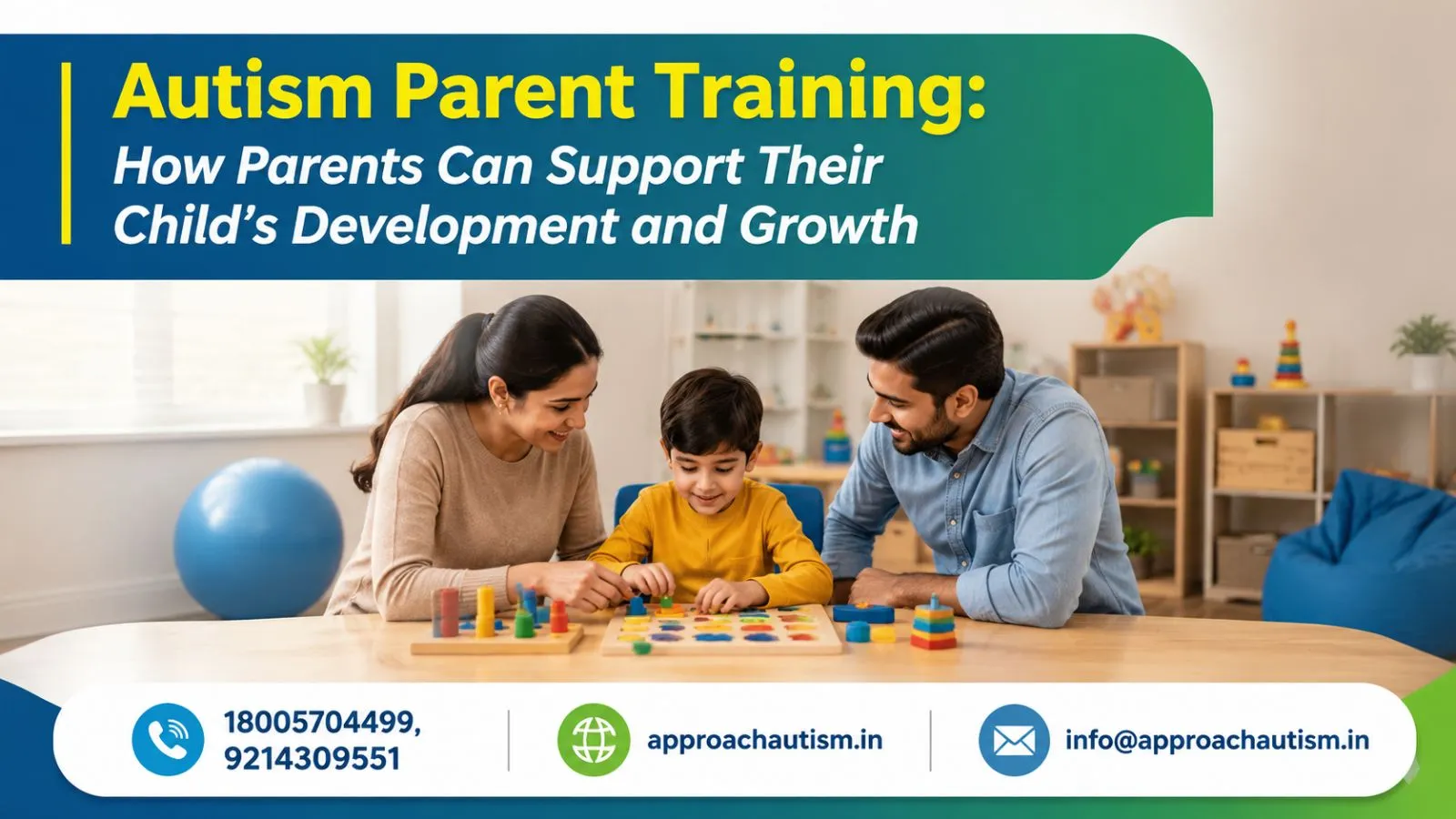
Autism Parent Training: How Parents Can Support Their Child’s Development and Growth
-
by
Approach
- No Comments on Autism Parent Training: How Parents Can Support Their Child’s Development and Growth
Autism parent training helps parents understand their child’s individual needs and develop practical skills to support communication, behaviour, learning, and independence. While professional therapies provide structured guidance, everyday interactions at home also create valuable opportunities for children with Autism Spectrum Disorder (ASD) to practise and strengthen their skills.
Parent training is not about becoming a therapist or expecting a child to behave like everyone else. It focuses on understanding the reasons behind a child’s responses, encouraging meaningful communication, and creating supportive routines. With the right guidance, parents can become more confident in handling everyday challenges and working alongside professionals to support their child’s development.
Understanding Autism Parent Training and Its Importance
What Is Parent Training for Autism?
Parent training for autism is a structured learning process that equips parents and caregivers with strategies to support their child’s development in everyday environments. Depending on the programme, parents may learn through demonstrations, guided practice, individual consultations, group sessions, and feedback from trained professionals.
Training may cover communication, play, positive behaviour support, sensory needs, daily living skills, and emotional regulation. Parents can also learn how to identify their child’s strengths, recognise situations that cause distress, and adapt activities to suit individual abilities.
The World Health Organization’s Caregiver Skills Training programme follows a similar family-centred approach, helping caregivers use play and everyday routines to encourage engagement, communication, and participation.
Why Is Parent Involvement Important in Child Development?
Children practise skills in many different settings, including their homes, schools, therapy sessions, and communities. When parents understand the strategies recommended by their child’s professionals, they can provide opportunities to practise those skills during familiar activities.
For example, a parent can encourage a child to request a favourite toy, participate in getting dressed, or communicate a preference during mealtimes. These everyday interactions can support learning without turning the entire day into a therapy session.
Parent involvement also helps professionals understand what works well at home and what challenges remain. Sharing observations allows the family and support team to adjust goals according to the child’s changing needs.
Common Challenges Parents Face When Raising an Autistic Child
Understanding Communication, Behaviour and Sensory Needs
One challenge parents may face is understanding what their child is communicating through words, gestures, actions, or behaviour. Some children may find it difficult to express discomfort, ask for help, or explain why a situation feels overwhelming.
A child who covers their ears in a crowded place may be responding to loud sounds. Another child who becomes upset when an activity ends may need more preparation for transitions. These responses can have different causes, so parents should observe the circumstances rather than assume that every behaviour has the same explanation.
Useful autism parenting strategies include noticing patterns, offering clear choices, allowing processing time, and providing suitable communication support. If a child uses pictures, gestures, or a communication device, parents can work with their professionals to encourage its use across everyday settings.
Managing Daily Routines, Learning and Family Stress
Changes in routine, difficulties with sleep, eating preferences, and unfamiliar environments can create challenges for some families. Parents may also feel uncertain about how to continue developmental activities at home while balancing work, household responsibilities, and the needs of other family members.
Simple adjustments can make routines more manageable. Visual schedules, short instructions, predictable transitions, and breaking larger tasks into smaller steps may help some children participate more comfortably.
Parents should remember that progress does not require constant structured teaching. Play, shared activities, and ordinary family routines can all provide learning opportunities. Asking professionals for realistic goals can help families avoid unnecessary pressure and prioritise the skills that matter most to their child.
Benefits of Autism Parent Training Programs and Essential Skills
Communication, Positive Behaviour Support and Learning
Autism parent training programs can help caregivers use consistent, individualised strategies in daily life. One important area is communication. Parents may learn to use simple language, respond to their child’s attempts to communicate, follow the child’s interests during play, and allow enough time for a response.
Another area is positive behaviour support. Instead of focusing only on stopping a behaviour, parents can work with professionals to understand what happens before it, what the child may be communicating, and what environmental changes could help.
For example, if a child becomes distressed when moving from playtime to a different activity, a visual cue, advance warning, or gradual transition may be helpful. The most appropriate approach depends on the child’s individual needs and the reason for the distress.
Training can also help parents understand therapy goals, record meaningful observations, and discuss progress with speech therapists, occupational therapists, educators, and other qualified professionals.
Building Daily Living Skills and Independence at Home
Daily living skills help children participate more independently in familiar activities. Depending on their developmental level, parents can support skills such as washing hands, brushing teeth, dressing, tidying toys, or following a simple morning routine.
A useful approach is to break each task into smaller steps, demonstrate what to do, and provide only as much assistance as necessary. Visual instructions or picture sequences may help some children understand what comes next.
For example, a handwashing routine can be taught through a sequence of turning on the tap, wetting the hands, applying soap, rinsing, and drying. Parents can gradually reduce prompts as the child becomes more familiar with the steps.
Progress will vary, and some children will need ongoing assistance. The aim is to develop useful skills at a comfortable pace while respecting the child’s abilities, preferences, and dignity.
How Parents Can Support Long-Term Growth and Find the Right Guidance
Creating Consistent Home Routines and Celebrating Progress
Consistency can help children understand expectations, but routines should remain flexible enough to accommodate their needs. Parents can establish predictable times for meals, rest, play, learning, and other daily activities without expecting every day to follow an identical schedule.
Choose a few realistic goals at a time. These might include communicating a need, completing one step of a self-care task, or transitioning between activities with additional support. Recognise progress through encouragement that is meaningful to the child.
It is also important to adjust expectations when a strategy is not working. Fatigue, discomfort, changes in the environment, or communication difficulties may affect participation. Parents can discuss recurring challenges with the child’s support team rather than interpreting every difficulty as deliberate non-compliance.
Caregiver well-being matters, too. Sharing responsibilities with trusted family members, taking breaks when possible, and seeking emotional support can help parents sustain their involvement over time.
Working with Autism Professionals and Support Services in India
Parent training works best when it reflects a child’s individual profile and the family’s circumstances. Before joining a programme, parents can ask about the trainer’s qualifications, teaching methods, opportunities for guided practice, progress reviews, and how the strategies will be adapted to their child.
Families in India can explore professional guidance, parent education initiatives, and caregiver programmes suited to their needs. The WHO Caregiver Skills Training resources also offer information about practical caregiver skills and family well-being.
For local guidance, families seeking an autism support center in Jaipur can explore Approach Autism Society Jaipur and learn about relevant support options. Parents should discuss their child’s needs with qualified professionals and choose services that promote communication, participation, independence, and well-being.
Collaboration between parents, therapists, educators, and other caregivers helps maintain a shared understanding of developmental goals. Regular communication also makes it easier to identify new priorities as the child grows.
Conclusion
Autism parent training gives families practical ways to support communication, learning, behaviour, and independence in everyday life. By understanding their child’s needs, creating supportive routines, and working with qualified professionals, parents can make ordinary activities more meaningful learning opportunities.
Every autistic child develops differently, so progress should be measured against individual needs rather than comparisons with other children. With realistic goals, consistent support, and attention to family well-being, parents can help their children build useful skills and participate more confidently in daily life.