Social Skills Training for Autism: Helping Children Build Better Communication and Relationships
-
by
Approach
- No Comments on Social Skills Training for Autism: Helping Children Build Better Communication and Relationships
Social interaction is an important part of a child’s development, helping them communicate needs, share interests, participate in activities, and build meaningful relationships. For autistic children, social communication may develop differently, and certain everyday interactions can require additional support. Social skills training for autism can help children practise useful communication strategies, understand social situations, and participate in ways that feel comfortable and meaningful to them.
Social skills are not about making every child behave identically or forcing them to follow social expectations that cause discomfort. Instead, effective support focuses on the individual child’s needs, interests, communication style, and developmental goals. With structured practice, supportive adults, and opportunities to apply skills in everyday settings, children can build confidence and strengthen their ability to connect with others.
Understanding Social Skills Training for Autism
Social skills include the many ways people communicate, cooperate, share experiences, and navigate interactions. For autistic children, learning some of these skills may require more explicit explanations, visual support, practice, or adjustments to the environment.
What Are Social Skills and Why Do They Matter?
Social skills involve both verbal and nonverbal communication. They may include starting a conversation, responding to another person, expressing preferences, taking turns, understanding boundaries, and working through disagreements.
These skills can help children participate in family routines, classroom activities, play, and community experiences. They can also help children communicate when they need assistance, a break, or clarification.
Not every child needs to develop the same skills. For one child, a meaningful goal might be asking a classmate to play. For another, it may be communicating discomfort, joining a preferred group activity, or learning how to end a conversation comfortably.
Common Social Communication Differences in Autistic Children
Autistic children have different strengths and support needs. Some may find it difficult to initiate interactions, interpret indirect language, understand unspoken expectations, or follow rapid conversations. Others may communicate confidently about favourite subjects but need help navigating unfamiliar social situations.
Some children use spoken language, while others communicate through gestures, pictures, sign language, or communication devices. These methods should be respected as valid ways to express needs and ideas.
Eye contact, facial expressions, and body language can also vary. A child may listen and understand without looking directly at someone’s eyes. Therefore, social development should be assessed through meaningful communication and participation rather than eye contact alone.
How Individualised Social Skills Training Works
A social skills programme should begin by understanding the child’s current abilities, interests, communication preferences, and challenges. Parents, educators, and relevant professionals can work together to identify practical goals.
Training may involve modelling, guided practice, visual prompts, social stories, role-play, or supported interaction with peers. A therapist might help a child practise asking for a turn, understanding a game’s rules, or requesting clarification when instructions are confusing.
The aim is to teach useful strategies that the child can apply in real situations. Activities should be adjusted to the child’s age and developmental level, with progress reviewed regularly.
Signs a Child May Benefit from Social Skills Support
Not every difference in social interaction requires formal training. However, when a child experiences persistent difficulties that affect participation, communication, friendships, or everyday routines, additional support may be helpful.
Difficulty Starting or Maintaining Interactions
Some children may want to connect with others but be unsure how to begin. They might find it challenging to approach a peer, enter an ongoing game, respond to a question, or keep a conversation going.
For example, a child may talk enthusiastically about a favourite topic but find it difficult to notice when another person wants to contribute. Another child may need extra processing time before responding.
Support can focus on practical strategies such as greeting someone, asking a related question, sharing an interest, requesting a turn, or explaining when they need more time to respond.
Understanding Social Cues, Boundaries, and Emotions
Social situations often involve information that is not stated directly. Children may need help understanding tone, gestures, personal boundaries, changes in conversation, or how to recognise when someone is uncomfortable.
Rather than expecting a child to guess what others mean, adults can explain social situations clearly and respectfully. For example, they can describe how to ask before borrowing a toy or how to respond when a friend says they want to play something different.
Emotion recognition activities may help children identify feelings in themselves and others. However, facial expressions do not always reveal exactly how someone feels, so it is useful to combine visual clues with listening, asking questions, and respecting what a person says.
Participation in Play and Group Activities
Group games, classroom discussions, and shared activities can involve several demands at once: listening, waiting, understanding rules, adapting to changes, and communicating with peers.
Some children may prefer individual activities or need a quieter environment before joining a group. Others may benefit from clear instructions, smaller groups, predictable routines, or a supportive partner.
The goal is not to force participation in every activity. It is to identify opportunities where the child wants to engage and provide the support needed to make that interaction accessible.
Social Skills Activities Used in Autism Training
Practical activities give children opportunities to explore communication and interaction in a predictable setting. The most useful activities are matched to the child’s goals and interests, and they allow practice without unnecessary pressure.
Role-Play, Modelling, and Social Stories
Role-play lets children rehearse everyday situations before trying them in real life. An adult can model a short interaction and then invite the child to practise at their own pace.
Examples include:
- Asking a teacher for help.
- Inviting a friend to join a game.
- Requesting a turn with a shared toy.
- Saying “no” or asking for a break.
- Explaining when something feels confusing.
Social stories or visual scripts can describe what may happen in a particular situation and offer possible responses. For example, a short story about visiting a playground might explain how to approach a game, ask to join, and respond if the other children are not ready.
These tools should prepare children for situations, not prescribe a single “correct” response for every circumstance.
Cooperative Games and Supported Peer Interaction
Simple cooperative activities can create natural opportunities to practise taking turns, sharing information, solving problems, and working towards a common goal.
Suitable examples include building something together, completing a puzzle as a team, passing a ball, creating a shared story, or taking turns choosing music. Adults can demonstrate the activity, explain the rules clearly, and offer reminders when needed.
Small groups may be more comfortable than large gatherings, particularly for children who find noise or unpredictable interactions overwhelming. Activities based on shared interests can also make interaction more motivating.
The purpose is meaningful participation, not winning every game or remaining in a group for a fixed amount of time.
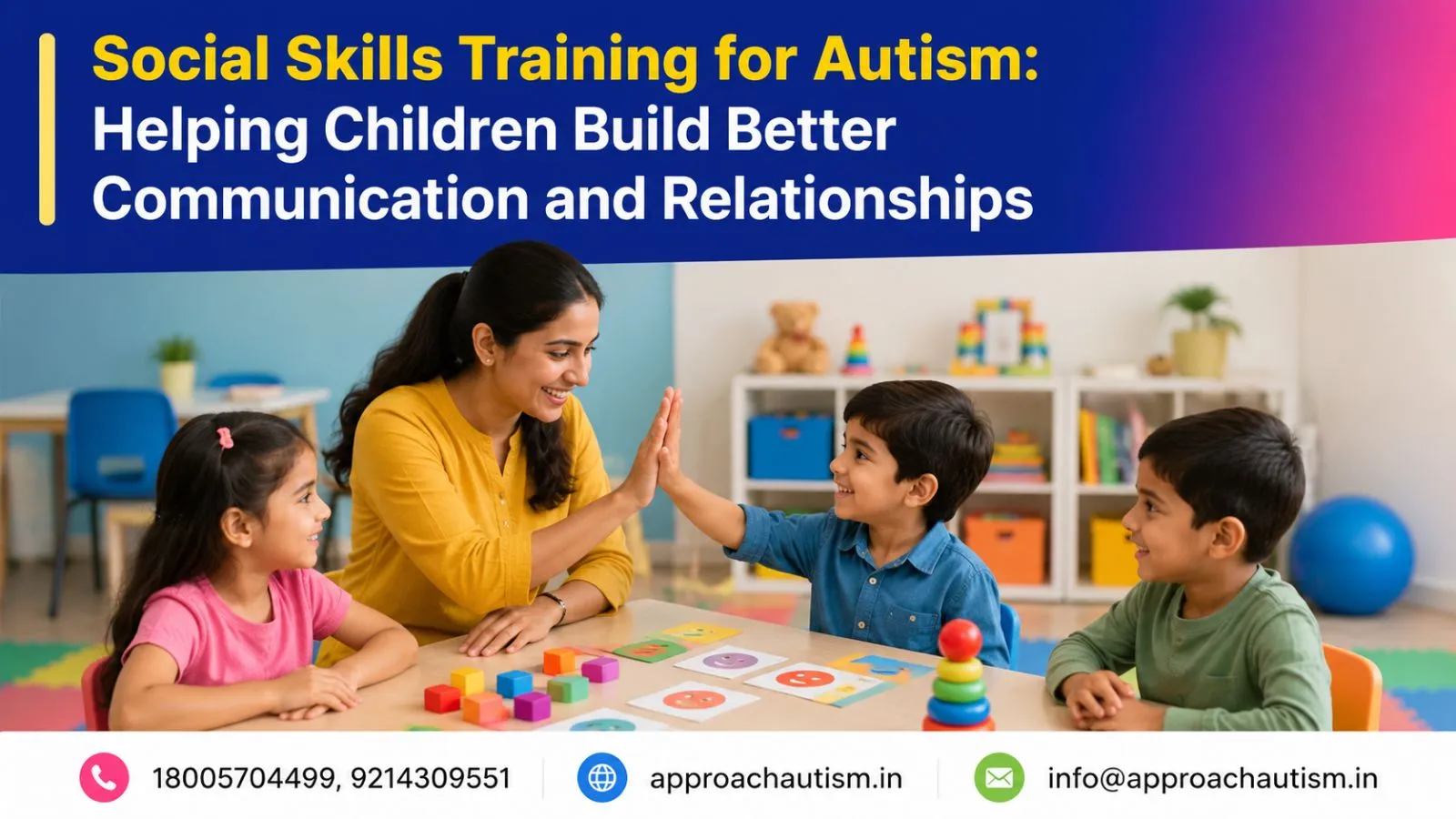
Emotion Recognition and Everyday Communication Practice
Picture cards, illustrated stories, pretend play, and everyday conversations can help children explore feelings and communication choices.
Parents or therapists might discuss what a character could be feeling, what clues support that idea, and how the character could ask for help. Children can also practise communicating their own emotions through words, gestures, pictures, or another preferred method.
Everyday situations offer further opportunities to practise. Preparing a snack together can involve requesting ingredients, making choices, and taking turns. Reading a favourite book can encourage shared attention and discussion without requiring the child to answer every question.
Activities should remain flexible. If a child becomes tired or overwhelmed, taking a break may be more useful than continuing the exercise.
How Parents Can Support Social Development at Home
Skills are more likely to be useful when children have opportunities to apply them with familiar people and in different environments. Parents do not need to turn every interaction into a lesson; small, supportive moments throughout the day can provide valuable practice.
Build Communication Into Everyday Routines
Follow the child’s interests and look for natural opportunities to communicate. During play, you might describe what the child is doing, offer a choice, or pause to give them time to respond.
Other helpful approaches include reading together, taking turns during favourite games, practising simple requests, and using pictures to explain upcoming activities. Respond positively when the child communicates, even if their method differs from spoken language.
Avoid placing too much pressure on the child to speak, make eye contact, or respond immediately. Allowing time and recognising different communication methods can make interactions more comfortable.
Encourage Positive Peer Experiences Without Pressure
Start with activities that match the child’s interests, energy level, and sensory preferences. A short play session with one familiar child may be easier than a busy group gathering.
Explain what to expect before an activity, make rules understandable, and provide a way to request a break. Adults can model how to negotiate turns, express preferences, and resolve small disagreements.
Respecting a child’s boundaries is important. Social development should help children communicate, build relationships, and advocate for themselves—not simply encourage them to appear more socially typical.
Choose Appropriate Support and Track Meaningful Progress
If social communication differences affect a child’s daily life, discuss them with a qualified professional. Depending on the child’s needs, support may involve a speech and language therapist, psychologist, special educator, or another professional with relevant experience in autism.
When considering an autism support center in Jaipur, families can look for individualized goals, respectful child-centred practices, parent involvement, and opportunities to practise skills beyond the therapy room. Approach Autism Society Jaipur is one resource families can explore when learning about autism-related support.
Progress should be measured through practical outcomes that matter to the child and family. These might include communicating a need more independently, joining a preferred activity, asking for clarification, or feeling more comfortable during a familiar interaction. Improvement can take time, and skills may not transfer automatically from one setting to another.
Social skills training can be a useful part of a broader support plan when it matches the child’s needs. With patient guidance, accessible activities, and collaboration between families and professionals, children can develop communication strategies, build relationships on their own terms, and participate more confidently in everyday life.