Why Do Autistic People Stim? Understanding Repetitive Movements and Behaviors
-
by
Approach
- No Comments on Why Do Autistic People Stim? Understanding Repetitive Movements and Behaviors
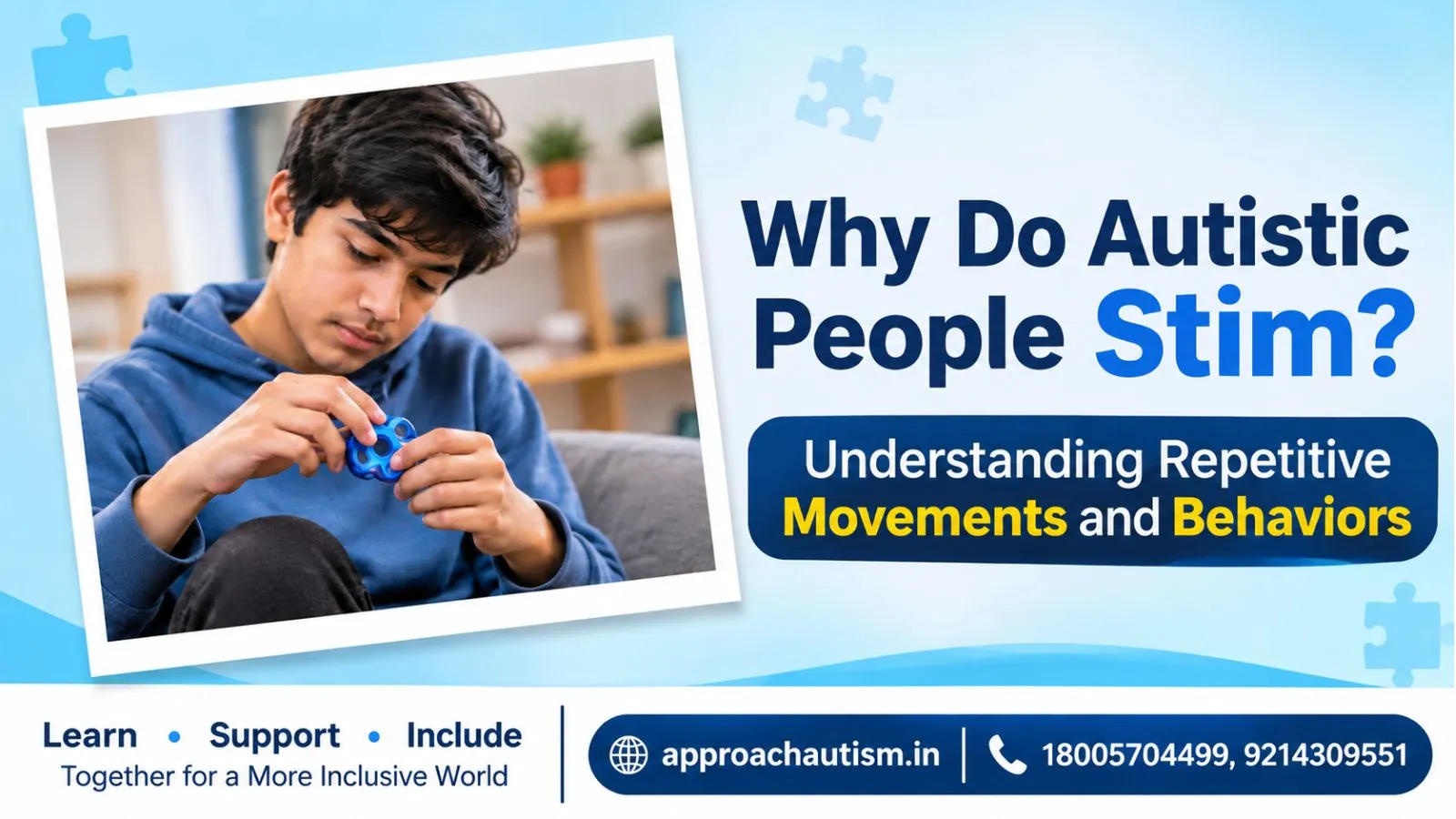
Stimming in Autism refers to repetitive movements, sounds or actions that autistic individuals may use to manage sensory experiences, express emotions, maintain focus or respond to their surroundings. Common examples include hand flapping, rocking, repeating words, tapping objects and making familiar sounds. These behaviours are often a natural part of autistic experiences and can provide comfort, enjoyment and self-regulation. Understanding why autistic people stim helps parents, teachers, caregivers and communities respond with acceptance rather than automatically trying to stop these behaviours.
What Is Stimming?
Stimming, short for self-stimulatory behaviour, describes repetitive actions that provide sensory feedback or help an individual manage internal experiences. These actions may involve body movements, sounds, visual patterns or interactions with objects.
For example, an individual might flap their hands when excited, rock while sitting, repeat a favourite phrase or move an object repeatedly. Some people stim consciously, while others perform these actions automatically.
Stimming is not limited to autism. People without autism may also tap their fingers, shake their legs or play with objects when concentrating or feeling nervous. However, repetitive behaviours can be more noticeable or serve different purposes for autistic individuals.
Why Is Stimming Associated With Autism?
Stimming is associated with autism because autistic individuals may process sensory information, emotions and environmental demands differently. Repetitive actions can provide predictable sensory input and help manage situations that feel unfamiliar, exciting or overwhelming.
Autism is a spectrum, meaning individuals have different communication styles, sensory preferences and support requirements. Consequently, stimming patterns also vary.
Some individuals stim frequently, while others display subtle repetitive behaviours. These actions should be understood in the context of the person’s experiences rather than treated as a problem simply because they look different.
Why Do Autistic People Stim?
There is no single reason behind every repetitive action. Understanding why autistic people stim requires considering sensory preferences, emotional experiences, attention and individual circumstances.
Sensory Regulation
One important reason is sensory regulation in autism. Repetitive movements and sounds can provide predictable sensory feedback when an environment feels uncomfortable or difficult to process.
For instance, hand movements, rocking or touching familiar objects may help someone manage sensory experiences. Some individuals also seek particular sensations because they find them enjoyable.
Emotional Regulation
Stimming can help individuals respond to different emotions, including happiness, frustration, nervousness and sadness.
Repetitive actions may provide a familiar way to manage feelings that are difficult to communicate verbally. For some people, these movements continue during both positive and challenging experiences.
Managing Excitement or Happiness
Autistic individuals may stim when experiencing happiness, anticipation or enthusiasm. Hand flapping, jumping, smiling, rocking and vocal sounds can communicate excitement.
These behaviours should not automatically be interpreted as signs of distress. Sometimes, they simply express enjoyment.
Coping With Stress or Overwhelm
Unfamiliar situations, sudden changes, crowded environments and demanding activities can create stress. Repetitive actions may help someone feel more settled during these experiences.
Rather than immediately stopping the behaviour, caregivers should consider whether reducing environmental pressure or providing a quiet space would be helpful.
Maintaining Focus and Attention
Some individuals use repetitive movements while listening, thinking, reading or completing tasks. Small movements may help them remain engaged with an activity.
For example, an individual might move their fingers while listening to instructions or gently rock while concentrating. Stimming does not necessarily mean someone is distracted.
Common Types of Stimming in Autism
Autism repetitive behaviours can involve different parts of the body, sounds, objects and visual experiences. The same individual may demonstrate several types depending on their preferences and environment.
Hand and Finger Movements
Hand flapping is one of the commonly recognised forms of stimming. Other examples include finger flicking, rubbing hands, twisting fingers, tapping and repetitive hand movements.
These actions may provide sensory feedback or express excitement. They are not automatically harmful and should not be discouraged without understanding their purpose.
Rocking and Body Movements
Some individuals rock forwards and backwards, sway from side to side, bounce their bodies or repeatedly move their legs.
These movements may provide predictable physical sensations and comfort. They can occur while sitting, standing or participating in other activities.
Repetitive Sounds and Vocal Stimming
Vocal stimming includes humming, repeating words, making sounds, singing short phrases and repeating familiar expressions.
Some individuals enjoy hearing particular sounds or experiencing the rhythm of repeated speech. These behaviours may also support emotional expression.
Repetitive Use of Objects
An individual might spin wheels, arrange toys, open and close objects, line up items or repeatedly operate a familiar mechanism.
Such activities can provide predictable sensory experiences and opportunities to explore patterns, movement and cause and effect.
Visual Stimming
Visual stimming involves enjoying repeated visual experiences, such as watching moving objects, observing reflections, looking at patterns or moving fingers in front of the eyes.
These behaviours may provide visual stimulation or enjoyment. Activities involving potentially harmful lights or objects should be assessed for safety.
Is Stimming Always a Sign of Autism?
No. Stimming is not exclusive to autism. People of different ages and neurological backgrounds may demonstrate repetitive movements when concentrating, waiting, feeling nervous or experiencing excitement.
However, stimming can be one characteristic observed in autistic individuals alongside differences in social communication and interaction and restricted or repetitive patterns of behaviour or interests.
A single behaviour cannot establish an autism diagnosis. A qualified professional considers developmental history, individual characteristics and broader patterns when conducting an assessment.
Stimming in Autistic Children
Children may stim during play, learning, communication and everyday routines. A child might flap their hands when excited, rock while watching television or repeat sounds during an enjoyable activity.
Parents can observe when these actions occur and whether they appear connected to particular experiences. Providing safe opportunities for movement, play and sensory exploration can support comfort.
It is also important to help children communicate their needs through suitable methods, including speech, gestures, pictures or alternative communication systems.
Stimming in Autistic Teenagers
During adolescence, stimming may continue while social expectations, academic responsibilities and personal preferences change.
Teenagers may become more aware of how others react to their movements. Some may hide their behaviours in public because they fear judgement, even when those actions help them feel comfortable.
Families and educators should encourage self-acceptance while discussing practical ways to manage situations where a behaviour creates a genuine safety or participation concern.
Stimming in Autistic Adults
Autistic adults may stim at home, work, during conversations or while completing everyday responsibilities. Examples include tapping fingers, moving legs, repeating phrases or using familiar objects.
Some adults develop personal strategies to manage their sensory and emotional needs. Others may prefer discreet forms of stimulation in particular environments.
Respecting these preferences can support confidence, workplace participation and independent living.
Positive and Neutral Forms of Stimming
Many forms of stimming are harmless and can contribute positively to an individual’s comfort and emotional well-being.
Hand movements, gentle rocking, humming, repetitive drawing and playing with textured objects may provide enjoyment or help with concentration.
Stimming should not be judged only by how unusual it appears to other people. Its purpose, safety and effect on the individual’s daily life are more important considerations.
When Stimming May Become a Concern
Although many repetitive behaviours are harmless, some situations may require additional attention. The focus should be on protecting the individual’s well-being rather than eliminating behaviours simply to make them appear typical.
Risk of Physical Injury
A behaviour may require support if it causes injuries, such as repeated head hitting, biting or forceful actions that damage the body.
Caregivers should seek professional guidance to understand possible causes, assess safety and identify suitable alternatives.
Interference With Daily Activities
Sometimes, repetitive actions may make it difficult to participate in essential activities, communication or learning.
In these situations, understanding the individual’s needs and adjusting the environment may help. Support should preserve opportunities for self-regulation wherever possible.
Distress or Loss of Control
If repetitive behaviours occur alongside significant distress, sudden changes or difficulty recovering, further assessment may be useful.
Families should observe patterns, identify possible triggers and discuss concerns with qualified professionals.
Why Stimming Should Not Automatically Be Stopped
Stimming can be an important way for autistic individuals to manage their experiences. Stopping harmless movements may remove a useful source of comfort without addressing the underlying need.
Forcing someone to suppress natural behaviours can also create unnecessary stress and discourage self-expression.
Instead, caregivers should focus on safety, communication, acceptance and participation. If a particular behaviour creates a genuine concern, the goal should be to understand its purpose and provide supportive alternatives.
Stimming vs Repetitive Behaviors: Are They the Same?
Stimming is one type of repetitive behaviour, but not every repetitive action serves a sensory or self-regulatory purpose.
Some repetitive patterns may involve routines, preferred activities, repeated questions or specific ways of organising objects. Others may provide sensory feedback or emotional comfort.
These behaviours can overlap, and their meaning varies between individuals. Understanding the context is essential before deciding whether additional support is needed.
Common Myths About Stimming
Misunderstandings about repetitive movements can lead to unnecessary criticism and inappropriate expectations. Recognising the facts encourages acceptance and more respectful support.
Myth: Stimming Always Means a Person Is Upset
Reality: Individuals may stim when happy, excited, relaxed, focused or overwhelmed. The behaviour alone does not explain someone’s emotional state.
Myth: Stimming Is Always Harmful
Reality: Most everyday forms of stimming are not inherently dangerous. Gentle rocking, humming and hand movements can be harmless ways to express or regulate experiences.
Myth: Only Autistic People Stim
Reality: Repetitive movements and actions occur across different populations. Stimming is not exclusive to autism, although its frequency and purpose may differ.
Myth: Stimming Means Someone Is Not Paying Attention
Reality: Some individuals stim while listening, learning or concentrating. Repetitive movement does not automatically indicate a lack of attention or understanding.
Frequently Asked Questions About Stimming
Why do autistic people flap their hands?
Hand flapping may provide sensory feedback or express happiness, excitement and other emotions. Its purpose varies between individuals and situations.
Why do autistic people rock back and forth?
Rocking may provide predictable movement sensations, comfort or support with emotional regulation. Some individuals find repetitive body movements enjoyable.
Is stimming normal in autism?
Yes. Stimming is a common autistic experience and can be a natural way to manage sensory information, emotions and attention.
Can stimming be a way to manage sensory overload?
Yes. Repetitive movements or sounds may help some individuals manage overwhelming sensory experiences. However, reducing environmental triggers may also be necessary.
Do autistic adults stim?
Yes. Stimming can continue throughout adulthood. Adults may demonstrate similar behaviours to children, although their preferences and strategies can change over time.
Key Takeaways
Stimming is an important aspect of understanding autism and individual differences. Repetitive movements, sounds and actions may support sensory regulation, emotional expression, concentration and enjoyment. Not every form requires intervention, and harmless behaviours should generally be accepted. When safety or everyday participation becomes a concern, understanding the underlying reason and providing appropriate support is more helpful than simply suppressing the behaviour.
Approach Autism Society promotes skill development, independence and inclusion through practical learning, life skills training, independent living and employment initiatives. Its programs focus on helping autistic individuals develop abilities and participate meaningfully in society. Families exploring an autism support center in Jaipur can learn more about its initiatives and opportunities for long-term development and independence.