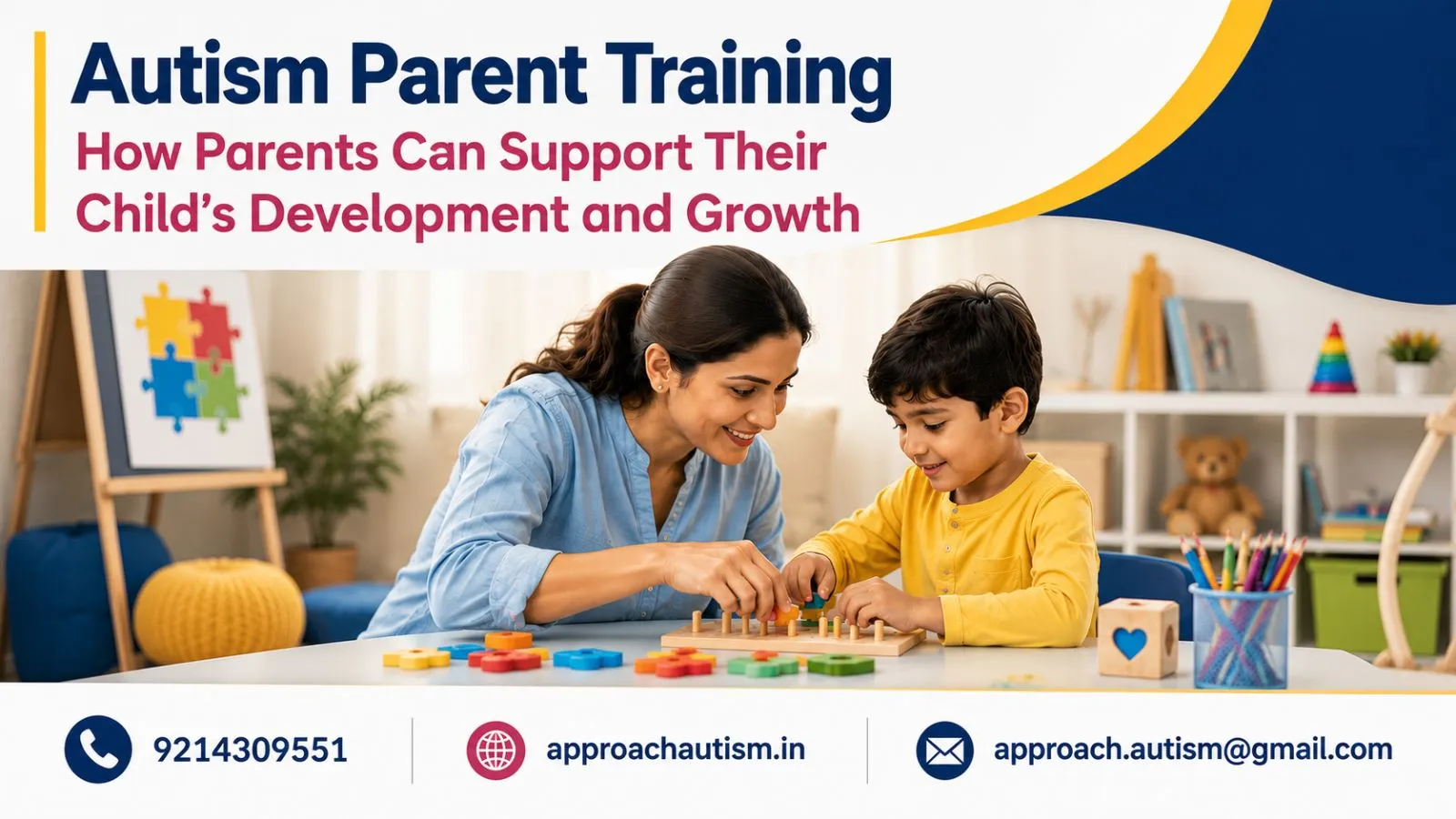
Autism Parent Training: How Parents Can Support Their Child’s Development and Growth
-
by
Approach
- No Comments on Autism Parent Training: How Parents Can Support Their Child’s Development and Growth
Autism parent training helps parents understand their child’s needs and support development at home. It provides practical strategies for communication, daily routines, behaviour and independence. Every autistic child has different strengths, interests and support needs. Therefore, parents need an approach that suits their individual child.
Parents play an important role in a child’s everyday life. They see how their child communicates, responds to changes and learns new skills. With suitable guidance, families can use these everyday experiences to encourage learning and build confidence.
Parent training does not replace professional therapy. Instead, it helps parents support their child’s goals between sessions. It can also improve communication between families and professionals.
The aim is not to follow a rigid formula. Rather, it is to understand the child, provide appropriate support and recognise progress at every stage.
Understanding Autism Parent Training and Its Benefits
What Is Autism Parent Training?
Autism parent training teaches caregivers practical ways to support their child’s development. Depending on the programme, it may cover communication, play, daily living skills, routines and behaviour support.
Parents learn to recognise their child’s needs and respond in helpful ways. For example, a child may become upset when they cannot express what they want. Parents can learn to recognise signs of frustration and offer suitable communication options.
Training may also help parents understand how sensory experiences affect their child. Loud sounds, bright lights or unfamiliar environments can sometimes cause distress. Recognising these factors can help families make everyday activities more comfortable.
The purpose is not to turn parents into therapists. Instead, training gives them practical tools they can use during normal family activities.
Why Is Parent Training Important for Families?
Supporting an autistic child can sometimes feel challenging. Parents may be unsure how to respond to communication differences, changes in routine or difficult situations. They may also receive conflicting advice.
Structured parent training can provide clearer guidance. It allows parents to discuss concerns, practise strategies and understand their child’s individual goals.
For example, a parent may learn to offer two choices instead of asking a broad question. Another may use a visual schedule to help their child prepare for school.
These small adjustments can make daily activities easier to understand. Over time, parents may also feel more confident when supporting their child’s learning.
However, every child develops differently. A strategy that works well for one child may need changes for another. Parents should focus on their child’s needs rather than comparing progress with other children.
Practical Parenting Strategies for Everyday Challenges
Supporting Communication and Understanding Behaviour
Communication can take many forms. Some autistic children use spoken language, while others communicate through gestures, pictures, signs or communication devices. Parents should respect their child’s preferred communication methods.
Simple changes can make communication more accessible. Use clear language, allow extra processing time and offer choices when appropriate. You can also follow your child’s interests to encourage interaction.
Behaviour also provides useful information. A child may become distressed because of sensory discomfort, frustration, tiredness or difficulty expressing a need.
Instead of labelling behaviour as simply good or bad, observe what happens before and after it. Look for patterns and consider what your child may be experiencing.
For example, if your child becomes upset during a noisy family gathering, the environment may feel overwhelming. A quieter space or planned break may help.
If behaviour creates a safety concern or continues to cause significant distress, seek guidance from a qualified professional. Avoid assuming that one strategy will work in every situation.
Creating Routines and Supporting Learning at Home
Predictable routines can help children understand what happens next. This may be especially useful during busy parts of the day, such as getting ready for school, mealtimes or bedtime.
Parents can use visual schedules, written checklists or simple reminders. For instance, a morning checklist might show getting dressed, brushing teeth, eating breakfast and packing a school bag.
However, routines should remain flexible. Preparing a child for a change can help them manage unexpected situations more comfortably.
Everyday activities also offer opportunities to practise skills. You can encourage communication during meals, turn-taking during games or independence while getting dressed.
Keep these activities short and suitable for your child’s abilities. Offer breaks when needed and make room for free play.
Learning should not turn every moment into a lesson. Children also need time to relax, explore their interests and enjoy family life without constant demands.
Skills Parents Can Develop Through Training
Encouraging Independence and Positive Behaviour
Parent training for autism may help families support daily living skills through clear instructions and regular practice. These skills can include dressing, brushing teeth, washing hands, eating meals and organising personal belongings.
Start with a task that matches your child’s current abilities. Break it into smaller steps and demonstrate what to do. Then, give your child time to try.
For example, you can teach handwashing by showing each step in order. A picture checklist may help your child remember the sequence.
Offer assistance when needed, but avoid taking over every task. As your child learns, gradually adjust the level of support. Some children may need visual prompts for longer, while others may learn the routine quickly.
Parents can also encourage helpful skills by recognising effort and progress. Specific encouragement, such as acknowledging that a child asked for help or completed part of a task, can make achievements easier to recognise.
The goal is not perfect behaviour or immediate independence. It is to help children build practical abilities in ways that respect their comfort, communication and needs.
Working With Therapists and Supporting Long-Term Growth
Parents may work with speech and language therapists, occupational therapists, psychologists, special educators or other qualified professionals. The team will depend on the child’s needs and goals.
Parent training can help families understand recommendations and apply suitable strategies at home. Regular communication with professionals also makes it easier to discuss what is working and where changes may be needed.
For example, if a child is learning to communicate a request, parents can ask how to create natural opportunities to practise that skill during daily routines.
It is also important to remember that progress may not always be consistent. A child may use a new skill in one setting but need support to use it elsewhere. This is a normal reason to review goals and teaching methods.
Families can explore suitable guidance through an autism support center in Jaipur when they need information about available support and services.
Building a Supportive Home and Family Environment
A supportive home helps children feel understood and respected. Parents can make everyday life more manageable by considering sensory needs, offering choices and allowing enough time for transitions.
Helpful approaches may include:
- Keeping important routines predictable.
- Preparing the child for changes when possible.
- Providing access to quiet spaces or calming activities.
- Respecting the child’s communication style.
- Encouraging interests and age-appropriate choices.
- Allowing time to practise new skills.
- Working with professionals when additional guidance is needed.
At the same time, parents need support too. Caring for a child can involve emotional, practical and financial pressures. Taking breaks, sharing responsibilities and connecting with trusted support networks can help caregivers manage these demands.
Supporting a child’s development is a shared journey. Parents bring valuable knowledge of their child, while professionals contribute specialised guidance. Respectful collaboration helps keep the child’s needs at the centre of decisions.
Supporting Your Child’s Development Over Time
Setting Realistic Goals and Recognising Progress
Every child has a different developmental path. Therefore, goals should reflect the child’s strengths, interests and current abilities.
One family may focus on helping a child communicate everyday needs. Another may work on personal care, participating in family activities or managing transitions.
Choose a small, meaningful goal and practise it regularly. If the task proves difficult, review the steps and consider whether the environment or instructions need adjustment.
Progress can take many forms. A child may ask for help more clearly, complete one extra step in a routine or feel more comfortable in a familiar activity.
Recognising these changes helps families focus on growth rather than comparison. It also allows parents and professionals to adjust support as the child’s needs change.
Preparing for Future Independence and Participation
Skills developed during childhood can support future participation in education, relationships, community activities and employment. Planning ahead helps families identify which abilities may be useful as their child grows.
For younger children, goals may involve communication, play and self-care. Older children and teenagers may practise organising belongings, managing schedules, handling money or preparing simple meals.
Not every individual will have the same goals or level of independence. Some autistic people will manage many activities on their own, while others will benefit from ongoing assistance or supported living.
Both pathways deserve respect. The aim is to provide opportunities for choice, meaningful participation and a fulfilling life.
Autism parent training can help families approach this journey with greater understanding and practical skills. By combining patient guidance, everyday practice and professional support, parents can help their child develop at their own pace.
Small steps matter. The most valuable progress is the progress that supports the child’s well-being, personal goals and ability to participate in daily life.