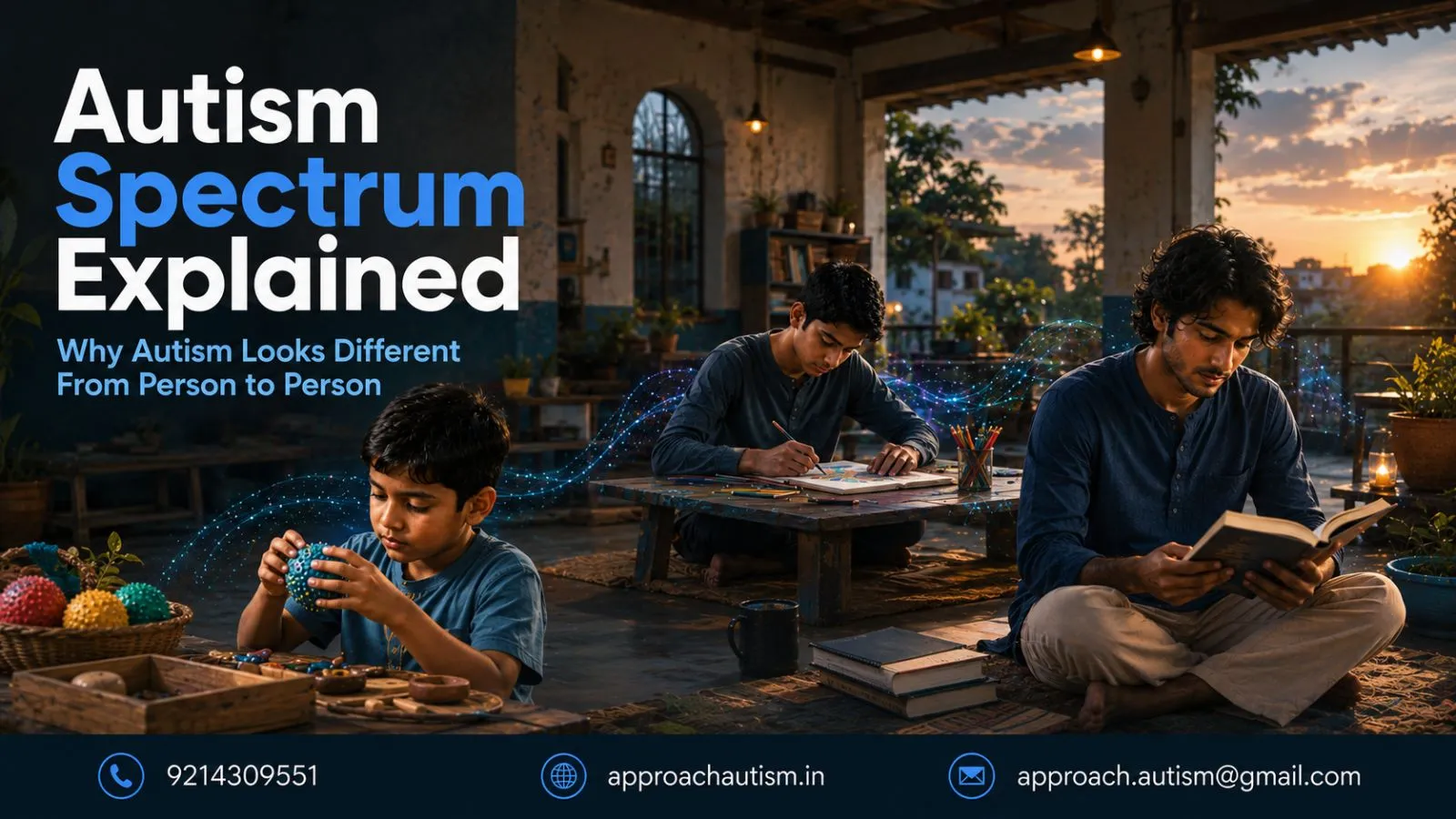
Autism Spectrum Explained: Why Autism Looks Different From Person to Person
-
by
Approach
- No Comments on Autism Spectrum Explained: Why Autism Looks Different From Person to Person
The autism spectrum describes the many ways autism can affect a person’s communication, behaviour, sensory experiences and everyday life. Every autistic person has a unique combination of strengths, challenges and support needs. Therefore, autism does not look the same in everyone.
For example, one autistic adult may communicate fluently but find busy environments overwhelming. Another may use alternative communication and need daily assistance. Both experiences are valid and can be part of the autism spectrum.
The word “spectrum” does not describe a simple scale from mild to severe autism. Instead, it reflects the many different characteristics that can occur together. Understanding these differences helps families, educators and professionals provide more appropriate, individualised support.
Understanding the Autism Spectrum and Its Characteristics
What Does the Autism Spectrum Mean?
Autism is a lifelong neurodevelopmental condition. It involves differences in social communication and interaction, along with restricted or repetitive behaviours, interests or activities. Sensory experiences can also affect everyday life.
The spectrum includes people with different communication styles, learning profiles and levels of independence. Some people need limited support in particular situations, while others require ongoing assistance with daily activities.
For this reason, there is no single description that fits every autistic person. A diagnosis helps explain certain developmental characteristics, but it does not define someone’s personality, interests or potential.
Why Does Autism Look Different in Each Person?
Autistic individuals can have different combinations of characteristics. These differences may affect how they communicate, learn, respond to their surroundings and manage daily responsibilities.
For example, one person may have strong spoken-language skills but struggle with unexpected changes. Another may communicate without speech but express preferences clearly through pictures or a communication device.
Sensory needs can also vary. Some people find loud sounds or bright lights uncomfortable, while others seek particular sensory experiences.
These differences show why support should be based on the individual. Rather than making assumptions from a diagnosis, families and professionals should consider the person’s abilities, preferences and everyday needs.
How Autism Characteristics Can Vary Between Individuals
Social Communication, Language and Sensory Differences
Social communication can involve understanding facial expressions, body language, indirect language and unwritten social expectations. Some autistic people may find these situations difficult, even when they want friendships and meaningful relationships.
Others may communicate comfortably in familiar settings but struggle in large groups or unpredictable conversations. Clear language and direct communication can help make interactions easier.
Language abilities also vary considerably. Some autistic people speak fluently, while others use gestures, pictures, writing or assistive communication tools. Spoken language alone does not determine intelligence or a person’s ability to understand others.
Sensory differences can influence communication and participation, too. Crowded places, strong smells, bright lights or certain textures may create discomfort. When sensory demands become overwhelming, a person may need a break or a quieter environment.
Understanding these differences helps people offer practical support instead of expecting everyone to respond in the same way.
Repetitive Behaviours, Routines and Focused Interests
Some autistic people use repetitive movements, sounds or actions to manage sensory input or express themselves. These behaviours are often called stimming. Examples include rocking, hand movements and repeating sounds.
Stimming is not automatically a problem. If it is safe and does not cause harm, it should not be discouraged simply because it looks different from typical behaviour.
Routines may also provide comfort and predictability. Unexpected changes can sometimes cause stress, particularly when a person has little time to prepare.
Focused interests are another characteristic that may vary across the spectrum. An autistic person might develop detailed knowledge about a favourite subject or enjoy repeating a familiar activity.
These interests can provide enjoyment, motivation and opportunities for learning. Support should focus on well-being and participation rather than trying to remove harmless differences.
How Autism Can Change Across Age and Support Needs
Autism in Children, Teenagers and Adults
Autism characteristics can become noticeable during early childhood, although some people receive a diagnosis much later. Children may show differences in communication, play, sensory responses or social interaction.
As children grow, their support needs may change. School introduces new routines, group activities and academic expectations. Teenagers may face additional challenges involving friendships, changing responsibilities and social pressure.
Some autistic teenagers learn strategies to manage situations that feel difficult. However, outward behaviour does not always reveal how much effort a situation requires.
In adulthood, autism may affect work, relationships, independent living or community participation. Some adults manage most daily activities independently, while others need regular or substantial support.
Autism remains lifelong, but the way its characteristics affect everyday life can change with experience, environment and available support.
Understanding Individual Support Needs
Autism should not be measured on a single line from “mild” to “severe.” A person may need little assistance with communication but substantial support with sensory challenges or daily organisation. Another person may need help with communication and personal care while showing strong abilities in specific areas.
Support needs can also vary by setting. Someone may feel comfortable at home but become overwhelmed in a crowded public place. Similarly, workplace adjustments may help an autistic adult participate more comfortably and effectively.
Useful support can include:
- Clear instructions and predictable expectations.
- Visual schedules or written reminders.
- Sensory adjustments in learning and work environments.
- Alternative communication methods when needed.
- Help with daily living or community activities.
- Extra preparation for changes and unfamiliar situations.
Higher support needs do not reduce a person’s right to dignity, choice or meaningful participation. Likewise, lower support needs do not mean someone experiences no challenges.
For families seeking guidance, an autism support centre in Jaipur may be a useful starting point for exploring available support and services.
Building Understanding Through Individualised Autism Support
Moving Beyond Common Autism Misconceptions
Several misconceptions can make it harder to understand autistic people. One common belief is that everyone with autism has the same characteristics. In reality, communication, sensory experiences, strengths and support needs differ widely.
Another misconception is that autism always involves intellectual disability. Autism and intellectual disability are distinct, although they can occur together. An individual’s abilities should be understood through appropriate assessment rather than assumptions.
It is also incorrect to assume that autism disappears with age. Autism is lifelong, but people can develop skills, find helpful strategies and benefit from changes to their environment.
Finally, a person’s visible behaviour does not always show their level of effort or distress. Some autistic people consciously or unconsciously mask characteristics in social situations. This can make their needs less obvious to others.
Listening to autistic people and respecting their communication preferences can help families, schools and workplaces respond more effectively.
Providing Support That Respects Individual Needs
Effective support starts with understanding the person rather than focusing only on a diagnosis. Families and professionals can identify strengths, recognise barriers and set goals that matter to the individual.
For children, support may focus on communication, learning, play or daily living skills. Teenagers may benefit from guidance with school transitions, friendships and self-advocacy. Adults may seek workplace adjustments, help with daily routines or support with community participation.
The approach should remain flexible. A strategy that works in one setting may need adjustment elsewhere. Regular communication between the individual, family and relevant professionals can help keep support practical and appropriate.
Most importantly, the goal is not to make an autistic person appear less autistic. It is to improve well-being, access, autonomy and participation while respecting individual differences.
Conclusion
The autism spectrum reflects the wide range of ways autism can affect people. There is no single autistic profile and no simple scale that captures every person’s abilities or challenges.
Communication, sensory experiences, routines, focused interests and support needs can vary considerably. They may also change in how they affect daily life as a person grows and encounters new environments.
Understanding these differences helps replace stereotypes with informed, respectful support. When families, educators and communities recognise individual strengths and needs, autistic people have more opportunities to communicate, make choices and participate meaningfully in everyday life.