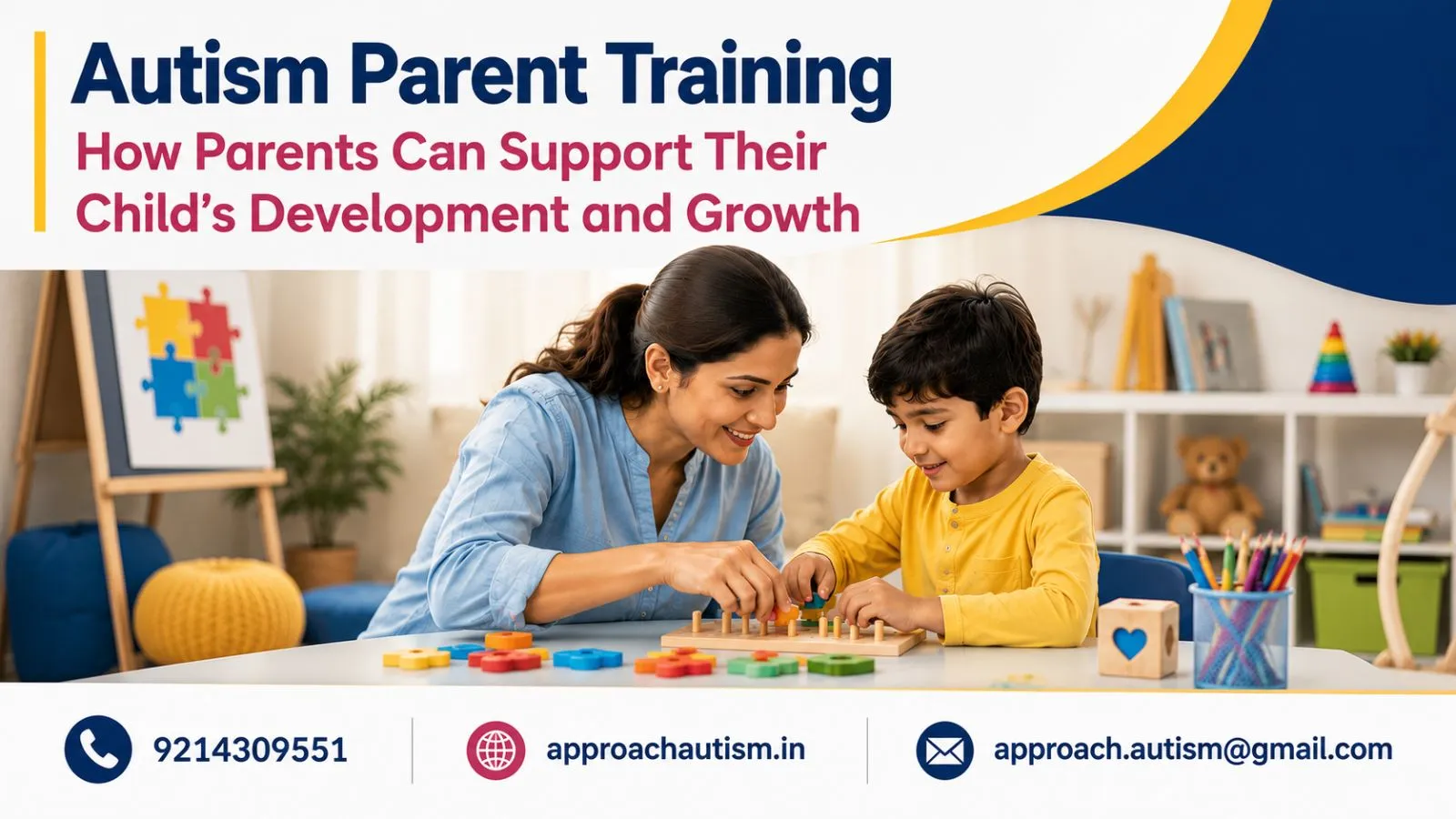
Autism Parent Training: How Parents Can Support Their Child’s Development and Growth
-
by
Approach
- No Comments on Autism Parent Training: How Parents Can Support Their Child’s Development and Growth
Autism can affect children in different ways, influencing communication, social interaction, behaviour, learning, and daily living skills. Every child with autism has unique strengths and support needs, which means there is no single approach that works for every family. Parents often play an important role in helping their child learn new skills and feel secure in everyday situations.
Autism parent training helps families understand their child’s needs and learn practical strategies that can be used at home. It may help parents communicate more effectively, support positive behaviour, encourage independence, and work more confidently with therapists and other professionals.
Parent training does not replace professional therapy or clinical care. Instead, it can complement a child’s individual support plan by helping parents understand therapy goals and create opportunities for learning throughout daily routines. With patience, consistency, and appropriate guidance, parents can become active partners in their child’s development journey.
Understanding Parent Training for Autism
What is Autism Parent Training and Why is It Important?
Autism parent training is an educational and supportive approach that helps parents understand autism and develop practical skills to support their child. Depending on the programme, parents may learn about communication, behaviour, routines, social skills, play, and daily living activities.
The purpose of parent training is not to make parents become therapists. Instead, it helps families understand what their child may be communicating through behaviour and how they can respond in supportive ways.
For example, a child who struggles to communicate their needs may become frustrated during everyday situations. Parent training may help caregivers identify possible triggers, recognise communication attempts, and introduce appropriate ways for the child to express themselves.
Training can also help parents understand that progress may look different for every child. Some children may develop communication skills gradually, while others may make progress in areas such as self-care, social interaction, or participation in daily routines.
When parents understand their child’s individual needs, they may feel better prepared to support learning and respond to challenges with greater confidence.
Role of Parents in an Autism Child’s Development Journey
Parents are often closely involved in their child’s everyday life. They see how their child communicates, plays, responds to changes, and manages different environments. This knowledge can be valuable when working with professionals to understand the child’s strengths and support requirements.
Parents can support development by creating opportunities for learning during normal activities. Simple routines such as getting dressed, eating meals, playing, or preparing for school can become opportunities to practise communication and independence.
For example, parents might encourage a child to make a choice between two preferred items, follow a simple routine, or participate in age-appropriate household activities.
The goal should be to support the child’s abilities and independence rather than expecting perfection. Progress can happen through small steps, and every child’s developmental journey is different.
How Parent Training Helps Families Build Confidence
Parents may sometimes feel uncertain about how to respond to a child’s behaviour or communication difficulties. They may also receive different advice from different sources, making it difficult to know what approach to follow.
A structured parent training programme can provide practical information and guidance from qualified professionals. Parents can learn how to observe their child’s behaviour, understand possible needs behind it, and use strategies consistently.
Training can also create opportunities for parents to ask questions and discuss challenges they experience at home. This can help families feel more confident when supporting their child’s development.
Most importantly, parent training can encourage parents to focus on their child’s strengths and progress instead of comparing them with other children.
Challenges Parents of Children with Autism Often Face
Understanding Child’s Behavior and Communication Needs
Communication differences are common among autistic children, but they can vary significantly. Some children may use spoken language, while others may communicate through gestures, visual supports, alternative communication systems, or a combination of methods.
Behaviour can also be difficult for parents to understand. A child may become distressed when routines change, when they experience sensory overload, or when they cannot communicate what they need.
Parents may benefit from learning to observe what happens before and after a behaviour. Understanding the context can help families identify patterns and discuss appropriate strategies with professionals.
Instead of viewing behaviour simply as “good” or “bad,” it can be helpful to consider what the child may be communicating or experiencing.
Managing Daily Routines and Behavioral Challenges
Daily routines can sometimes be challenging for autistic children, especially when activities are unpredictable or involve transitions.
Activities such as getting ready for school, leaving the house, changing tasks, or attending unfamiliar places may create stress for some children.
Parents can support routines by providing clear expectations and preparing children for changes whenever possible. Visual schedules, simple instructions, timers, and predictable routines may be helpful for some children.
However, strategies should always be adapted to the child’s individual needs. What works for one child may not work for another.
If a behaviour is frequent, intense, or creates safety concerns, parents should seek guidance from qualified professionals rather than trying to manage the situation alone.
Supporting Learning and Development at Home
Parents may want to support their child’s learning at home but may not know where to begin. One effective approach is to incorporate learning into everyday activities rather than turning every moment into a formal lesson.
For example, parents can encourage communication during meals, practise turn-taking during games, or develop independence through simple self-care routines.
The key is to keep activities appropriate, enjoyable, and achievable. Short, consistent opportunities may be more manageable than lengthy activities that overwhelm the child.
Parents should also allow time for rest and play. Children with autism, like all children, need opportunities to relax, explore their interests, and enjoy activities without constant demands.
Benefits of Autism Parent Training Programs
Learning Effective Communication Strategies
Parent training may introduce communication strategies that are suitable for a child’s individual abilities.
Parents may learn how to:
- Use clear and simple language.
- Offer choices.
- Allow additional processing time.
- Follow the child’s interests during interaction.
- Use visual supports when appropriate.
- Recognise non-verbal communication.
- Encourage functional communication.
The goal is to help the child communicate their needs and participate more effectively in everyday life.
Communication should not be limited to spoken language. Gestures, pictures, signs, communication devices, and other methods may also support meaningful interaction, depending on the child’s needs and professional recommendations.
Understanding Therapy Goals and Progress
Parents may work with professionals such as speech and language therapists, occupational therapists, psychologists, special educators, or behaviour professionals, depending on their child’s needs.
Parent training can help caregivers better understand the goals of these interventions and how they can support consistency at home.
For example, if a professional is working on communication, parents may learn how to create natural opportunities for communication during daily routines.
Regular communication between parents and professionals can also help identify progress and challenges. However, parents should remember that development is not always linear. Children may make progress at different rates and may need different levels of support at different times.
Creating a Supportive Home Environment
A supportive home environment can help children feel safe and understood.
Parents may consider:
- Creating predictable routines.
- Providing access to calming activities.
- Reducing unnecessary sensory stressors.
- Using visual information when helpful.
- Encouraging the child’s interests.
- Providing opportunities for choice and independence.
A supportive environment does not mean removing every challenge. Instead, it means understanding the child’s needs and providing appropriate support while gradually encouraging new skills.
Important Skills Parents Learn Through Training
Behavior Management Techniques at Home
Parent training may teach families practical approaches to understanding and responding to behaviour.
Parents may learn how to identify triggers, recognise patterns, reinforce helpful behaviours, and respond consistently.
For example, if a child becomes distressed during transitions, parents may work with professionals to introduce a predictable transition routine.
Positive reinforcement can also be used to encourage skills and behaviours that support the child’s goals. Reinforcement should be meaningful to the individual child and used thoughtfully.
Parents should avoid relying on punishment-based approaches or strategies that may increase fear or distress. When behaviour is challenging or potentially unsafe, professional guidance is especially important.
Encouraging Communication and Social Skills
Social interaction can be challenging for some autistic children, but parents can create natural opportunities to practise social skills.
Activities may include:
- Taking turns during games.
- Practising greetings.
- Sharing interests.
- Playing alongside others.
- Making choices.
- Requesting help.
- Participating in family activities.
Parents should respect their child’s communication style and avoid forcing eye contact or other behaviours that may cause discomfort. The focus should be on meaningful communication, connection, and participation.
Children can develop social skills through activities that match their interests and abilities. A child who enjoys a particular toy, game, or topic may be more motivated to interact when those interests are included.
Developing Daily Living and Independence Skills
Independence is an important part of long-term development. Parents can support daily living skills by breaking tasks into manageable steps.
Skills may include:
- Brushing teeth.
- Getting dressed.
- Eating independently.
- Washing hands.
- Organising personal belongings.
- Following a morning routine.
- Participating in simple household tasks.
Parents can use visual schedules, demonstrations, prompts, and repetition when appropriate.
It is important to give children enough time to attempt tasks independently. Parents may gradually reduce assistance as the child becomes more confident.
The goal is not to rush independence but to provide opportunities for the child to build skills at their own pace.
How Parents Can Support Long-Term Growth in Autism
Building Consistency Between Therapy and Home Activities
Consistency can help children understand expectations across different environments. When parents and professionals communicate regularly, they can work toward shared goals while adapting strategies to the child’s everyday needs.
However, consistency does not mean every situation must be identical. Children should also have opportunities to practise skills in different environments and with different people.
Parents can ask professionals how specific skills can be incorporated naturally into home routines. This approach can make learning more meaningful and practical.
Celebrating Progress and Encouraging New Skills
Every child develops differently, and progress may sometimes be gradual. Parents should celebrate meaningful achievements, including small steps that may not be immediately visible to others.
A child learning to communicate a need, participate in a routine, tolerate a new activity, or complete part of a task independently can represent important progress.
Positive encouragement can help children feel motivated and supported.
Parents should also recognise their own efforts. Supporting a child with autism can be demanding, and caregivers need support and time for themselves as well.
Working Together with Autism Professionals
Parents do not have to navigate the autism journey alone. A multidisciplinary team may include different professionals depending on the child’s individual needs.
Working collaboratively can help families understand priorities and coordinate support.
Parents can contribute valuable information because they know their child’s daily routines, preferences, strengths, and challenges. Professionals can provide specialised knowledge and guidance.
The best support often comes from a respectful partnership where parents and professionals listen to each other and keep the child’s individual needs at the centre of decision-making.
Final Thoughts
Autism parent training can help families become more confident and informed partners in their child’s development. Parents often have a unique understanding of their child’s strengths, interests, communication style, and everyday challenges. With appropriate guidance, they can use daily routines as opportunities to encourage communication, independence, social participation, and learning.
The goal is not to follow a rigid formula but to understand the individual child and provide support that respects their needs. Small steps can represent meaningful progress, and every child’s journey is different. A supportive home environment, patient communication, and realistic expectations can help children feel understood and encouraged as they develop new skills.
Frequently Asked Questions About Autism Parent Training
1. What is autism parent training?
Autism parent training helps caregivers understand autism and learn practical strategies to support communication, behaviour, learning, daily living, and independence at home.
2. Why is parent training important for families?
Parent training can help caregivers better understand their child’s needs and feel more confident when supporting development and responding to everyday challenges.
3. Can parents do autism therapy at home?
Parents can support skills at home, but they should follow guidance from qualified professionals. Parent involvement can complement professional therapy but does not necessarily replace specialised intervention.
4. What skills can parents learn through autism parent training?
Depending on the programme, parents may learn communication strategies, behaviour-support techniques, ways to encourage independence, and methods for creating predictable and supportive routines.
5. How can parents support a child with autism at home?
Parents can provide predictable routines, encourage communication, support independence, follow professional recommendations, create learning opportunities during everyday activities, and celebrate the child’s individual progress.