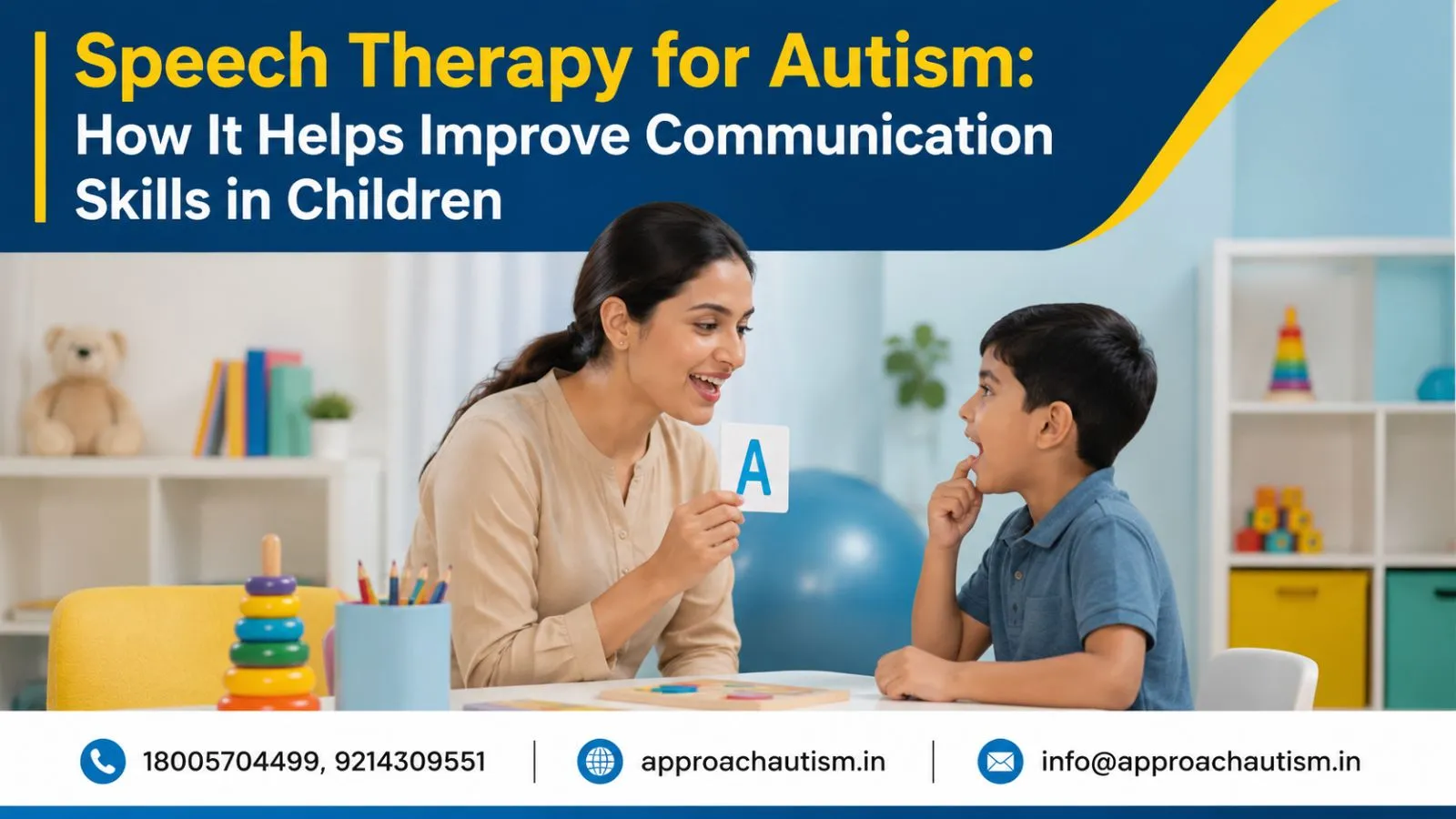
Speech Therapy for Autism: How It Helps Improve Communication Skills in Children
-
by
Approach
- No Comments on Speech Therapy for Autism: How It Helps Improve Communication Skills in Children
Speech therapy plays a vital role in helping children with autism improve their communication abilities, express their needs, and develop meaningful social interactions. Many children with Autism Spectrum Disorder (ASD) experience challenges in speech, language understanding, and social communication. These difficulties can affect daily life, learning, and relationships.
Speech therapy for autism focuses on building communication skills step by step, based on each child’s unique strengths and challenges. With early intervention and consistent support, children can improve both verbal and non-verbal communication, leading to greater independence and confidence.
This guide explains what speech therapy is, why it is important, the signs that indicate a need for therapy, and how parents can support communication development at home.
Understanding Speech Therapy for Autism
Speech therapy is a structured intervention designed to improve communication skills in children who have difficulty speaking, understanding language, or interacting socially. For children with autism, therapy is customized to match developmental levels and specific communication needs.
The main goal is not just speech production but also helping children understand language, express emotions, and interact effectively with others.
What is Speech Therapy and Why is it Important for Autism?
Speech therapy focuses on improving both verbal and non-verbal communication skills. For children with autism, it is especially important because communication challenges are one of the core characteristics of the condition.
Speech therapy helps children:
- Develop spoken language skills
- Understand instructions and questions
- Use gestures and expressions effectively
- Improve social interaction abilities
- Build functional communication for daily needs
For example, a child who struggles to ask for water or express discomfort may learn alternative ways to communicate through structured therapy sessions.
Common Communication Challenges Faced by Children with Autism
Children with autism may experience a variety of communication difficulties, which can range from mild to severe.
Common challenges include:
- Delayed speech development
- Limited vocabulary usage
- Difficulty forming sentences
- Repetitive or echolalic speech
- Trouble understanding social language
These challenges may affect how children interact with family members, teachers, and peers, making early support essential.
How Speech Therapy Supports Language Development
Speech therapy supports language development through structured learning techniques that gradually build communication skills.
It focuses on:
- Strengthening vocabulary
- Improving sentence formation
- Enhancing listening skills
- Encouraging conversational abilities
- Supporting comprehension of language
Therapists use play-based and interactive methods to make learning engaging and effective for children.
Signs That a Child with Autism May Need Speech Therapy
Recognizing early signs of communication delay can help parents seek timely intervention. Speech therapy is recommended when children show persistent difficulties in speech or language development.
Delayed Speech and Limited Vocabulary Development
One of the most common signs is delayed speech development compared to peers.
Indicators include:
- Not speaking first words at expected age
- Limited vocabulary for age group
- Difficulty combining words into sentences
- Slow progress in language development
While speech delay alone does not confirm autism, it should be evaluated when combined with other developmental concerns.
Difficulty Expressing Needs, Feelings, and Ideas
Children with autism may struggle to express what they want or feel.
Common signs include:
- Trouble asking for basic needs
- Limited emotional expression
- Frustration due to communication gaps
- Difficulty describing thoughts or experiences
These challenges can often lead to behavioral responses when children are unable to communicate effectively.
Challenges with Understanding and Responding to Communication
Understanding language is just as important as speaking it.
Children may show:
- Difficulty following instructions
- Trouble responding to their name
- Limited understanding of questions
- Delayed response during conversations
Speech therapy helps improve both receptive (understanding) and expressive (speaking) language skills.
Benefits of Speech Therapy for Children with Autism
Speech therapy provides long-term developmental benefits that support communication, learning, and social interaction.
With consistent intervention, children often show meaningful improvements in daily functioning and confidence.
Improving Verbal and Non-Verbal Communication Skills
One of the primary benefits of speech therapy is improving overall communication ability.
It helps children:
- Speak more clearly
- Use appropriate words
- Understand gestures and facial expressions
- Develop alternative communication methods
Even non-verbal children can learn effective ways to communicate using structured techniques.
Developing Social Communication and Interaction Skills
Speech therapy also focuses on social communication, which is often challenging for children with autism.
It helps them:
- Start and maintain conversations
- Take turns while speaking
- Understand social cues
- Build peer interaction skills
These improvements help children engage more comfortably in social environments like school and community settings.
Building Confidence in Everyday Conversations
As communication skills improve, children often become more confident in expressing themselves.
Speech therapy supports:
- Reduced communication frustration
- Increased participation in conversations
- Better emotional expression
- Improved self-esteem
Confidence in communication plays a major role in overall development and independence.
Speech Therapy Techniques Used for Autism Support
Speech therapists use a variety of structured and interactive techniques to support communication development.
These methods are tailored based on the child’s abilities and learning style.
Language Development Activities and Exercises
Therapists use targeted exercises to build language skills step by step.
Common activities include:
- Picture identification exercises
- Word repetition practice
- Storytelling sessions
- Vocabulary-building games
- Listening and response tasks
These activities help children gradually improve understanding and expression of language.
Communication Games and Social Interaction Activities
Play-based learning is highly effective for children with autism.
Examples include:
- Role-playing conversations
- Turn-taking games
- Interactive storytelling
- Group communication activities
These exercises help children learn social communication in a natural and engaging way.
Alternative Communication Methods for Non-Verbal Children
For children who are non-verbal or have limited speech, alternative communication methods are used.
These may include:
- Picture Exchange Communication System (PECS)
- Sign language support
- Communication boards
- Assistive communication devices
These tools help children express their needs effectively while developing communication skills over time.
How Parents Can Support Speech Development at Home
Parental involvement plays a crucial role in reinforcing speech therapy progress. Consistent support at home can significantly improve communication outcomes.
Creating a Positive Communication Environment
A supportive environment encourages children to communicate without fear or pressure.
Parents can:
- Speak slowly and clearly
- Encourage eye contact naturally
- Respond positively to attempts to communicate
- Avoid correcting too harshly
A calm and encouraging environment builds confidence in communication.
Daily Activities to Encourage Language Skills
Everyday routines can be used to develop language skills naturally.
Helpful activities include:
- Reading books together
- Naming objects during play
- Singing simple songs
- Asking simple questions
- Encouraging choice-making
These activities make language learning part of daily life.
Importance of Consistency Between Therapy and Home Practice
Consistency between therapy sessions and home practice is essential for progress.
It helps:
- Reinforce learned skills
- Improve retention of language
- Build routine-based learning
- Accelerate communication development
When parents and therapists work together, children show more stable and meaningful improvements.
Conclusion
Speech therapy is a powerful intervention for children with autism, helping them develop essential communication and social skills. By improving both verbal and non-verbal communication, therapy supports emotional expression, learning, and daily interaction.
With early intervention, structured therapy, and consistent parental involvement, children can make significant progress in communication and build greater independence in everyday life.
FAQs
1. What age should a child start speech therapy for autism?
Speech therapy can begin as early as 18 months if communication delays are noticed, and early intervention is highly beneficial.
2. Can speech therapy help non-verbal children with autism?
Yes. Non-verbal children can learn communication using alternative methods like PECS, gestures, and communication devices.
3. How long does speech therapy take to show results?
Results vary, but consistent therapy over months typically shows gradual improvement in communication skills.
4. Is speech therapy enough for autism treatment?
Speech therapy is important but often works best when combined with occupational and behavioral therapy.
5. How can parents support speech therapy at home?
Parents can support progress by encouraging daily communication, reading together, using simple language, and practicing therapy activities at home.