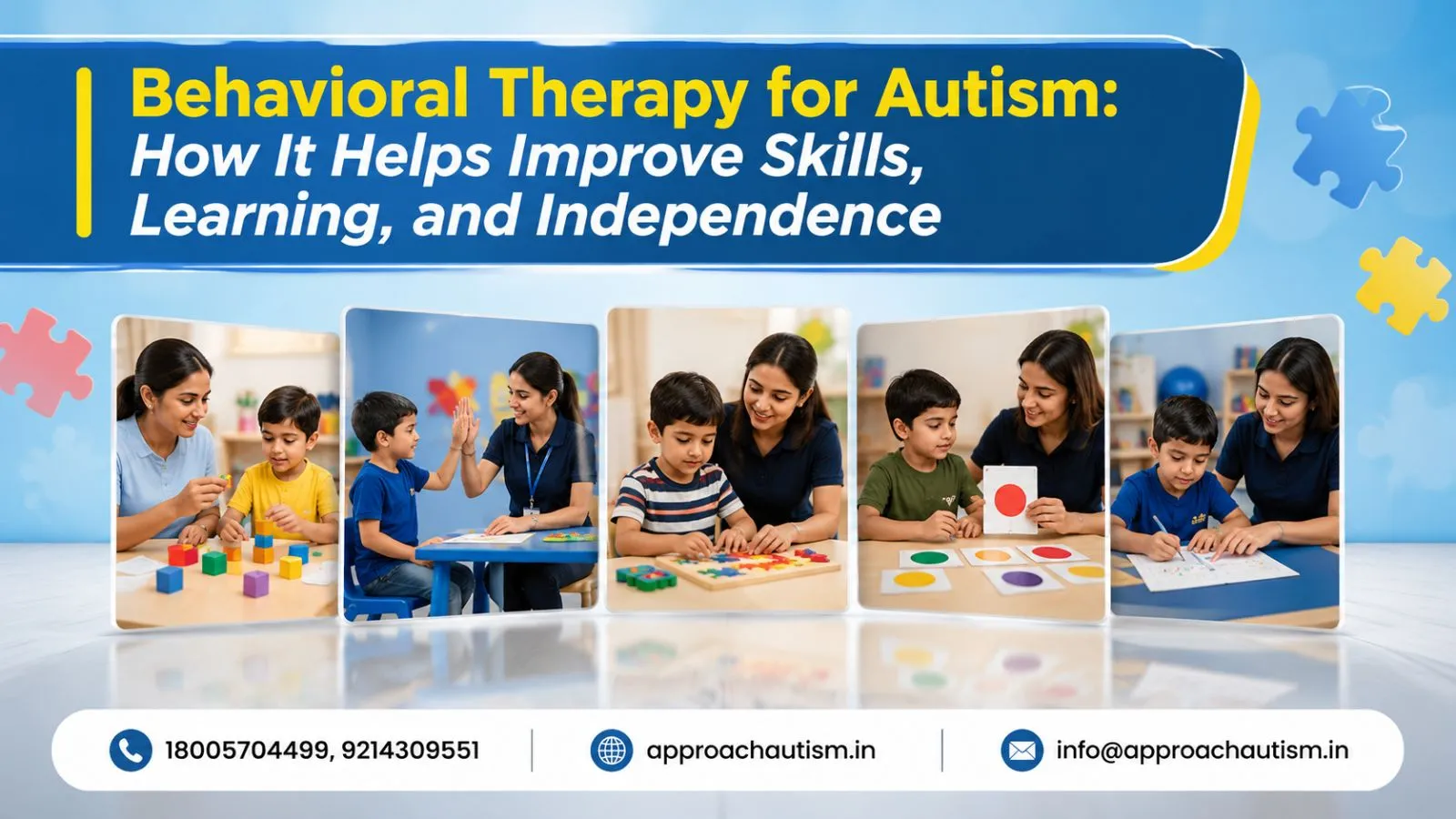
Behavioral Therapy for Autism: How It Helps Improve Skills, Learning, and Independence
-
by
Approach
- No Comments on Behavioral Therapy for Autism: How It Helps Improve Skills, Learning, and Independence
Behavioral therapy is one of the most widely used and effective interventions for children with Autism Spectrum Disorder (ASD). It focuses on improving communication, learning abilities, behavior patterns, and daily life skills through structured teaching methods and positive reinforcement.
Behavioral therapy for autism helps children develop meaningful skills that support independence, reduce challenging behaviors, and improve social interaction. Since autism affects each child differently, therapy is always tailored to individual needs and developmental levels.
This guide explains how behavioral therapy works, common behavioral challenges in autism, its benefits, techniques used, and the important role parents play in supporting long-term progress.
Understanding Behavioral Therapy for Autism
Behavioral therapy is a structured approach that focuses on understanding behavior patterns and teaching positive alternatives. It helps children learn new skills by breaking tasks into small, manageable steps and reinforcing positive actions.
The primary goal is to improve everyday functioning and help children develop skills needed for communication, learning, and independence.
What is Behavioral Therapy and How Does It Work?
Behavioral therapy is based on the principle that behavior can be learned and modified over time through reinforcement and practice.
It works by:
- Identifying behavior patterns
- Encouraging positive behaviors
- Reducing challenging behaviors
- Reinforcing learning through repetition
- Teaching step-by-step skills
For example, a child may be taught how to request an object instead of crying or showing frustration. Over time, positive behaviors replace unwanted behaviors through consistent reinforcement.
Why Behavioral Therapy is Used for Children with Autism
Children with autism often experience challenges in communication, behavior regulation, and social interaction. Behavioral therapy helps address these areas in a structured and measurable way.
It is used because it:
- Provides clear learning structure
- Supports skill development
- Improves communication abilities
- Helps manage behavioral challenges
- Encourages independence
This makes it one of the most effective early intervention strategies for autism support.
How Behavioral Therapy Supports Positive Development
Behavioral therapy supports overall development by teaching children how to respond appropriately in different situations.
It helps improve:
- Learning readiness
- Social interaction skills
- Emotional control
- Daily life routines
- Communication abilities
With consistent practice, children gradually develop habits that support long-term independence and confidence.
Common Behavioral Challenges in Autism
Children with autism may show a variety of behavioral patterns that affect daily functioning. Behavioral therapy helps understand and manage these challenges effectively.
Managing Repetitive Behaviors and Routines
Repetitive behaviors are common in autism and may include physical actions or strict routines.
Examples include:
- Repeating hand movements
- Lining up objects
- Insisting on fixed routines
- Repeating words or phrases
These behaviors often provide comfort or predictability but may interfere with learning or flexibility.
Behavioral therapy helps children gradually adapt to change while maintaining emotional stability.
Understanding Emotional Regulation and Meltdowns
Many children with autism struggle with emotional regulation, leading to intense emotional reactions or meltdowns.
Common triggers include:
- Sensory overload
- Changes in routine
- Communication difficulties
- Frustration or confusion
Behavioral therapy teaches coping strategies such as calming techniques, structured responses, and alternative communication methods to reduce emotional distress.
Improving Attention, Learning, and Social Responses
Attention and focus challenges can impact learning and social development.
Children may:
- Have difficulty staying focused
- Struggle with instructions
- Respond inconsistently in social situations
- Become easily distracted
Therapy helps improve attention span, listening skills, and appropriate social responses through structured reinforcement.
Benefits of Behavioral Therapy for Children with Autism
Behavioral therapy provides long-term developmental benefits that help children improve essential life skills and independence.
Developing Communication and Social Skills
One of the key benefits is improved communication ability.
Behavioral therapy helps children:
- Express needs effectively
- Improve verbal and non-verbal communication
- Engage in social interactions
- Understand social cues
Better communication leads to improved relationships with family, teachers, and peers.
Building Positive Behaviors and Daily Habits
Behavioral therapy focuses on replacing challenging behaviors with positive habits.
It supports:
- Following instructions
- Completing daily routines
- Developing discipline
- Building structured habits
These improvements help children function more independently in daily life.
Increasing Independence in Everyday Activities
Independence is a major goal of behavioral therapy.
Children learn to:
- Complete tasks on their own
- Manage routines
- Make simple decisions
- Participate in daily activities
This increases confidence and reduces reliance on constant assistance.
Behavioral Therapy Techniques Used for Autism Support
Behavioral therapists use structured and evidence-based techniques to teach skills and manage behavior.
Each technique is adapted based on the child’s unique needs and developmental level.
Positive Reinforcement and Skill Building Strategies
Positive reinforcement is one of the most effective techniques used in behavioral therapy.
It involves:
- Rewarding desired behaviors
- Encouraging repetition of positive actions
- Motivating learning through encouragement
For example, a child may receive praise or rewards for completing a task independently.
Behavior Modification and Learning Techniques
Behavior modification focuses on reducing unwanted behaviors and replacing them with appropriate ones.
It includes:
- Identifying triggers
- Teaching alternative responses
- Gradual behavior shaping
- Consistent reinforcement strategies
This structured approach helps children learn appropriate ways to respond in different situations.
Individualized Therapy Plans Based on Child Needs
Every child with autism has different strengths and challenges. Therefore, therapy plans are fully customized.
Individualized plans consider:
- Communication level
- Behavioral patterns
- Learning ability
- Sensory needs
- Developmental goals
This ensures therapy is effective and meaningful for each child.
Role of Parents in Supporting Behavioral Therapy
Parents play a critical role in reinforcing behavioral therapy outside of clinical sessions. Consistent support at home helps strengthen learning outcomes.
Creating Consistency Between Therapy and Home Environment
Consistency is key to successful behavioral therapy.
Parents can:
- Follow therapist guidelines
- Maintain similar routines
- Reinforce learned behaviors
- Avoid conflicting instructions
A consistent environment helps children understand expectations more clearly.
Encouraging Positive Behaviors at Home
Parents can support progress by encouraging good behavior in daily life.
This includes:
- Praising positive actions
- Encouraging independence
- Setting clear expectations
- Using simple instructions
Positive reinforcement at home strengthens therapy outcomes.
Tracking Progress and Supporting Long-Term Development
Monitoring progress helps identify improvements and areas that need further support.
Parents can:
- Observe behavioral changes
- Maintain progress notes
- Communicate with therapists
- Adjust home strategies as needed
This collaborative approach ensures continuous developmental growth.
Conclusion
Behavioral therapy is a powerful and structured approach that helps children with autism improve communication, behavior, learning abilities, and independence. By focusing on positive reinforcement and individualized strategies, it supports meaningful developmental progress.
When combined with early intervention and strong parental involvement, behavioral therapy can significantly improve a child’s ability to manage daily life, interact socially, and develop essential skills for long-term independence.
FAQs
1. What is behavioral therapy for autism?
Behavioral therapy is a structured intervention that teaches positive behaviors and reduces challenging behaviors through reinforcement techniques.
2. How does behavioral therapy help children with autism?
It improves communication, learning skills, emotional regulation, and independence in daily activities.
3. At what age should behavioral therapy start?
It is most effective when started early, often during early childhood after developmental concerns are identified.
4. How long does behavioral therapy take to show results?
Progress varies, but consistent therapy over time leads to gradual and noticeable improvement.
5. Can parents apply behavioral therapy techniques at home?
Yes. Parents can reinforce therapy strategies at home to support consistent learning and better outcomes.