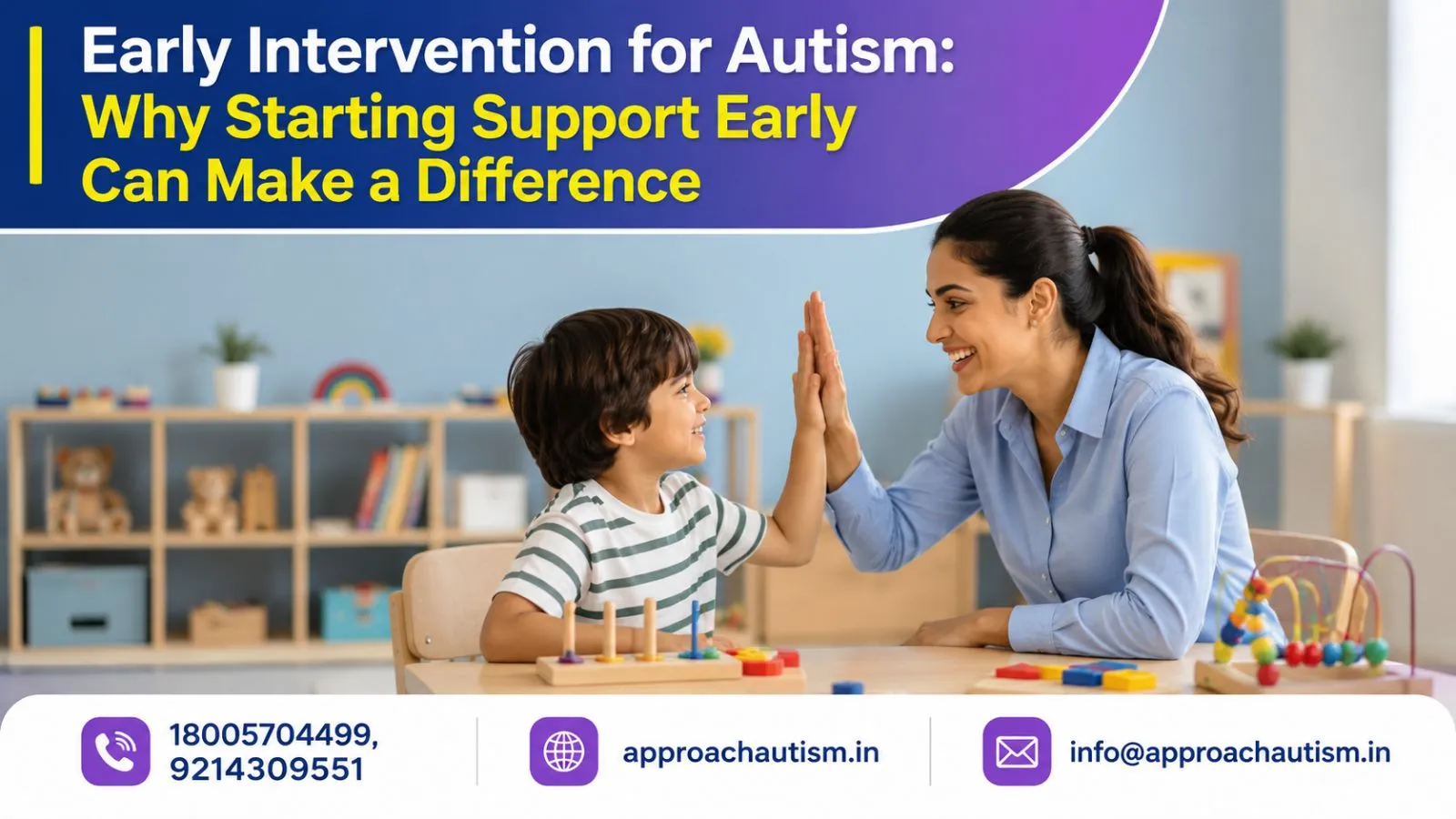
Early Intervention for Autism: Why Starting Support Early Can Make a Difference
-
by
Approach
- No Comments on Early Intervention for Autism: Why Starting Support Early Can Make a Difference
Understanding Early Intervention in Autism
Early intervention is a structured approach that focuses on identifying developmental challenges early and providing targeted support through therapy and learning programs.
It is designed to help children build foundational skills during the most critical period of brain development.
What is Early Intervention for Children with Autism?
Early intervention refers to a combination of therapies and educational strategies designed to support children with autism during early childhood.
It helps children:
- Improve communication skills
- Develop social interaction abilities
- Enhance cognitive and learning skills
- Build behavior regulation
- Gain independence in daily activities
For example, a child who struggles to speak or interact may receive speech and behavioral therapy to improve communication and social engagement.
Why the Early Years Are Important for Child Development
The first few years of life are the most important for brain development. During this time, children learn essential communication, social, and motor skills.
Early years are important because:
- Brain development is highly flexible
- Learning happens at a rapid pace
- Habits and behaviors are easily shaped
- Early support improves long-term outcomes
Intervening during this stage allows children to build strong developmental foundations.
How Early Intervention Supports Learning and Growth
Early intervention supports learning by using structured and play-based methods tailored to each child’s needs.
It helps:
- Strengthen attention and focus
- Improve learning abilities
- Encourage communication development
- Support emotional regulation
- Build daily living skills
Children who receive early support often show steady progress across multiple developmental areas.
Signs That a Child May Benefit from Early Intervention
Recognizing early signs of developmental delay is essential for timely support. Early identification allows children to receive appropriate therapy before challenges become more significant.
Delayed Speech and Communication Challenges
Speech and communication delays are often among the first signs noticed by parents.
Indicators include:
- Delayed first words
- Limited vocabulary for age
- Difficulty forming sentences
- Reduced response to name
These signs may indicate the need for speech therapy and early developmental support.
Difficulty with Social Interaction and Play Skills
Social challenges are another key indicator of developmental concerns.
Children may show:
- Limited eye contact
- Difficulty playing with peers
- Preference for solitary play
- Reduced interest in social interaction
Early intervention helps improve social engagement and play-based learning skills.
Delays in Learning and Daily Living Activities
Some children may also show delays in basic learning and self-care activities.
Examples include:
- Difficulty following instructions
- Delayed self-care skills
- Trouble adapting to routines
- Slower developmental milestones
Early therapy helps children develop essential life skills step by step.
Benefits of Early Intervention Programs for Autism
Early intervention provides long-term developmental benefits by addressing challenges at an early stage.
It creates a strong foundation for communication, behavior, and independence.
Improving Communication and Language Skills
One of the major benefits of early intervention is improved communication ability.
It helps children:
- Develop speech and language skills
- Understand instructions
- Express needs effectively
- Improve non-verbal communication
Early speech support often leads to better long-term language development.
Developing Social, Cognitive, and Behavioral Skills
Early intervention supports overall development across multiple areas.
It helps children:
- Build social interaction skills
- Improve attention and focus
- Learn appropriate behaviors
- Develop problem-solving abilities
These skills are essential for school readiness and daily functioning.
Supporting Independence and Confidence in Children
As children develop new skills, their confidence and independence improve.
Early intervention helps:
- Build self-care abilities
- Encourage decision-making skills
- Reduce dependency on caregivers
- Improve self-confidence
This leads to better participation in home, school, and social environments.
Key Therapies Included in Autism Early Intervention
Early intervention programs often include multiple therapies working together to support overall development.
Each therapy targets specific developmental areas.
Role of Speech Therapy in Early Development
Speech therapy helps children improve communication and language skills.
It focuses on:
- Speech development
- Language understanding
- Social communication
- Expressing needs and emotions
Early speech therapy can significantly improve communication outcomes.
Importance of Occupational Therapy and Sensory Support
Occupational therapy helps children develop daily living skills and manage sensory challenges.
It supports:
- Self-care activities
- Sensory regulation
- Motor skill development
- Daily routine participation
This improves independence and comfort in daily life.
Behavioral Therapy for Skill Development
Behavioral therapy focuses on teaching positive behaviors and reducing challenging ones.
It helps children:
- Develop learning habits
- Improve attention and focus
- Build positive behavior patterns
- Enhance independence
This structured approach supports overall developmental progress.
How Parents Can Support Early Intervention at Home
Parents play a vital role in reinforcing early intervention strategies and supporting consistent development.
Home support helps strengthen therapy outcomes.
Creating a Supportive Learning Environment
A structured and supportive environment encourages learning and comfort.
Parents can:
- Maintain consistent routines
- Provide a calm environment
- Use simple instructions
- Encourage communication
A stable environment improves learning and emotional regulation.
Practicing Skills Through Daily Activities and Play
Daily routines can be used as learning opportunities.
Parents can:
- Encourage interactive play
- Read books together
- Practice communication during activities
- Teach self-care tasks step by step
Play-based learning makes development more natural and engaging.
Working Together with Therapists for Better Outcomes
Collaboration between parents and therapists is essential for progress.
Parents should:
- Follow therapy guidance
- Share progress updates
- Practice recommended activities
- Stay consistent with routines
This teamwork leads to better long-term developmental results.
Conclusion
Early intervention for autism is one of the most effective ways to support a child’s development during the most critical stages of growth. By addressing communication, behavior, learning, and daily living skills early, children can achieve meaningful progress and build a strong foundation for the future.
With the right combination of therapies, structured support, and parental involvement, early intervention can significantly improve independence, confidence, and overall quality of life.
FAQs
1. What is early intervention for autism?
Early intervention is a set of therapies and support programs designed to help children with autism develop essential skills during early childhood.
2. When should early intervention start?
Early intervention should ideally begin as soon as developmental delays or autism signs are noticed.
3. Why is early intervention important?
It helps improve communication, behavior, learning abilities, and long-term independence.
4. What therapies are included in early intervention?
Common therapies include speech therapy, occupational therapy, and behavioral therapy.
5. Can parents help in early intervention?
Yes. Parents play a crucial role by reinforcing therapy strategies and supporting learning at home.