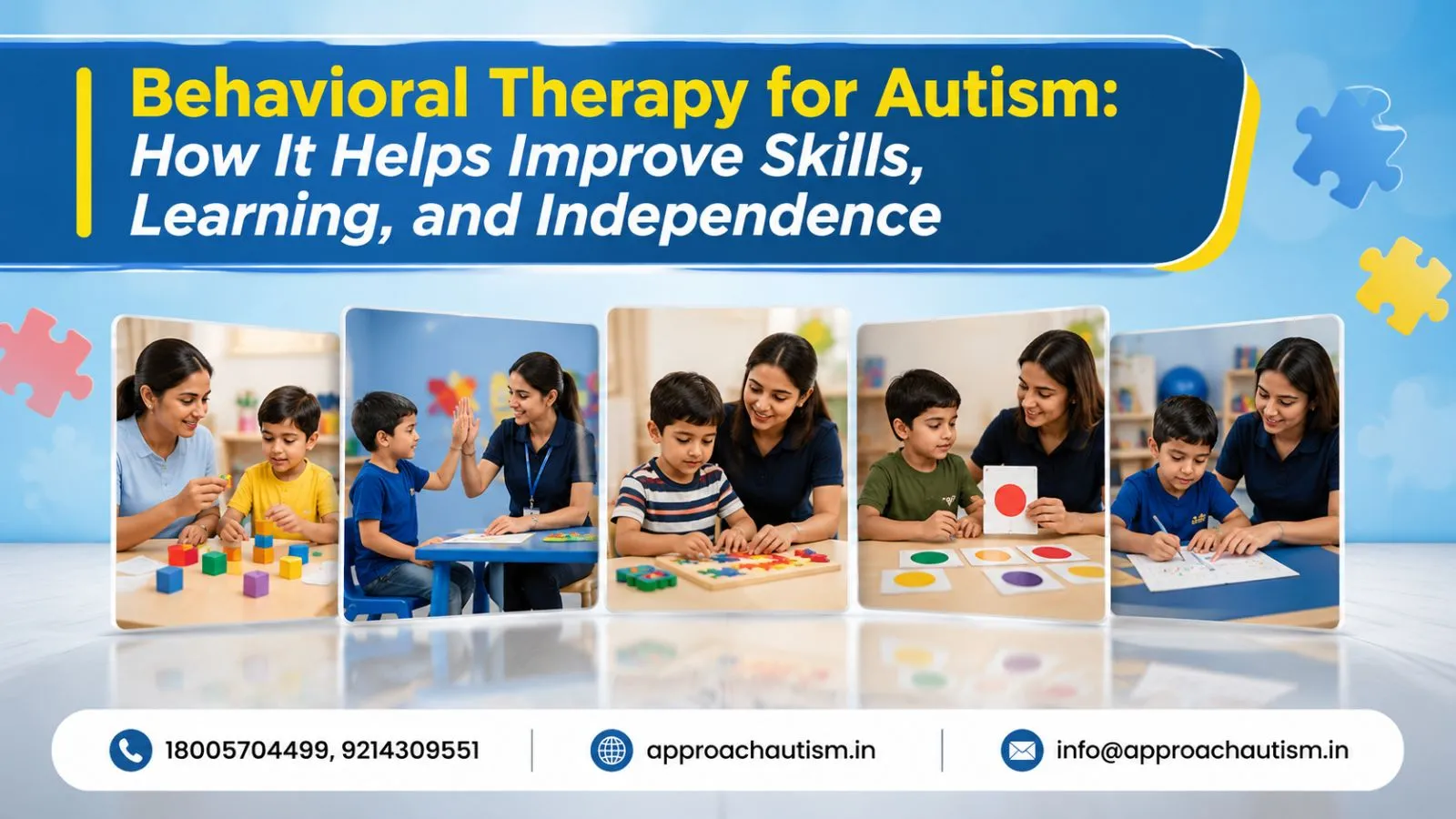
Behavioral Therapy for Autism: How It Helps Improve Skills, Learning, and Independence
-
by
Approach
- No Comments on Behavioral Therapy for Autism: How It Helps Improve Skills, Learning, and Independence
Behavioral therapy for autism helps children with Autism Spectrum Disorder (ASD) develop practical skills related to communication, learning, social interaction, and everyday activities. It uses structured teaching, positive reinforcement, observation, and individualised strategies to support meaningful progress.
Autism affects every child differently. Some children may need support communicating their needs, while others may benefit from strategies for managing transitions, developing independence, or participating in social situations. Effective behavioural intervention considers these differences rather than expecting every child to learn in the same way.
Parents, caregivers, and qualified professionals can work together to identify useful goals, understand the reasons behind challenging situations, and create supportive learning environments. This guide explains how behavioural therapy works, common challenges, evidence-informed techniques, and ways families can support progress at home.
Understanding Behavioral Therapy for Autism and Its Benefits
What Is Behavioral Therapy and How Does It Work?
Behavioral therapy is an approach that examines how behaviour relates to a person’s environment, experiences, communication, and learning. For autistic children, interventions may focus on developing functional skills, encouraging communication, and reducing behaviours that interfere with safety, comfort, or participation in daily activities.
A therapist may break a complicated task into smaller steps, demonstrate what to do, provide prompts when needed, and gradually reduce assistance as the child learns. Positive reinforcement can encourage a child to repeat a useful skill when the experience is motivating and appropriate for them.
For example, a child who finds it difficult to request a favourite toy may learn to communicate the request through speech, gestures, pictures, or an assistive communication device. The aim is to help the child express their needs more effectively, not simply to make them follow instructions.
Why Behavioral Therapy Can Help Children with Autism
Behavioural interventions can support several developmental areas when selected according to the child’s needs and delivered appropriately. Evidence-based approaches may help children develop communication, adaptive behaviour, social skills, and learning abilities.
Potential goals include:
- Communicating needs, preferences, and discomfort.
- Learning self-care and everyday living skills.
- Participating in play and educational activities.
- Managing difficult transitions with appropriate support.
- Developing safer ways to respond to challenging situations.
There is no single intervention that works equally well for every child. Progress depends on individual goals, the quality of support, the child’s circumstances, and collaboration between caregivers and professionals.
Common Behavioral Challenges in Autism and How to Understand Them
Repetitive Behaviors, Routines and Sensory Differences
Repetitive movements, repeated words, and strong preferences for familiar routines are common characteristics of autism. These behaviours may help a child regulate sensory experiences, express excitement, or feel more comfortable in an unpredictable environment.
Not every repetitive behaviour needs to be changed. If a movement is harmless and helps the child feel comfortable, allowing it may be more appropriate than trying to stop it. Support may be needed when a behaviour creates a safety concern, causes injury, or significantly interferes with activities the child wants or needs to participate in.
Therapists and parents can identify situations that cause discomfort and consider practical adjustments. Visual schedules, advance warnings before transitions, quieter environments, and predictable routines may help some children feel more secure.
The goal is to improve comfort, participation, and flexibility where useful, while respecting the child’s individual needs and communication style.
Emotional Regulation, Meltdowns and Communication Difficulties
Some autistic children experience intense distress when they cannot communicate a need, encounter overwhelming sensory input, or face unexpected changes. A meltdown may reflect distress rather than deliberate disobedience.
Understanding what happens before, during, and after a difficult situation can help families identify possible triggers. Parents and professionals should also consider whether pain, tiredness, hunger, anxiety, or another unmet need may be contributing.
Helpful strategies may include offering a quiet space, using simple language, reducing unnecessary demands during distress, and teaching alternative ways to ask for help or a break. Communication supports should remain available even when a child is upset.
If challenging behaviour is frequent, severe, or poses a safety risk, a qualified professional can assess the situation and develop an individualised support plan. Behaviour should be understood in context rather than addressed through punishment alone.
Behavioral Therapy Techniques and Individualised Intervention Plans
Positive Reinforcement, Skill Building and Applied Behavior Analysis
Applied Behavior Analysis (ABA) is one approach that uses principles of learning and behaviour to teach skills and assess progress. ABA-based interventions vary in their methods, structure, intensity, and goals, so parents should ask how a particular programme will meet their child’s needs.
Positive reinforcement involves following a useful behaviour with something the child values, making that behaviour more likely to occur again. Depending on the child, reinforcement might involve praise, access to a favourite activity, a preferred toy, or a natural outcome such as receiving help after requesting it.
Other techniques may include:
- Task analysis: Breaking a complex activity into smaller, achievable steps.
- Prompting and fading: Providing assistance initially and reducing it as skills develop.
- Naturalistic teaching: Practising skills through play and everyday activities.
- Functional communication training: Teaching a more effective way to communicate a need that may otherwise be expressed through challenging behaviour.
- Visual supports: Using pictures, schedules, or written cues to make expectations easier to understand.
For example, a child learning to put on shoes may first practise sitting in the right place, positioning each shoe, and completing individual steps with support. Assistance can be adjusted as the child develops the skill.
Techniques should be selected by appropriately trained professionals, with attention to the child’s comfort, assent, communication, and personal goals.
Individualised Behavioral Therapy Plans for Every Child
An effective plan begins by understanding the child’s current abilities, support needs, interests, and priorities. A therapist may observe behaviour in different settings, speak with parents and educators, and review relevant developmental information before recommending strategies.
Goals should be specific and meaningful. Instead of measuring success only by how often a child follows instructions, a plan might focus on communicating discomfort, participating in self-care, asking for assistance, or transitioning between activities with less distress.
Progress can be reviewed through observations and relevant measures, with strategies adjusted when they are not helping. Parents should feel comfortable asking why a technique is being used, how improvement will be measured, and whether the approach respects their child’s needs.
A multidisciplinary team may include behavioural professionals, speech and language therapists, occupational therapists, special educators, and medical professionals, depending on the child’s circumstances. Coordinated support helps address communication, sensory needs, learning, and health-related factors together.
Supporting Behavioral Therapy Progress at Home and in Daily Life
The Role of Parents in Reinforcing Skills at Home
Parents can support therapy goals by creating opportunities for children to practise useful skills during familiar routines. Everyday activities such as mealtimes, play, getting dressed, and preparing for school can provide natural opportunities for communication and learning.
For example, parents can offer two meaningful choices, allow time for the child to respond, and recognise attempts to communicate. If a child is learning a new self-care skill, the family can practise one manageable step at a time instead of expecting the entire task to be completed independently.
Consistency can help, but it does not mean every interaction must become a formal teaching session. Children also need rest, free play, enjoyable family time, and opportunities to explore their interests.
Parents should discuss home strategies with the therapist to ensure that techniques are appropriate and realistic. Sharing observations about what works at home can also help professionals adjust the intervention plan.
Finding Appropriate Autism Behavioral Therapy Support in India
Families exploring behavioural therapy should look for qualified professionals who explain their methods, involve caregivers, establish individualised goals, and review progress regularly. Parents can ask about the professional’s training, the proposed intervention, session structure, communication with families, and how the programme addresses distress or safety concerns.
A suitable programme should respect the child’s dignity, support functional communication, and avoid unnecessary attempts to suppress harmless autistic characteristics. Families should be cautious about guaranteed results or claims that one therapy can cure autism.
In India, families can explore developmental services, early-intervention programmes, parent guidance, and multidisciplinary support according to their location and circumstances. Parents seeking local guidance can visit Approach Autism Society Jaipur to explore relevant autism support options in Jaipur.
The most appropriate support plan is one that addresses the child’s individual priorities and adapts as their needs change. Regular communication between parents, therapists, and educators can help maintain consistent goals across home, school, and other environments.
Conclusion
Behavioral therapy can help autistic children develop meaningful skills in communication, learning, daily living, and participation when interventions are individualised and evidence-informed. Positive reinforcement, functional communication, structured teaching, and supportive environmental adjustments may all contribute to progress.
Parents play an important role by understanding their child’s needs, practising relevant skills during everyday routines, and collaborating with qualified professionals. Progress will differ from one child to another, so goals should focus on meaningful development, well-being, and greater participation rather than conformity.
With appropriate guidance and a respectful, child-centred approach, behavioural support can help children build skills that matter in their daily lives.