Speech Therapy for Autism: How It Helps Improve Communication Skills in Children
-
by
Approach
- No Comments on Speech Therapy for Autism: How It Helps Improve Communication Skills in Children
Speech therapy for autism helps children develop communication skills that support everyday interactions, learning, and self-expression. Some autistic children experience delays in spoken language, while others speak fluently but find conversations, social cues, or understanding language in context more challenging. Every child has a different communication profile, so support should reflect their individual strengths, needs, and preferences.
Speech therapy focuses on more than speaking clearly. It can help children understand language, express their thoughts, communicate their needs, and connect with others. Some children use spoken words, while others communicate through gestures, pictures, signs, or assistive technology.
With appropriate support, meaningful communication can become easier across home, school, and community settings. This guide explains how speech therapy works, when to consider it, which activities may help, and how parents can encourage communication at home.
Understanding Speech Therapy for Autism
Speech therapy, also called speech and language therapy, supports children who have difficulties with speech, language, or social communication. For autistic children, a speech-language therapist assesses how the child understands and shares information before developing an individualized plan.
What Does Speech Therapy Focus On?
Speech therapy addresses several aspects of communication. The priorities depend on what a child can already do and what would make daily life easier.
Common areas include:
- Expressive language: Using words, sentences, gestures, or communication tools to share thoughts and needs.
- Receptive language: Understanding words, instructions, questions, and everyday conversations.
- Speech clarity: Developing clearer speech sounds when this is an appropriate goal.
- Social communication: Learning how to start interactions, share interests, take turns, and understand conversational context.
- Functional communication: Expressing choices, asking for help, refusing something, or communicating discomfort.
For example, a child who cannot easily ask for a favourite toy may learn to use a word, gesture, picture, or communication device. The aim is to help the child communicate effectively, not to require one particular way of communicating.
Why Is Speech Therapy Important for Autistic Children?
Communication difficulties can affect participation in classroom activities, family routines, play, and relationships. A child may understand more than they can express. Another child may speak in sentences but struggle to interpret indirect language or participate in back-and-forth conversations.
Speech therapy helps identify these differences and build on existing abilities. It can also help parents and teachers understand the child’s communication style.
Early assessment can be useful when concerns first appear. However, children can benefit from communication support at different ages. Families do not need to wait for a formal autism diagnosis before discussing a speech or language concern with a qualified professional.
Signs a Child May Benefit From Speech Therapy
Children develop communication skills at different rates. A single sign does not establish an autism diagnosis or automatically mean that therapy is necessary. However, persistent concerns deserve attention, particularly when they affect everyday communication.
Delayed Speech and Language Development
Some children use their first words later than expected, have a limited vocabulary, or find it difficult to combine words into phrases. Others may repeat words or phrases they have heard, a pattern known as echolalia.
Echolalia can serve a communication purpose, such as requesting something, processing language, or participating in an interaction. A therapist can assess how a child uses repeated language and identify ways to expand communication when helpful.
Parents may consider an assessment if a child:
- Uses few words or does not develop language as expected.
- Finds it difficult to understand everyday instructions.
- Struggles to communicate wants, choices, or discomfort.
- Has difficulty using language in different situations.
- Loses previously acquired communication skills.
Loss of previously developed language or other skills should be discussed promptly with a healthcare professional.
Difficulty Expressing Needs and Understanding Others
Some children become distressed when they cannot make themselves understood. They may cry, withdraw, move an adult towards an object, or use other actions to communicate.
These responses should not automatically be treated as deliberate misbehaviour. They may indicate an unmet need, discomfort, confusion, or a communication barrier.
A speech-language assessment can explore how the child understands language, initiates communication, responds to others, and uses gestures or other communication methods. It can also identify whether additional assessment, such as a hearing evaluation, may be helpful.
Recognising these signs early allows families to seek appropriate guidance rather than relying on guesswork.
Benefits and Techniques of Speech Therapy for Autism
Speech therapy goals should be practical, individualised, and meaningful to the child. Progress may look different for each child. One child may develop longer spoken sentences, while another may become more confident using pictures or a communication device.
Improving Everyday and Social Communication
Speech therapy activities can help children develop skills they can use in real situations. Depending on their needs, sessions may focus on requesting, commenting, answering questions, understanding instructions, or communicating feelings.
Examples include:
- Practising how to ask for help during a task.
- Learning words associated with familiar objects and activities.
- Using simple conversations during play.
- Practising turn-taking in games when appropriate.
- Understanding common expressions and everyday directions.
- Learning ways to express agreement, refusal, and preferences.
Social communication goals should support meaningful interaction without forcing children to hide harmless autistic traits. For example, making eye contact should not be treated as a requirement for successful communication. A child can listen and participate in their own comfortable way.
Speech Therapy Activities for Autism
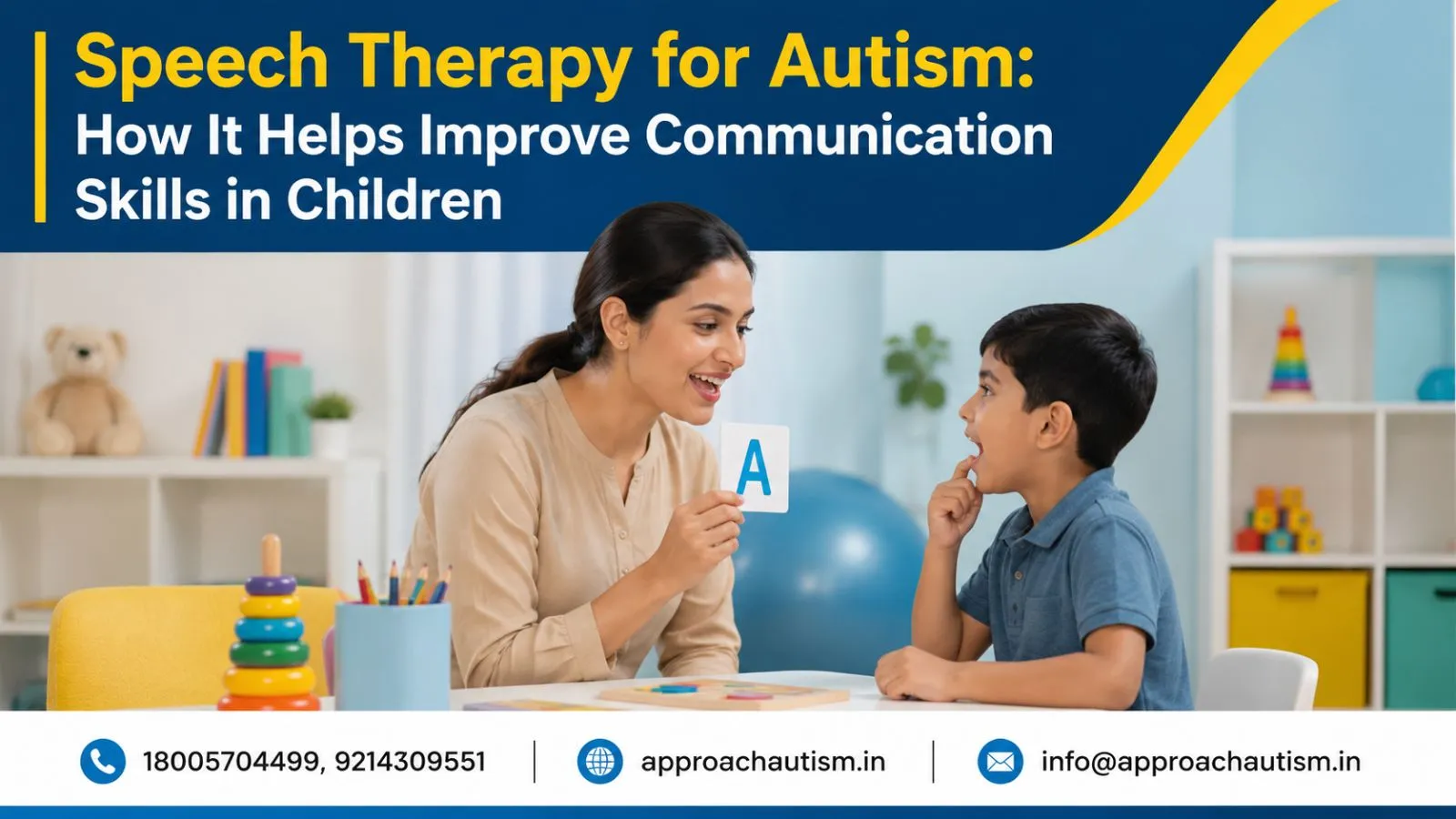
Play-based learning can create natural opportunities to practise communication. A therapist may use activities that match the child’s interests, sensory preferences, and current abilities.
Useful examples include:
Picture and object matching: Pair familiar objects with pictures or words. This can help build vocabulary and connect language with everyday experiences.
Shared book reading: Look at pictures together, name familiar items, describe actions, and allow the child time to respond. Responses may include pointing, gestures, sounds, words, or communication devices.
Choice-making games: Offer two meaningful options, such as a ball or a puzzle. Encourage the child to indicate their preference in any reliable way.
Songs and action games: Repetitive songs, movement games, and familiar routines can create predictable opportunities to practise words, gestures, and turn-taking.
Everyday conversation practice: Talk during meals, dressing, shopping, or play. Describe what is happening and respond to the child’s attempts to communicate instead of turning every interaction into a test.
Therapists may also work on understanding questions, forming sentences, or clarifying speech sounds. Activities should be adapted to the child’s developmental level rather than applied in exactly the same way to every child.
Alternative Communication Methods for Children With Limited Speech
Not every child communicates through spoken language. Augmentative and alternative communication (AAC) provides additional ways to express thoughts, needs, preferences, and feelings.
AAC may include:
- Gestures and natural signs.
- Picture cards and communication boards.
- Picture-based communication systems, including PECS when suitable.
- Electronic devices or applications that produce spoken messages.
A speech-language therapist can help determine which options suit the child’s abilities and daily environment. Some children use AAC alongside speech, while others rely on it as their main communication method.
AAC should not be withheld until a child reaches a particular age or demonstrates specific speech skills. It can provide access to communication while language continues to develop. Families and teachers should also learn how to use the chosen system consistently so the child can communicate with different people.
How Parents Can Support Speech Development at Home
Parents and caregivers play an important role in helping children use communication skills in everyday situations. Home practice does not need to feel like a formal lesson. Small, responsive interactions throughout the day can create useful opportunities for learning.
Simple Daily Activities to Encourage Communication
Choose activities your child enjoys and follow their interests. Keep language clear, allow enough processing time, and respond to all meaningful communication attempts.
Try these strategies:
- Talk during routines: Name actions and objects while preparing meals, getting dressed, or playing.
- Read together: Describe pictures and pause to give your child time to respond in their preferred way.
- Offer choices: Let your child choose a snack, toy, song, or activity using speech, gestures, pictures, or AAC.
- Follow their interests: Join an activity they enjoy and build communication around it.
- Model useful language: If your child says “ball,” you might respond with “big ball” or “roll ball,” without demanding that they repeat you.
- Respect communication attempts: Acknowledge pointing, signs, facial expressions, and communication devices as well as spoken words.
Avoid asking repeated questions or insisting on perfect pronunciation during every interaction. Children need opportunities to communicate without feeling pressured. Give them time to process what they hear and formulate a response.
Working With a Speech Therapist and Tracking Progress
Regular communication between parents and the therapist helps make therapy relevant to everyday life. Ask which goals are being addressed, how to practise them naturally, and which strategies are most useful when your child becomes confused or frustrated.
Progress can include more than an increase in spoken words. A child might begin requesting help, expressing refusal clearly, understanding familiar instructions, using AAC independently, or participating more comfortably in an activity.
Keep expectations realistic. The pace of progress varies according to individual needs, the support available, and other developmental factors. If a strategy is causing distress or does not seem helpful, discuss adjustments with the therapist.
Families looking for individualised guidance can explore the services and resources available through an autism support centre in Jaipur and discuss suitable communication support for their child.
Conclusion
Speech therapy for autism can support children’s ability to understand language, express themselves, and participate in everyday interactions. Its focus may include spoken language, social communication, speech clarity, or alternative communication methods, depending on each child’s needs.
Parents can reinforce these skills through play, daily routines, shared reading, and responsive conversations. Collaboration with a qualified speech-language therapist helps ensure that strategies remain practical and appropriate.
Most importantly, communication is about being understood and having a voice. Whether a child communicates through speech, gestures, pictures, or assistive technology, the goal is to support meaningful expression, choice, connection, and participation in daily life.