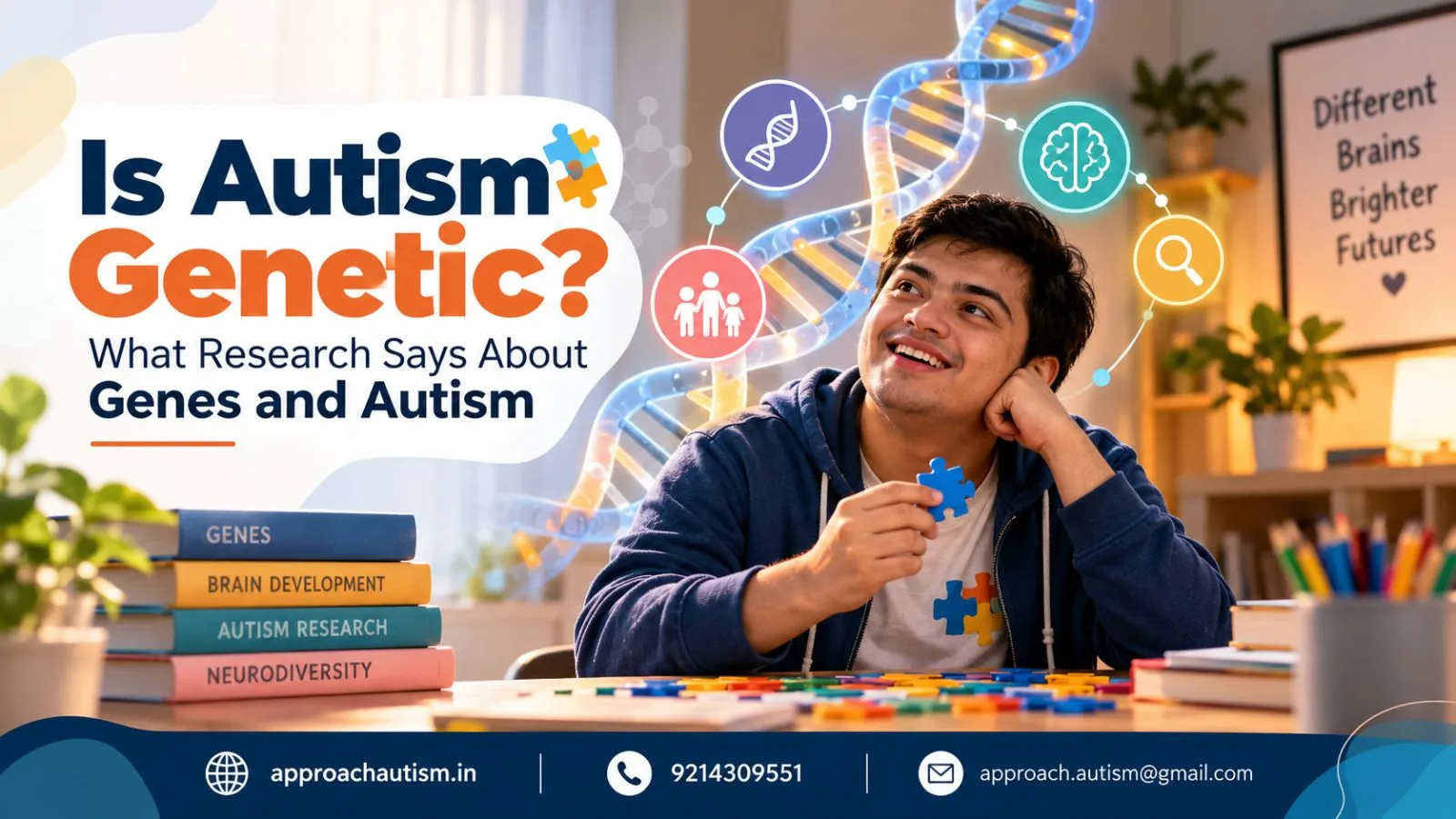
Is Autism Genetic? What Research Says About Genes and Autism
 Approach
Is autism genetic? Research indicates that genetics plays a substantial role in autism spectrum disorder (ASD). However, autism does not usually result from one single gene or a simple inheritance pattern. Many genetic variations can contribute to a person’s likelihood of being autistic, and other developmental and biological factors may also play a role.
Autism is a neurodevelopmental condition that affects how a person communicates, interacts, processes information, and experiences the world. Its characteristics and support needs vary considerably between individuals.
Understanding the connection between genes and autism can help families make informed decisions about developmental assessments, genetic testing, and appropriate support. It can also clarify why autism may occur in families with no known history of the condition.
Understanding Autism Genetics
What Does Genetic Mean in Autism?
Genes are sections of DNA that carry instructions involved in how the body develops and functions. People inherit genetic material from their biological parents, but genetic changes can also occur for the first time during the formation of an egg or sperm or early development.
In autism, genetic influence means that differences in DNA can contribute to the likelihood of developing autistic characteristics. These differences may involve one gene, changes in chromosomes, or the combined effects of many genetic variations.
A genetic contribution does not mean autism follows a predictable pattern in every family. People who share some genetic variations may have different developmental experiences and support needs.
Genetics is also not the same as destiny. A person’s genetic profile cannot usually predict every aspect of their development or determine their future abilities.
Is Autism Genetic or Inherited?
Autism has a strong genetic component, but genetic influence and direct inheritance are not the same thing. Some genetic variations associated with autism can be inherited from a parent. Others occur spontaneously and may not have been present in either parent.
In many cases, autism is associated with the combined influence of multiple genetic variations rather than one identifiable genetic change. This makes inheritance more complex than a simple parent-to-child pattern.
A child can therefore be autistic even when no other family member has received an autism diagnosis. Equally, having autistic relatives does not mean that every child in the family will be autistic.
Researchers continue to investigate how genetic differences influence brain development and why their effects vary between individuals.
How Genes Influence Autism and Family Risk
Common Genetic Variations and Rare Genetic Changes
Research suggests that many common genetic variations, each with a small effect, can combine to influence autism likelihood. These variations are widespread in the population and do not individually determine whether someone will be autistic.
Rare genetic changes can also contribute. In some individuals, a specific genetic change or chromosomal difference is associated with autism and may help explain additional developmental or medical characteristics.
Some changes are inherited, while others arise for the first time in the affected individual. Even when a genetic difference is identified, its effects can vary. A finding does not always explain every characteristic a person experiences.
This is why autism genetics cannot be reduced to searching for one universal cause.
Can Autism Run in Families?
Yes. Autism can occur more frequently within some families because relatives share genetic material. A family history of autism may increase the likelihood that another family member will also be autistic, but it does not make that outcome certain.
Research has consistently identified a greater likelihood of autism among siblings of autistic children compared with the general population. However, the likelihood varies between families and depends on several factors. A healthcare professional or genetic counsellor can help explain individual family circumstances.
Autism may also appear across generations. For example, a child may be diagnosed even though a parent or grandparent was never assessed. Some relatives may have had similar characteristics without receiving a formal diagnosis.
Family patterns are useful information during developmental assessment, but they cannot establish or rule out autism on their own.
Can a Child Develop Autism Without a Family History?
Yes. The absence of a known family history does not rule out autism.
A child may have genetic variations that were not previously identified in the family. A genetic change may have arisen spontaneously, or multiple inherited variations may contribute together without any relative having a recognised diagnosis.
Autism is also influenced by a range of developmental and biological factors that researchers are still studying. No single explanation applies to every autistic person.
Parents should not assume that they caused autism through their parenting or everyday interactions. Autism is a complex neurodevelopmental condition, and its development cannot usually be traced to one simple event or decision.
If a child shows developmental differences, the appropriate next step is to discuss those observations with a qualified healthcare professional rather than trying to determine the cause from family history alone.
Genetic Conditions, Testing, and What Research Can Tell Us
Genetic Conditions Associated With Autism
Some autistic people also have an identifiable genetic or chromosomal condition. These are sometimes described as syndromic forms of autism, particularly when autism occurs alongside other physical, developmental, or medical characteristics.
Examples include fragile X syndrome and tuberous sclerosis complex. These conditions have their own genetic mechanisms and may involve features beyond autism.
Other individuals may have chromosomal differences, such as a missing or duplicated section of genetic material. These differences can sometimes be identified through clinical genetic testing.
However, not every autistic person has a known genetic syndrome. Many people do not receive a specific genetic explanation for their autism, even after assessment.
Identifying an associated condition may help healthcare professionals understand additional medical needs, consider appropriate monitoring, and provide more informed genetic counselling for the family.
Can Genetic Testing Identify Autism?
Genetic testing can identify certain genetic changes associated with autism or other developmental conditions. Depending on a person’s medical history and clinical presentation, a professional may consider tests such as chromosomal microarray analysis, testing for a specific genetic condition, or sequencing-based tests.
Testing may be particularly relevant when autism occurs alongside developmental delay, intellectual disability, unusual physical features, seizures, or a family history that suggests a genetic condition.
However, genetic testing cannot independently confirm or rule out autism in every person. There is no single genetic test that identifies all cases of autism.
An autism diagnosis is based on developmental history and a comprehensive assessment of relevant characteristics. Genetic testing may provide additional information, but it does not replace that assessment.
Families considering testing can discuss its potential benefits, limitations, possible results, and implications with an appropriately qualified healthcare professional or genetic counsellor.
Genes, Environment, and Common Myths About Autism
Genes are an important part of autism research, but they are not the entire explanation. Scientists continue to investigate how genetic influences interact with other biological and developmental factors.
Several common myths can make this subject confusing:
- Myth: One gene causes all autism. Research indicates that autism has many possible genetic pathways, and no single gene explains every case.
- Myth: Autism is always inherited directly from a parent. Some associated genetic changes are inherited, while others arise spontaneously. Many cases involve complex genetic contributions.
- Myth: Genetic risk means autism is certain. Genetic variations can influence likelihood without determining an individual’s outcome.
- Myth: No family history means a child cannot be autistic. Autism can occur even when no relatives are known to be autistic.
Genetic research helps explain some aspects of autism, but it cannot predict every person’s developmental profile, strengths, or support needs. Genetic findings should be interpreted in the context of an individual’s clinical history rather than used to make assumptions about their future.
Families seeking guidance about developmental assessment and support can explore resources from an autism support centre in Jaipur and discuss individual concerns with qualified professionals.
Conclusion
Autism has a strong genetic component, but its causes are complex. Multiple genetic variations, rare genetic changes, and chromosomal differences can contribute to autism, and these influences may be inherited or arise spontaneously.
A family history can provide useful information, but autism can occur without any known autistic relatives. Similarly, having an autistic family member does not mean that another person will necessarily be autistic.
Genetic testing may help identify certain associated conditions and provide information for families, but it cannot diagnose every case of autism. Developmental assessment remains essential when autism is suspected.
The most useful approach is to understand genetics as one part of a broader picture. Regardless of whether a specific genetic explanation is identified, autistic people benefit from respectful understanding, individualised support, and access to services that meet their developmental and everyday needs.