Autism vs ADHD: How Their Signs Can Overlap and Differ
 Approach
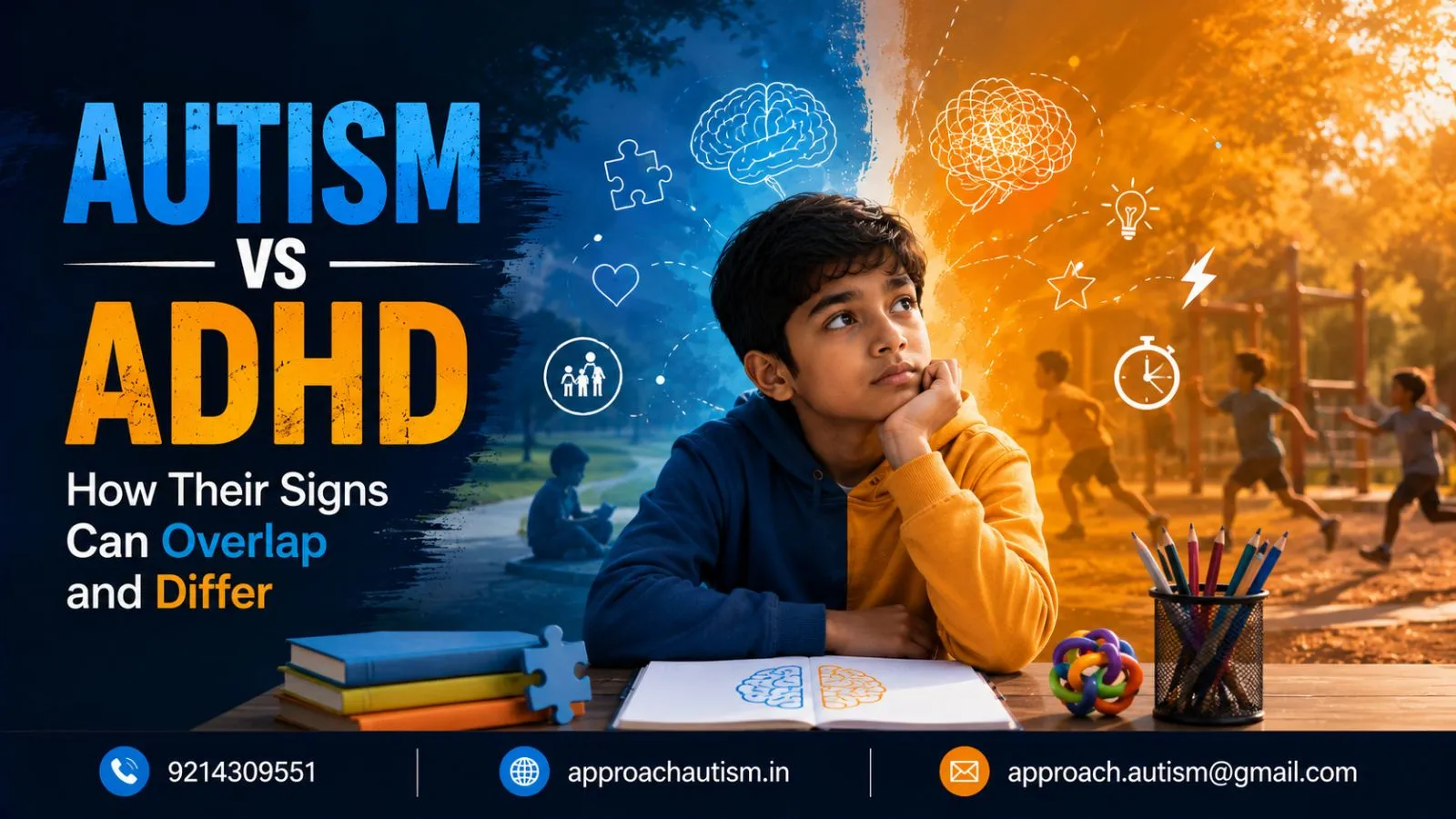
Autism vs ADHD is a common topic for parents, caregivers and adults seeking to understand neurodevelopmental differences. Autism and attention-deficit/hyperactivity disorder (ADHD) are distinct conditions. However, some of their characteristics can look similar.
Autism is associated with differences in social communication, sensory experiences, routines and repetitive behaviours. ADHD mainly involves ongoing difficulties with attention regulation and/or hyperactivity and impulsivity. Both can affect learning, relationships and daily activities.
For example, a child may struggle to finish a classroom task because they find it difficult to maintain attention. Another child may lose focus because the classroom feels noisy or overwhelming. The behaviour may look similar, but the reasons can differ.
Understanding these differences can help families recognise individual needs and seek suitable support. However, no single behaviour can confirm a diagnosis. A qualified professional considers the person’s developmental history and everyday experiences.
Autism vs ADHD: Understanding the Main Differences
Social Communication and Interaction
Social communication differences are a key characteristic of autism. An autistic person may interpret conversations, facial expressions, gestures or unspoken social expectations differently. They may also prefer direct communication or need more time to process social information.
ADHD can affect social interactions in other ways. A person may interrupt, forget parts of a conversation or respond before someone finishes speaking. These difficulties may relate to impulsivity or attention regulation.
However, these patterns are not absolute. Autistic people can communicate in many different ways, and people with ADHD can also experience social communication difficulties.
The important distinction is the broader pattern of characteristics, rather than one isolated social behaviour.
Attention, Repetitive Behaviours and Routines
Attention can work differently for autistic people and people with ADHD. Some autistic individuals focus deeply on particular interests or find it difficult to switch between activities. Others may experience attention difficulties for different reasons.
ADHD commonly involves difficulty regulating attention. A person may struggle with repetitive tasks, forget instructions or move between activities before finishing them. They may also focus intensely on something highly engaging.
Autism is also associated with restricted interests and repetitive behaviours. These may include repeated movements, a preference for familiar routines or strong interest in particular topics. Repetitive movements can serve different purposes, including comfort and sensory regulation.
People with ADHD may also enjoy routines, develop strong interests or repeat certain activities. Therefore, these features should be understood in context.
An autistic person may find unexpected changes difficult, while a person with ADHD may struggle to maintain a routine consistently. Someone with both conditions may experience both challenges.
Similarities Between Autism and ADHD
Executive Function and Emotional Regulation
Executive functions are mental skills that help people plan, organise, remember instructions, manage time and begin tasks. Both autism and ADHD can affect these skills.
For example, a student may understand an assignment but struggle to organise the steps needed to complete it. An adult may know what needs to be done but find it difficult to prioritise tasks or manage deadlines.
Emotional regulation can also be challenging for some people with either condition. Stress, frustration, unexpected changes or overwhelming environments may make emotions harder to manage.
These experiences do not look the same for everyone. Some people need reminders or planning tools, while others benefit from extra processing time, predictable routines or adjustments to their environment.
Practical support should address the person’s actual difficulties. It should not rely on assumptions based only on a diagnosis.
Sensory Experiences and Social Challenges
Sensory differences are an important part of autism for many individuals. Certain sounds, lights, textures, smells or crowded environments may feel uncomfortable. Some people may also seek movement, pressure or other sensory experiences.
People with ADHD may also report sensory sensitivities. However, sensory differences alone cannot distinguish one condition from the other.
Social situations can present challenges for both groups, too. An autistic person may find indirect communication or unwritten social rules difficult to interpret. A person with ADHD may miss details because of distraction or interrupt without intending to do so.
When both conditions occur together, these experiences may overlap. For example, a busy social gathering may create sensory discomfort while also making it difficult to follow several conversations.
Understanding the person’s experience is more helpful than assuming all autistic people or all people with ADHD share the same traits.
Autism and ADHD Across Different Ages
Signs in Children and Teenagers
Autism and ADHD may become noticeable during childhood, although their characteristics vary. Autistic children may show differences in social communication, play, sensory responses, routines or repetitive behaviours. Children with ADHD may have persistent difficulties with attention, impulse control or activity levels.
Teenagers face greater academic and social demands. As a result, some challenges may become more noticeable during secondary school.
For example, an autistic teenager may need support with unpredictable schedules or overwhelming social environments. A teenager with ADHD may need help organising assignments, remembering deadlines or managing time.
However, one behaviour does not establish a diagnosis. Difficulty sitting still, avoiding an activity or struggling at school can have several possible explanations.
If concerns persist across everyday settings, families can discuss them with a qualified healthcare professional. A detailed assessment can help identify the teenager’s strengths, needs and appropriate support options.
Autism and ADHD in Adults
Both conditions can affect adult life, including employment, relationships, household responsibilities and independent living.
An autistic adult may prefer clear communication, experience sensory discomfort in busy workplaces or find unexpected changes challenging. An adult with ADHD may struggle with scheduling, task completion, organisation or sustained attention.
Some adults develop strategies to manage these challenges without knowing why certain situations feel difficult. Others may recognise their characteristics after a child or family member receives an assessment.
A person’s achievements do not automatically rule out either condition. Adults can succeed at work, maintain relationships and live independently while still benefiting from appropriate support.
Assessment for adults considers current experiences and, where possible, developmental history. This helps professionals understand longstanding patterns rather than relying on present-day behaviour alone.
Can a Person Have Both Autism and ADHD?
Yes. Autism and ADHD can occur together. A person may experience characteristics associated with both conditions, and each can affect daily life in different ways.
For example, someone may prefer predictable routines but struggle to organise or follow them because of attention and planning difficulties. They may also experience sensory differences alongside impulsivity or distractibility.
The informal term AuDHD is often used to describe the co-occurrence of autism and ADHD. However, it is not a separate formal diagnosis.
Having a few characteristics of both conditions does not necessarily mean a person has both. A qualified professional must assess the overall pattern and determine whether the diagnostic criteria are met.
Assessment and Support for Individual Needs
Why Accurate Identification Matters
A thorough assessment can help distinguish autism, ADHD or their co-occurrence. Professionals consider developmental history, communication, attention, behaviour, sensory experiences and the effect of these characteristics on everyday life.
They also consider other possible explanations for the person’s difficulties. For children, information from caregivers and teachers may help build a clearer picture. Adults may discuss childhood experiences alongside current challenges.
An online checklist can provide general information, but it cannot confirm a diagnosis. If you have concerns about yourself or your child, seek advice from a qualified healthcare professional with relevant assessment experience.
Accurate identification can help people understand their experiences and explore suitable support. It can also prevent important needs from being overlooked.
Practical Support at Home, School and Work
Support should reflect the person’s strengths, preferences and specific challenges. There is no single approach that works for everyone.
For autistic individuals, useful adjustments may include clear communication, preparation for changes, sensory accommodations and predictable routines. For people with ADHD, support may include reminders, task breakdowns, planning tools and strategies for managing attention.
When both conditions occur together, support may need to address several needs at once. For example, a student may benefit from a written task list and a quieter place to work.
Families can also explore guidance through an autism support centre in Jaipur when seeking information about autism-related support services.
The goal is not to make everyone behave in the same way. Instead, appropriate support should reduce unnecessary barriers, encourage participation and help each person develop skills that matter to them.
Understanding autism and ADHD begins with recognising that similar behaviours can have different explanations. With careful assessment, individualised support and greater awareness, families and individuals can make more informed decisions about their needs and everyday lives.