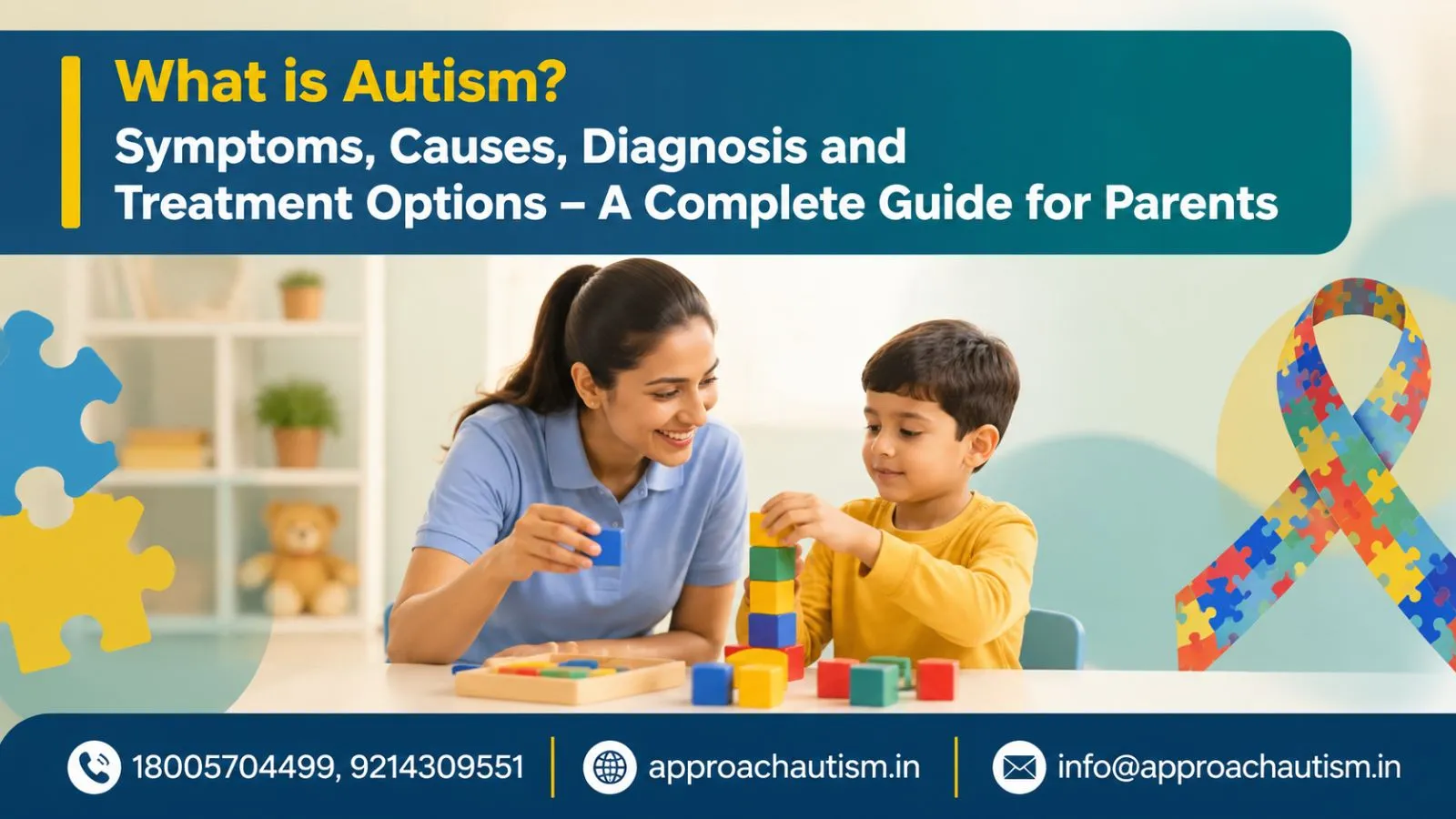
What is Autism? Symptoms, Causes, Diagnosis and Treatment Options – A Complete Guide for Parents
-
by
Approach
- No Comments on What is Autism? Symptoms, Causes, Diagnosis and Treatment Options – A Complete Guide for Parents
What is autism? Autism Spectrum Disorder (ASD) is a neurodevelopmental condition that influences how a person communicates, interacts socially, learns, and experiences the world. It is not an illness or the result of poor parenting. Instead, autism reflects differences in brain development, communication, behaviour, and sensory processing.
For parents, understanding autism symptoms, possible causes, diagnosis, and available support can make it easier to recognise developmental differences and seek appropriate guidance. Although autism is lifelong, individualised support can help children develop communication, learning, social, and daily living skills. Every child has different strengths and support needs, so the right approach should be based on the individual rather than a standard treatment plan.
Understanding Autism Spectrum Disorder and Its Characteristics
What Does Autism Mean in Children?
Autism Spectrum Disorder is a neurodevelopmental condition that commonly becomes noticeable during early childhood. It can affect social communication, interaction, behaviour, and responses to sensory experiences. Some children communicate verbally, while others use gestures, pictures, communication devices, or other methods.
Common characteristics include differences in understanding social cues, repetitive movements, strong interests, a preference for familiar routines, and sensitivity to sounds, lights, textures, or other sensations.
Autism does not look the same in every child. Some children may need substantial daily assistance, while others may require support mainly in specific situations. Their abilities can also differ across communication, learning, independence, and social interaction.
Why Is Autism Called a Spectrum Disorder?
The word spectrum describes the wide range of characteristics, abilities, and support requirements associated with autism. One child may have advanced vocabulary but find conversations difficult, while another may need additional support to communicate basic needs.
Some autistic children enjoy social interaction but find unfamiliar situations overwhelming. Others may prefer quieter environments or communicate their interest differently from their peers.
Understanding these individual differences helps parents avoid comparisons. A child’s progress should be assessed against their own developmental needs and goals. Autism can also occur alongside other conditions, including ADHD, anxiety, epilepsy, or intellectual disability, which may influence the type of support required.
Autism Symptoms, Early Signs and Possible Causes
Early Signs of Autism in Babies, Toddlers and Young Children
Recognising the early signs of autism can help families seek timely developmental assessment. Signs may appear during the first years of life, although they vary considerably between children.
Parents may notice limited use of gestures, reduced response to their name, differences in shared attention, delayed speech, or less interest in back-and-forth interaction. Other signs can include repetitive movements, lining up toys, repeating words or phrases, strong preferences for routines, and unusual reactions to everyday sounds or textures.
Not every child who shows one of these characteristics is autistic. Similarly, some autistic children develop speech and other skills within expected timeframes. A developmental assessment is particularly important if a child loses previously acquired language, social, or other skills.
Parents should discuss concerns with a qualified healthcare professional rather than waiting for every possible sign to appear.
Autism Causes, Risk Factors and Common Myths
Researchers have not identified one single cause of autism. Current evidence points to a complex combination of genetic influences and certain prenatal or early developmental factors. Family history and some pregnancy or birth-related factors may be associated with a higher likelihood of autism, but they do not determine an individual child’s outcome.
It is important to distinguish between an association and a proven cause. Autism is not caused by poor parenting, a lack of affection, or a child’s upbringing. Extensive scientific research has also found no causal link between childhood vaccines and autism.
Parents do not need to blame themselves or search for a single event that supposedly caused the condition. Understanding autism through reliable information allows families to focus on their child’s current needs, strengths, and developmental opportunities.
Autism Diagnosis and Treatment Options for Children
How Is Autism Diagnosed, and When Should Parents Seek Help?
There is no single blood test or medical scan that can diagnose autism. Autism diagnosis involves a comprehensive assessment of a child’s developmental history, social communication, behaviour, and patterns of interests or activities.
Depending on the child’s needs, the assessment may involve developmental screening, direct observation, parent interviews, communication assessments, and standardised tools. Qualified clinicians may also evaluate hearing, language development, learning, and other conditions that could influence a child’s presentation.
Autism can sometimes be reliably diagnosed by around two years of age, although some children are identified later. Parents do not need to wait for a formal diagnosis before discussing developmental concerns or seeking appropriate early support.
In India, families can begin by consulting a paediatrician or developmental specialist and asking about suitable assessment and early-intervention services. School observations and information from caregivers can also help professionals understand how a child communicates and behaves in different settings.
Autism Treatment, Therapies and Early Intervention
There is no single cure for autism, but individualised, evidence-based interventions can support development and everyday participation. The goal of autism treatment is not to make every child behave identically; it is to address individual challenges, build useful skills, support well-being, and improve quality of life.
Depending on the child’s assessment, a support plan may include:
- Speech and language therapy: Supports communication, language development, conversation, and alternative communication methods when needed.
- Occupational therapy: Helps develop daily living skills, fine-motor abilities, participation in everyday activities, and strategies for managing relevant sensory difficulties.
- Behavioural and developmental interventions: Use individualised, positive approaches to develop communication, learning, independence, and practical skills.
- Special education: Adapts learning activities, teaching strategies, and educational goals to the child’s abilities and support requirements.
- Parent guidance: Helps families practise communication and learning strategies during everyday routines at home and in the community.
Early intervention can create valuable opportunities to develop skills, but progress differs from child to child. Therapy goals should be meaningful, regularly reviewed, and adapted as needs change. Families should discuss the benefits, limitations, and suitability of each approach with qualified professionals.
Supporting a Child with Autism at Home, School and in the Community
Practical Ways Parents Can Support Development
Parents and caregivers play an important role in helping children practise skills in familiar environments. Consistent routines, clear instructions, visual schedules, and preparation for transitions may make daily activities more manageable for some children.
Follow the child’s interests to encourage interaction and learning. Allow additional processing time, recognise different communication styles, and provide access to communication aids when appropriate. If certain sounds, lights, clothing textures, or crowded environments cause distress, identify practical adjustments that make these situations more comfortable.
Celebrate progress in everyday skills, including requesting help, expressing preferences, participating in activities, or completing routines with greater independence. Avoid comparing one child’s progress with another’s.
Parents should also communicate with teachers and therapists so that strategies remain consistent across home, school, and therapy settings. Regular discussions help families identify what is working and where additional support may be useful.
Finding Appropriate Autism Support in India
Access to autism services can differ by location, availability of trained professionals, and family circumstances. Parents may need to explore developmental assessments, speech and occupational therapy, special education, parent training, and inclusive learning opportunities.
When evaluating a service provider, ask about professional qualifications, assessment procedures, individualised goals, family involvement, progress reviews, and coordination between specialists. A suitable support plan should respect the child’s dignity, communication preferences, safety, and well-being.
Families in Rajasthan can also explore local developmental support resources and learn about services offered by Approach Autism Society Jaipur, an autism care center in Jaipur. Choosing support should involve understanding the child’s needs and discussing appropriate options with qualified professionals rather than relying on promises of a guaranteed outcome.
Conclusion
Autism Spectrum Disorder affects individuals differently, and understanding its characteristics is an important first step for parents. Recognising developmental differences, seeking an appropriate assessment, and exploring suitable interventions can help children access support that reflects their strengths and needs.
There is no single pathway for every autistic child. With informed family involvement, individualised education, appropriate therapies, and inclusive environments, children can develop meaningful skills and participate more fully in everyday life. The priority is to understand each child, respect their individuality, and provide support that helps them learn, communicate, and thrive.