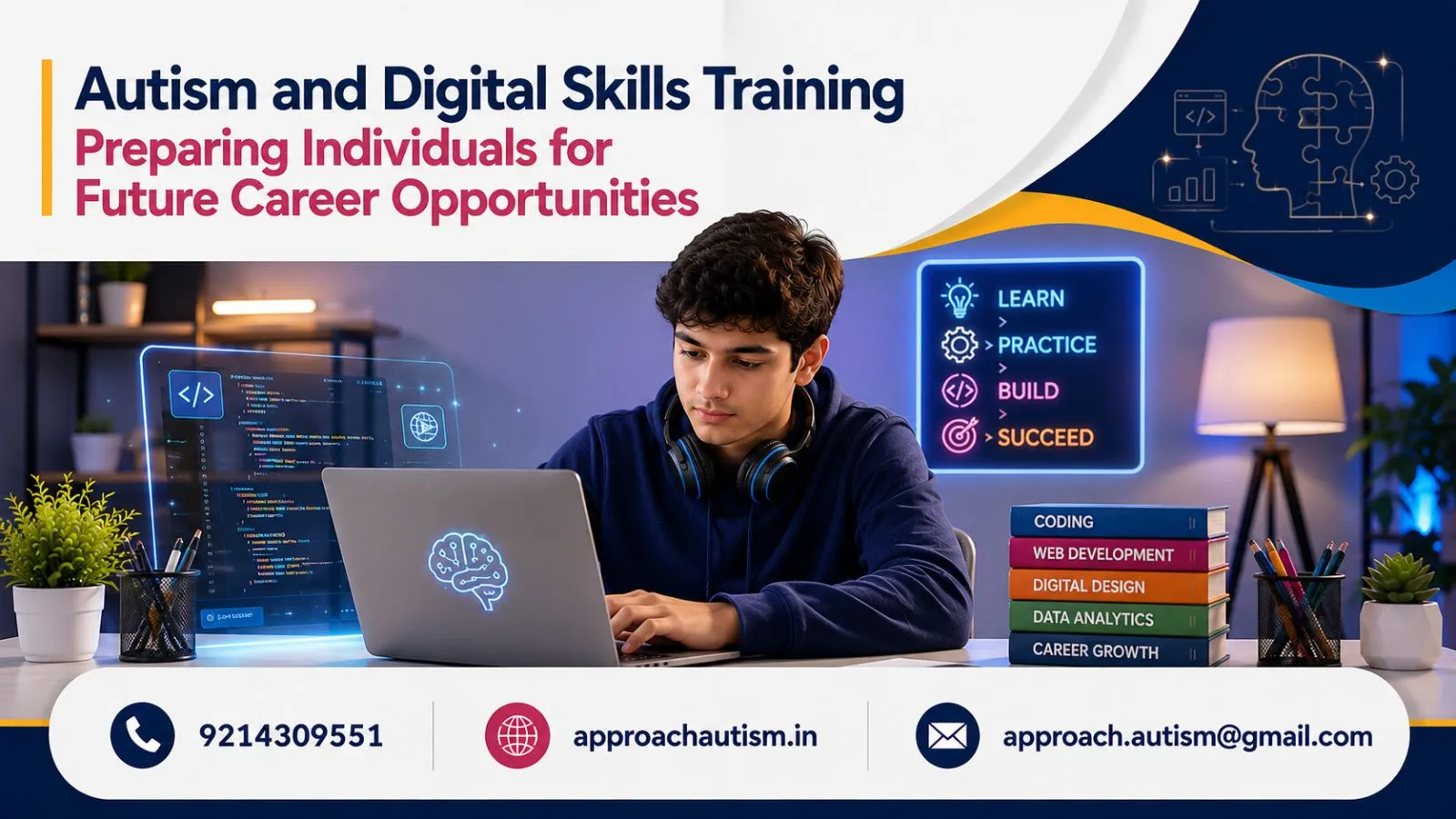
Autism and Digital Skills Training: Preparing Individuals for Future Career Opportunities
-
by
Approach
- No Comments on Autism and Digital Skills Training: Preparing Individuals for Future Career Opportunities
Technology has become an important part of education, employment, communication, and everyday life. For individuals with autism, developing digital skills can create new opportunities for learning, independence, vocational development, and career growth. With the right training approach, individuals can learn how to use computers, digital tools, creative software, and online platforms according to their abilities and interests.
Digital skills training for autism should be personalised and practical. Some individuals may benefit from learning basic computer skills, while others may be interested in digital marketing, graphic design, video editing, data-related tasks, or other technology-based careers. The objective is not to teach everyone the same skills but to identify individual strengths and provide training that supports meaningful personal and professional goals.
Structured learning, patient guidance, practical activities, and consistent support can make digital education more accessible. As individuals develop technology skills, they may become better prepared for workplace environments and future career opportunities. Digital training can also support freelancing, remote work, and other flexible employment models when these options match the individual’s interests and abilities.
Understanding Digital Skills Training for Autism Individuals
What is Digital Skills Training and Why is It Important?
Digital skills training refers to learning how to use computers, software, online platforms, digital tools, and technology safely and effectively.
For individuals with autism, digital training may begin with basic computer literacy and gradually progress toward more specialised skills.
Training may include:
- Using a computer or laptop
- Typing and keyboard skills
- Using internet browsers
- Managing files and folders
- Using email
- Working with documents and spreadsheets
- Online safety and privacy
- Using creative software
- Learning job-specific digital tools
Digital skills can be useful in both personal and professional life. Individuals may use technology to communicate, access educational resources, manage schedules, complete work tasks, or explore career interests.
The training process should consider the individual’s learning style, communication preferences, and current abilities.
How Technology Skills Support Independence and Career Growth
Technology can support greater independence in many areas of life.
For example, individuals may use digital tools to:
- Set reminders
- Manage appointments
- Communicate with others
- Search for information
- Access online learning
- Complete work assignments
- Manage personal documents
Digital skills can also support career development. Many modern workplaces use computers and online platforms for everyday tasks, even in roles that are not primarily technology-focused.
Learning technology skills can therefore help individuals become more comfortable with workplace systems.
For some individuals, specialised digital abilities may also open opportunities in areas such as creative design, digital marketing, content production, data management, or software-related work.
Role of Structured Learning in Developing Digital Abilities
A structured approach can make digital learning easier to understand.
Instead of introducing several tools at once, trainers can teach one skill at a time and provide opportunities for repeated practice.
For example, a computer training programme might begin with:
- Identifying computer components
- Learning mouse and keyboard use
- Opening and closing applications
- Creating and saving files
- Using basic software
- Completing practical assignments
Once the learner becomes comfortable with these skills, training can gradually move toward more advanced activities.
Clear instructions, demonstrations, visual guides, and practical exercises can support learning.
The training environment should also be adapted to individual sensory and communication needs where appropriate.
Benefits of Digital Skills Training for Individuals with Autism
Improving Confidence and Workplace Readiness
Learning to use digital tools can increase confidence when individuals see themselves successfully completing tasks.
Workplace readiness may involve understanding how to:
- Use email professionally
- Attend online meetings
- Organise digital files
- Complete assignments
- Follow digital instructions
- Use workplace software
Practical training can help individuals become familiar with common workplace situations before entering employment.
Confidence often develops through repeated practice. Trainers can begin with simple activities and gradually introduce more complex responsibilities.
The objective should be to help individuals recognise their abilities and become comfortable using technology in meaningful situations.
Developing Problem-Solving and Learning Skills
Digital learning can also encourage problem-solving.
When using software, individuals may need to understand how to complete a task, identify an error, or find a different way to achieve an outcome.
For example, a learner might practise:
- Finding a missing file
- Correcting a formatting issue
- Organising information
- Following a multi-step process
- Troubleshooting simple problems
These activities can help develop logical thinking and task-management skills.
However, trainers should provide appropriate support rather than expecting individuals to solve every problem independently. The level of assistance should gradually reduce as confidence and competence improve.
Creating Opportunities for Professional Growth
Digital skills can provide pathways toward different types of employment.
Depending on individual interests and abilities, potential areas may include:
- Administrative work
- Data entry
- Digital marketing
- Graphic design
- Video editing
- Content creation
- Website support
- Online customer service
These are examples rather than guaranteed career paths. Career planning should always consider the individual’s strengths, interests, qualifications, and support needs.
As digital skills develop, individuals may also explore additional certifications or advanced training that can strengthen their professional profile.
Digital Skills Programs Suitable for Autism Individuals
Basic Computer Skills and Digital Literacy
Basic digital literacy is often a useful starting point.
Training may include:
- Computer operation
- Keyboard and mouse use
- Typing practice
- Internet browsing
- Email communication
- File management
- Word processing
- Basic spreadsheets
Online safety should also be part of digital education.
Individuals can learn about:
- Strong passwords
- Protecting personal information
- Recognising suspicious messages
- Safe browsing
- Privacy settings
- Responsible online communication
These skills can support both personal independence and workplace participation.
Digital Marketing and Online Work Skills
Some individuals may have an interest in digital marketing and online business activities.
Training may introduce areas such as:
- Social media management
- Basic content creation
- Search engine optimisation
- Email marketing
- Online research
- Basic analytics
- Content scheduling
Digital marketing is a broad field, so learners can begin with specific tasks that match their abilities and interests.
For example, one individual may enjoy creating social media graphics, while another may prefer research or data-related tasks.
Practical projects can help learners understand how these skills are applied in real work environments.
Video Editing and Creative Technology Skills
Creative technology can be another area of interest.
Video editing training may include:
- Importing media files
- Cutting and arranging clips
- Adding text
- Using transitions
- Adjusting audio
- Exporting videos
Other creative skills may include graphic design, photography editing, animation, or digital illustration.
Creative training can provide opportunities for self-expression while developing technical abilities.
With experience, individuals may explore portfolio development and potential freelance or employment opportunities.
How Digital Training Supports Employment in Autism
Preparing for Technology-Based Career Opportunities
Many modern jobs require at least basic digital skills.
Technology-based training can help individuals become familiar with tools they may encounter in professional environments.
Training can focus on practical workplace activities such as:
- Completing digital assignments
- Managing files
- Communicating through email
- Using collaboration platforms
- Following online workflows
- Meeting deadlines
Career preparation should focus on realistic tasks rather than teaching technology in isolation.
For example, a learner interested in office work may benefit from practising document creation, spreadsheets, email, and digital organisation.
Someone interested in creative work may benefit more from design and video editing software.
Building Workplace Communication and Professional Skills
Digital employment often requires communication through email, messaging platforms, or online meetings.
Training can help individuals practise professional communication, including:
- Writing clear emails
- Responding appropriately to messages
- Asking for clarification
- Participating in online meetings
- Communicating task progress
Individuals can also learn how to recognise professional boundaries and understand workplace expectations.
Clear instructions from employers can make these processes easier.
Inclusive workplaces should recognise that communication styles can differ and provide reasonable support when needed.
Supporting Freelancing and Independent Work Options
Digital skills may also create opportunities for freelance or independent work.
Depending on abilities and interests, individuals may explore areas such as:
- Graphic design
- Video editing
- Content support
- Data entry
- Digital marketing
- Online research
Freelancing requires more than technical skills. Individuals may also need to learn about communication, deadlines, pricing, client expectations, and managing projects.
For some individuals, supported training can help introduce these concepts gradually.
Remote work may also provide a more comfortable environment for certain individuals, although suitability depends on personal preferences and job requirements.
Creating a Successful Learning Environment for Autism Training
Importance of Personalized Training Approaches
Every autistic individual has different learning needs, strengths, interests, and goals.
A personalised training programme can consider:
- Current digital abilities
- Preferred learning style
- Communication needs
- Sensory preferences
- Career interests
- Long-term goals
Some learners may prefer visual demonstrations, while others may learn more effectively through written instructions or hands-on practice.
Training should be flexible enough to accommodate these differences.
The goal should be meaningful skill development rather than simply completing a standard curriculum.
Supporting Learning Through Practical Activities
Practical activities can help learners understand how digital skills are used in real situations.
For example, a training programme might include projects such as:
- Creating a professional document
- Designing a simple social media post
- Editing a short video
- Organising a digital folder
- Creating a basic presentation
- Completing a simulated workplace task
Projects can help learners build confidence while creating examples of their work.
A portfolio may also become useful for individuals who want to explore creative or digital careers.
Helping Individuals Achieve Career Independence
Digital skills training can be one part of a broader pathway toward career independence.
The journey may involve:
Skill Assessment → Digital Training → Practical Projects → Vocational Preparation → Work Experience → Employment Support → Career Development
Each stage should be adapted to the individual’s goals.
Some people may need support with workplace transitions, while others may be ready to work independently after completing training.
Families, trainers, NGOs, vocational professionals, and employers can work together to create meaningful opportunities.
Career independence should not be measured only by whether someone works without support. It should also consider whether the individual has meaningful choices, appropriate workplace support, and opportunities to grow.
Final Thoughts
Digital skills training can open meaningful pathways for autistic individuals who want to develop greater independence, workplace confidence, and career opportunities. Technology is now part of many aspects of modern life, making digital literacy valuable for education, communication, employment, and everyday tasks. A personalised approach can help individuals learn skills that match their strengths and interests, whether that involves basic computer use, office applications, digital marketing, creative technology, or other specialised areas.
Structured training, practical projects, visual support, and consistent encouragement can make learning more accessible. The focus should always remain on individual goals and abilities rather than expecting every learner to follow the same career pathway. With the right training and support, digital skills can become a valuable foundation for personal development and professional growth.
Frequently Asked Questions About Autism and Digital Skills Training
1. What is digital skills training for autism?
Digital skills training for autistic individuals focuses on developing computer literacy, online safety, software skills, and other technology abilities that can support education, independence, employment, and career development.
2. Which digital skills can autistic individuals learn?
Depending on individual interests and abilities, training may include basic computer skills, office software, digital marketing, graphic design, video editing, content creation, data entry, and other technology-related skills.
3. Can digital skills help autistic individuals find employment?
Yes. Digital skills can support workplace readiness and create opportunities in roles that use technology. However, employment suitability depends on the individual’s skills, qualifications, interests, and support requirements.
4. Is online work suitable for autistic individuals?
Remote or online work may suit some autistic individuals, particularly when the work environment matches their preferences and support needs. However, suitability varies from person to person.
5. How should digital training be provided to autistic individuals?
Digital training should ideally be personalised, structured, practical, and paced according to individual learning needs. Visual supports, clear instructions, repeated practice, and real-world projects may help some learners.