Autism and Independent Living Skills: Helping Individuals Become More Self-Reliant
-
by
Approach
- No Comments on Autism and Independent Living Skills: Helping Individuals Become More Self-Reliant
Independent living is an important part of development for many autistic individuals. The level of independence a person can achieve varies from one individual to another, depending on communication abilities, learning style, sensory needs, physical abilities, and personal strengths. For some, independence may mean managing personal hygiene and preparing simple meals. For others, it may involve travelling independently, managing money, working, or living with limited support.
Independent living skills for autism focus on helping individuals participate more confidently in everyday activities and make choices about their own lives. These skills are not about expecting every autistic person to live completely independently. Instead, the goal is to provide appropriate support so each individual can develop their abilities and experience greater autonomy.
With structured teaching, practical learning opportunities, family support, and professional guidance, autistic individuals can build valuable life skills at their own pace. Early preparation and consistent practice can help make everyday activities more manageable and meaningful.
Understanding Independent Living Skills in Autism
What Are Independent Living Skills?
Independent living skills are the practical abilities people use to manage everyday life. These skills can include personal care, communication, household tasks, decision-making, safety awareness, money management, and community participation.
For autistic individuals, these skills may require additional teaching and practice. Some people may learn them naturally through observation, while others may benefit from structured instruction, visual supports, repetition, or step-by-step guidance.
Examples of independent living skills include:
- Brushing teeth and maintaining personal hygiene
- Choosing and wearing appropriate clothing
- Preparing simple meals
- Cleaning personal spaces
- Organising belongings
- Following daily schedules
- Using public transport
- Managing basic finances
- Asking for help when needed
- Understanding personal safety
The specific skills taught should depend on the individual’s age, abilities, interests, and future goals.
Why Independence is Important for Individuals with Autism
Developing independence can help autistic individuals participate more actively in their daily lives. It can provide opportunities to make choices, express preferences, and take greater control over everyday activities.
Independence does not necessarily mean doing everything without assistance. A person may still require support from parents, caregivers, professionals, or community services. The focus should be on maximising the individual’s abilities while providing the right level of support.
For example, an autistic teenager may learn to prepare their school bag independently but still need reminders about their schedule. Another individual may be able to travel independently on a familiar route but require assistance when navigating an unfamiliar location.
These small steps can contribute to greater confidence and self-reliance over time.
How Life Skills Training Supports Autism Development
Life skills training provides structured opportunities to learn practical abilities through real-world activities. Instead of learning only through theory, individuals can practise skills in situations that are relevant to their daily lives.
Training may include:
- Personal hygiene routines
- Cooking and meal preparation
- Household organisation
- Shopping skills
- Money management
- Travel training
- Communication skills
- Workplace readiness
The teaching approach should be adapted to the individual’s learning style. Visual schedules, demonstrations, role-play, task breakdowns, and repeated practice can be useful for some individuals.
The goal is to make skills understandable, practical, and achievable.
Essential Daily Living Skills for Individuals with Autism
Personal Care and Self-Management Skills
Personal care is an important area of independent living. It includes activities such as bathing, brushing teeth, dressing, grooming, and managing personal hygiene.
Some autistic individuals may experience sensory sensitivities that make certain personal care activities uncomfortable. For example, particular textures, sounds, smells, or water temperatures may create challenges.
Parents and professionals can work with the individual to identify suitable strategies. Breaking tasks into smaller steps can make routines easier to understand.
A visual checklist might show:
- Take the toothbrush.
- Apply toothpaste.
- Brush teeth.
- Rinse the mouth.
- Clean the toothbrush.
- Put it away.
With consistent practice, some individuals may gradually complete more steps independently.
Managing Daily Routines and Household Activities
Daily routines help individuals understand what is expected and what comes next. Predictability can be particularly helpful for autistic individuals who find unexpected changes challenging.
Household activities can include:
- Making the bed
- Organising personal belongings
- Washing dishes
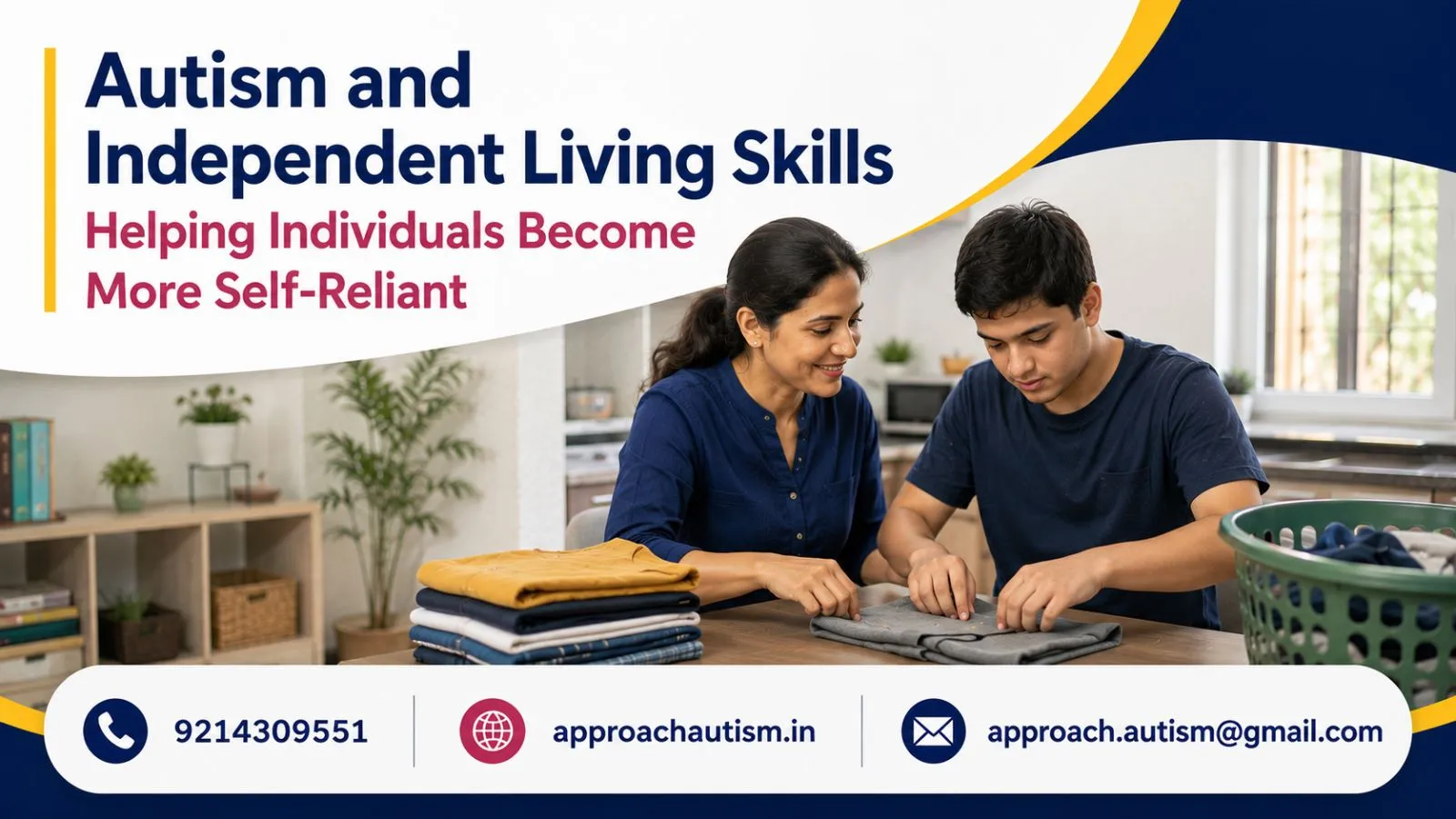
- Folding clothes
- Putting rubbish in the bin
- Preparing simple meals
- Keeping personal spaces organised
Parents can begin with simple tasks and gradually increase complexity.
For example, a child may initially learn to put toys away. Later, they may learn to organise their room or manage a simple cleaning routine.
The aim should be to provide enough support to encourage success without unnecessarily doing everything for the individual.
Developing Decision-Making and Problem-Solving Skills
Independent living also requires the ability to make decisions and respond to everyday problems.
Individuals can practise making choices in age-appropriate situations. For example, they might choose between two meals, select appropriate clothing, decide which activity to do, or plan what they need for an outing.
Problem-solving skills can also be practised through everyday scenarios.
For example:
- What should you do if you lose your belongings?
- Who can you ask for help?
- What should you do if you miss your bus?
- How can you stay safe if you feel uncomfortable?
Role-playing these situations can help individuals practise responses in a safe environment.
Challenges Autism Individuals May Face in Independent Living
Difficulty Following Daily Tasks and Routines
Some autistic individuals may have difficulty remembering multi-step activities or transitioning between tasks.
A routine that seems simple to others may involve several steps that require planning and organisation.
Visual schedules, checklists, timers, and reminders may help make routines easier to follow.
For example, a morning routine could be represented through pictures or written instructions showing each step from waking up to leaving for school or work.
The level of support should be gradually adjusted according to the individual’s progress.
Challenges with Communication and Safety Awareness
Communication differences can sometimes affect an individual’s ability to ask for help or explain a problem.
Safety awareness is another important area of independent living. Individuals may need to learn about:
- Road safety
- Stranger awareness
- Emergency situations
- Safe use of household appliances
- Personal boundaries
- Online safety
- Recognising unsafe situations
Safety education should be practical and age-appropriate. Role-play and real-world practice can help individuals understand how to respond in different situations.
Parents and professionals should also consider the individual’s communication method when teaching safety skills.
Need for Structured Support and Skill-Based Training
Some autistic individuals may benefit from structured training to develop independent living abilities. This does not mean that they cannot learn these skills. It means they may need a different teaching approach or more opportunities for practice.
Skills can be taught through:
- Step-by-step instructions
- Visual supports
- Modelling
- Repetition
- Prompting
- Positive reinforcement
- Real-life practice
Over time, support can be gradually reduced when the individual demonstrates greater confidence and ability.
How Autism Programs Help Build Independence
Life Skills Training and Practical Learning Activities
Autism-focused programmes may provide structured opportunities to practise everyday skills in a supportive environment.
Activities may include cooking, personal care, shopping, communication, household tasks, and community participation.
Practical learning allows individuals to understand how skills apply to real situations.
For example, instead of only discussing money management, an individual may practise identifying prices, making a shopping list, selecting items, paying at a shop, and checking change.
Such activities can help connect learning with everyday life.
Vocational Training for Future Career Readiness
For older teenagers and adults, vocational training can help prepare individuals for future employment and workplace participation.
Training may focus on:
- Workplace communication
- Following instructions
- Time management
- Task completion
- Workplace behaviour
- Team participation
- Job-specific skills
Some individuals may benefit from supported employment or customised vocational programmes based on their strengths and interests.
Career readiness should focus on helping individuals identify meaningful opportunities rather than following a one-size-fits-all approach.
Building Confidence Through Real-Life Experiences
Confidence often grows through successful experiences. When individuals have opportunities to practise skills in real-world situations, they may become more comfortable handling everyday activities.
A person who learns to shop independently may gradually become more confident in other community activities. Someone who learns to prepare a simple meal may become interested in learning additional cooking skills.
Progress should be recognised at every stage.
The objective is not to compare one individual with another but to help each person develop skills that are meaningful for their own life.
Supporting Independent Living at Home and Beyond
How Parents Can Encourage Independence
Parents and caregivers can play an important role in supporting independence at home.
Instead of completing every task for the individual, parents can provide opportunities to participate.
For example, a child can:
- Choose their clothes
- Help prepare meals
- Organise school materials
- Put away personal belongings
- Participate in household chores
Parents can provide prompts when necessary and gradually reduce assistance as skills develop.
It is also important to allow enough time for the individual to complete tasks. Rushing to finish an activity may unintentionally reduce opportunities for learning.
Creating a Supportive and Structured Environment
A structured environment can make everyday activities easier to understand.
Parents may use:
- Visual schedules
- Written checklists
- Labels
- Timers
- Routine charts
- Step-by-step instructions
However, structure should be flexible enough to help individuals cope with changes over time.
Individuals can gradually practise handling small changes in routines. This may help build flexibility and prepare them for situations that cannot always be predicted.
The right balance between structure and flexibility depends on the individual’s needs.
Preparing Individuals with Autism for a Better Future
Preparing for adulthood should begin well before adulthood. Families and professionals can gradually identify skills that an individual may need for future goals.
These goals may include:
- Further education
- Employment
- Community participation
- Financial skills
- Travel
- Personal care
- Social relationships
- Supported or independent living
Planning should be individualised and realistic. Not every person will have the same goals or level of independence.
Some individuals may live independently, while others may require supported living arrangements or ongoing assistance. Both pathways can provide meaningful and fulfilling lives when the right support is available.
The focus should always be on helping individuals develop their strengths, make choices, and participate as fully as possible in their communities.
Final Thoughts
Developing independent living skills can help autistic individuals build greater confidence, autonomy, and participation in everyday life. Independence looks different for everyone, and the goal should not be to measure success against a single standard. For one individual, independence may involve managing personal care, while another may focus on employment, travel, cooking, or making daily choices.
With structured teaching, patient guidance, and regular opportunities to practise, individuals can develop practical skills at their own pace. Families can support this process by encouraging participation, allowing individuals to try tasks independently, and providing appropriate assistance when needed. Small achievements can become important steps towards greater self-reliance and a more fulfilling life.
Frequently Asked Questions About Autism and Independent Living Skills
1. What are independent living skills in autism?
Independent living skills include practical abilities such as personal care, household tasks, communication, decision-making, safety awareness, money management, and community participation.
2. Can autistic individuals learn independent living skills?
Yes. Many autistic individuals can develop independent living skills with appropriate teaching, practice, structured support, and opportunities to use those skills in real-life situations. Progress varies from person to person.
3. How can parents teach life skills at home?
Parents can break activities into smaller steps, use visual schedules or checklists, demonstrate tasks, provide opportunities for practice, and gradually reduce assistance as the individual becomes more confident.
4. Why is life skills training important for autism?
Life skills training can help individuals participate more actively in everyday activities, develop self-confidence, make choices, and build practical abilities that support greater autonomy.
5. What role do autism programmes play in developing independence?
Autism programmes may provide structured training in daily living, communication, social participation, vocational preparation, and practical activities. Support should be adapted to each individual’s needs and goals.