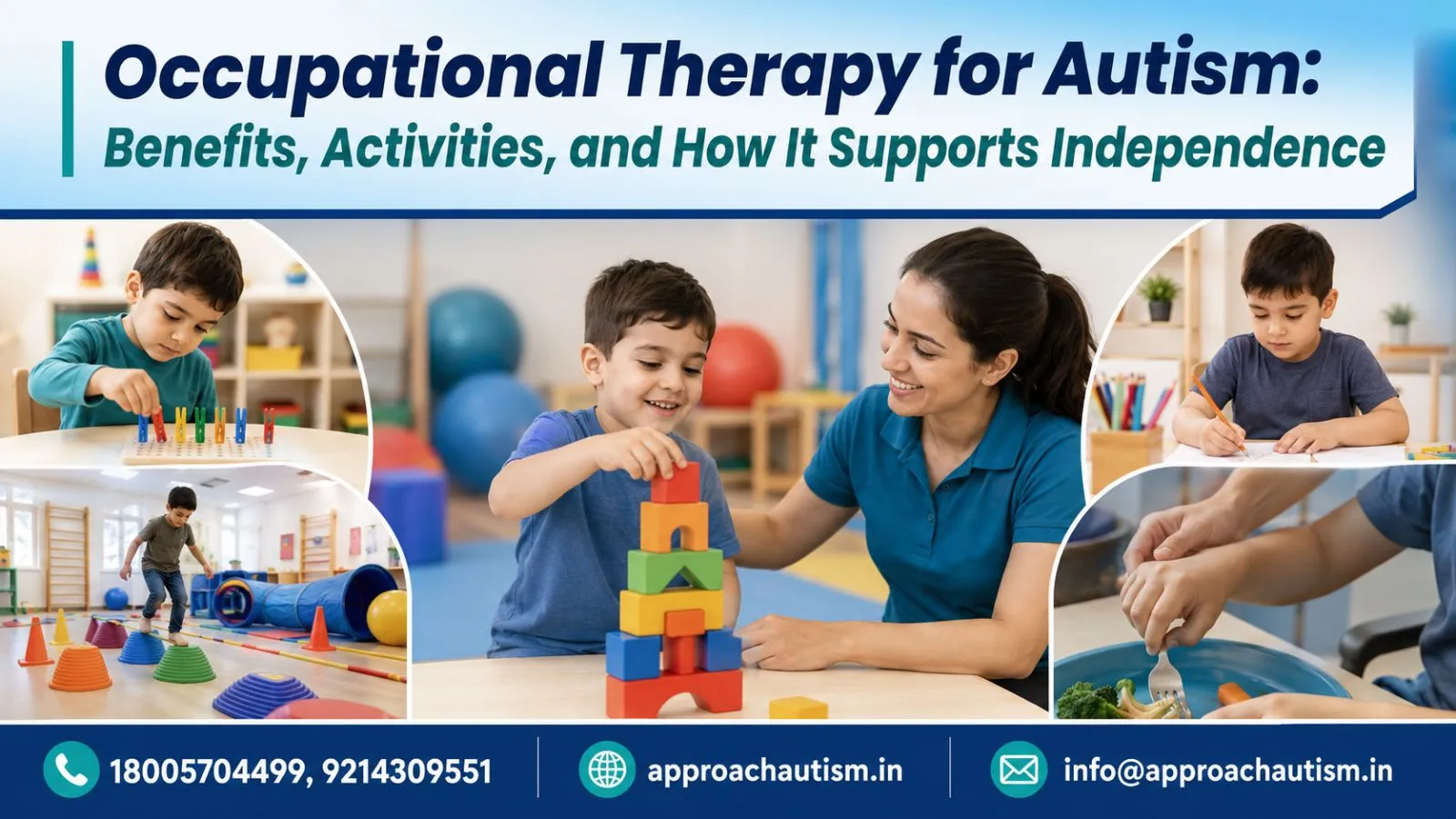
Occupational Therapy for Autism: Benefits, Activities, and How It Supports Independence
-
by
Approach
- No Comments on Occupational Therapy for Autism: Benefits, Activities, and How It Supports Independence
Occupational therapy plays a vital role in supporting children with autism by helping them develop essential life skills needed for daily functioning and independence. Many children with Autism Spectrum Disorder (ASD) face challenges related to sensory processing, motor coordination, attention, and self-care activities. These challenges can affect their ability to participate fully at home, school, and in social environments.
Occupational therapy for autism focuses on improving these skills through structured, activity-based interventions. The goal is to help children become more independent, confident, and capable of handling everyday tasks in a meaningful way.
This guide explains what occupational therapy is, common challenges it addresses, its benefits, and practical activities that support development at home and in therapy sessions.
Understanding Occupational Therapy in Autism
Occupational therapy (OT) is a specialized form of therapy that helps children develop the skills needed for daily life activities. For children with autism, OT is tailored to their sensory, motor, cognitive, and behavioral needs.
It focuses on improving independence and helping children engage more effectively with their environment.
What is Occupational Therapy and How Does It Help Children with Autism?
Occupational therapy helps children learn how to perform everyday tasks in a structured and manageable way. It focuses on building both physical and cognitive skills required for independence.
OT helps children:
- Improve self-care abilities
- Develop motor coordination
- Manage sensory challenges
- Enhance attention and focus
- Participate in daily routines
For example, a child who struggles with dressing or using utensils can learn step-by-step techniques to perform these tasks independently over time.
Why Occupational Therapy is Important for Autism Development
Occupational therapy is important because children with autism often experience developmental differences that affect daily functioning.
It helps by:
- Supporting independence in everyday activities
- Improving sensory processing abilities
- Enhancing learning readiness
- Reducing frustration during tasks
- Building life skills for long-term success
Without proper support, these challenges can impact a child’s confidence and ability to participate in school and home environments.
Role of Occupational Therapy in Improving Daily Functioning
OT focuses on helping children function better in real-life situations rather than only improving isolated skills.
It supports:
- Dressing and grooming routines
- Eating and feeding skills
- Writing and school readiness tasks
- Movement and coordination
- Social participation in group activities
The ultimate goal is to help children perform daily tasks with greater independence and ease.
Common Challenges Addressed Through Occupational Therapy
Children with autism often face a variety of challenges that affect their daily functioning. Occupational therapy helps address these challenges through targeted interventions.
Sensory Processing Difficulties in Children with Autism
Many children with autism experience sensory processing differences, meaning they may react differently to sounds, textures, or visual stimuli.
Common sensory challenges include:
- Sensitivity to loud sounds
- Avoidance of certain textures or clothing
- Overreaction to bright lights
- Difficulty processing sensory input
These sensitivities can affect behavior and emotional regulation, making daily activities more challenging.
OT uses sensory integration techniques to help children respond more comfortably to their environment.
Challenges with Motor Skills and Coordination
Motor skill development is another area where children with autism may face difficulties.
These may include:
- Poor hand-eye coordination
- Difficulty holding pencils or utensils
- Clumsiness during physical activities
- Delayed fine and gross motor development
Occupational therapy helps strengthen motor skills through structured physical and play-based activities.
Difficulties in Performing Daily Living Activities
Daily living tasks can be challenging for children with autism due to sensory or motor difficulties.
Common difficulties include:
- Dressing independently
- Brushing teeth or grooming
- Feeding and using utensils
- Following multi-step instructions
OT breaks these tasks into smaller steps, making them easier for children to learn and practice.
Benefits of Occupational Therapy for Children with Autism
Occupational therapy provides long-term developmental benefits that support independence and confidence in daily life.
Improving Self-Care and Independent Living Skills
One of the most important benefits of OT is helping children become more independent in self-care tasks.
It helps improve:
- Dressing skills
- Personal hygiene routines
- Eating habits
- Daily routine management
These skills are essential for long-term independence and quality of life.
Enhancing Focus, Attention, and Participation
Occupational therapy also helps improve a child’s ability to focus and participate in structured activities.
Benefits include:
- Better attention span
- Improved task completion
- Increased participation in learning activities
- Reduced distractibility
Improved focus helps children perform better both at home and in school environments.
Building Confidence Through Skill Development
As children gain new skills, their confidence naturally improves.
OT supports:
- Positive self-esteem
- Reduced frustration during tasks
- Greater willingness to try new activities
- Emotional development
Confidence plays a key role in overall development and social participation.
Occupational Therapy Activities for Autism Support
Occupational therapists use a variety of structured activities to help children develop essential skills.
These activities are engaging, repetitive, and tailored to individual needs.
Sensory Integration Activities for Better Regulation
Sensory activities help children manage sensory input more effectively.
Examples include:
- Swinging or rocking activities
- Textured material exploration
- Sand or water play
- Deep pressure exercises
These activities help children regulate their sensory responses and feel more comfortable in different environments.
Fine Motor and Gross Motor Skill Development Activities
Motor skill activities are designed to improve coordination and physical control.
Examples include:
- Bead threading and puzzles
- Drawing and coloring exercises
- Catching and throwing balls
- Balancing and obstacle courses
These activities help improve both small muscle control and full-body coordination.
Activities to Improve Daily Life and Social Skills
OT also includes activities that support practical life and social interaction skills.
Examples include:
- Role-playing daily routines
- Practicing dressing steps
- Group play activities
- Turn-taking games
These exercises help children apply learned skills in real-life situations.
How Parents Can Support Occupational Therapy Goals at Home
Parental involvement is essential for reinforcing occupational therapy progress. Consistent practice at home helps children develop skills faster and more effectively.
Creating a Structured Home Routine
A predictable routine helps children feel secure and improves learning outcomes.
Parents can:
- Set daily schedules
- Use visual activity charts
- Maintain consistent timing for tasks
- Reduce unexpected changes
Structure helps children understand expectations and follow routines more easily.
Encouraging Independence Through Daily Tasks
Parents can encourage children to perform tasks independently.
This includes:
- Dressing themselves
- Eating with minimal help
- Cleaning up toys
- Washing hands
Even small efforts toward independence build confidence and skill development.
Practicing Therapy Skills in Everyday Activities
Therapy goals should be reinforced in daily life situations.
Parents can:
- Turn routines into learning opportunities
- Encourage repetition of therapy exercises
- Use play-based learning at home
- Provide positive reinforcement
Consistency between therapy and home practice leads to better long-term outcomes.
Conclusion
Occupational therapy is a powerful support system for children with autism, helping them develop essential skills for daily living, sensory regulation, and motor coordination. By focusing on real-life activities, OT improves independence, confidence, and participation in everyday environments.
With early intervention, structured therapy, and strong parental involvement, children can make meaningful progress and achieve greater independence in their daily lives.
FAQs
1. What does occupational therapy do for autism?
Occupational therapy helps children with autism develop daily living skills, improve motor coordination, and manage sensory challenges.
2. At what age should occupational therapy start?
OT can begin in early childhood once developmental challenges are identified, and early intervention is highly beneficial.
3. Can occupational therapy improve behavior in autism?
Yes. By improving sensory regulation and daily skills, OT can reduce frustration-related behaviors.
4. How long does occupational therapy take to show results?
Progress varies, but consistent therapy over time leads to gradual improvement in independence and skills.
5. Do parents need to be involved in occupational therapy?
Yes. Parental involvement is important to reinforce skills and support consistent progress at home.