Autism Spectrum Explained: Why Autism Looks Different From Person to Person
-
by
Approach
- No Comments on Autism Spectrum Explained: Why Autism Looks Different From Person to Person
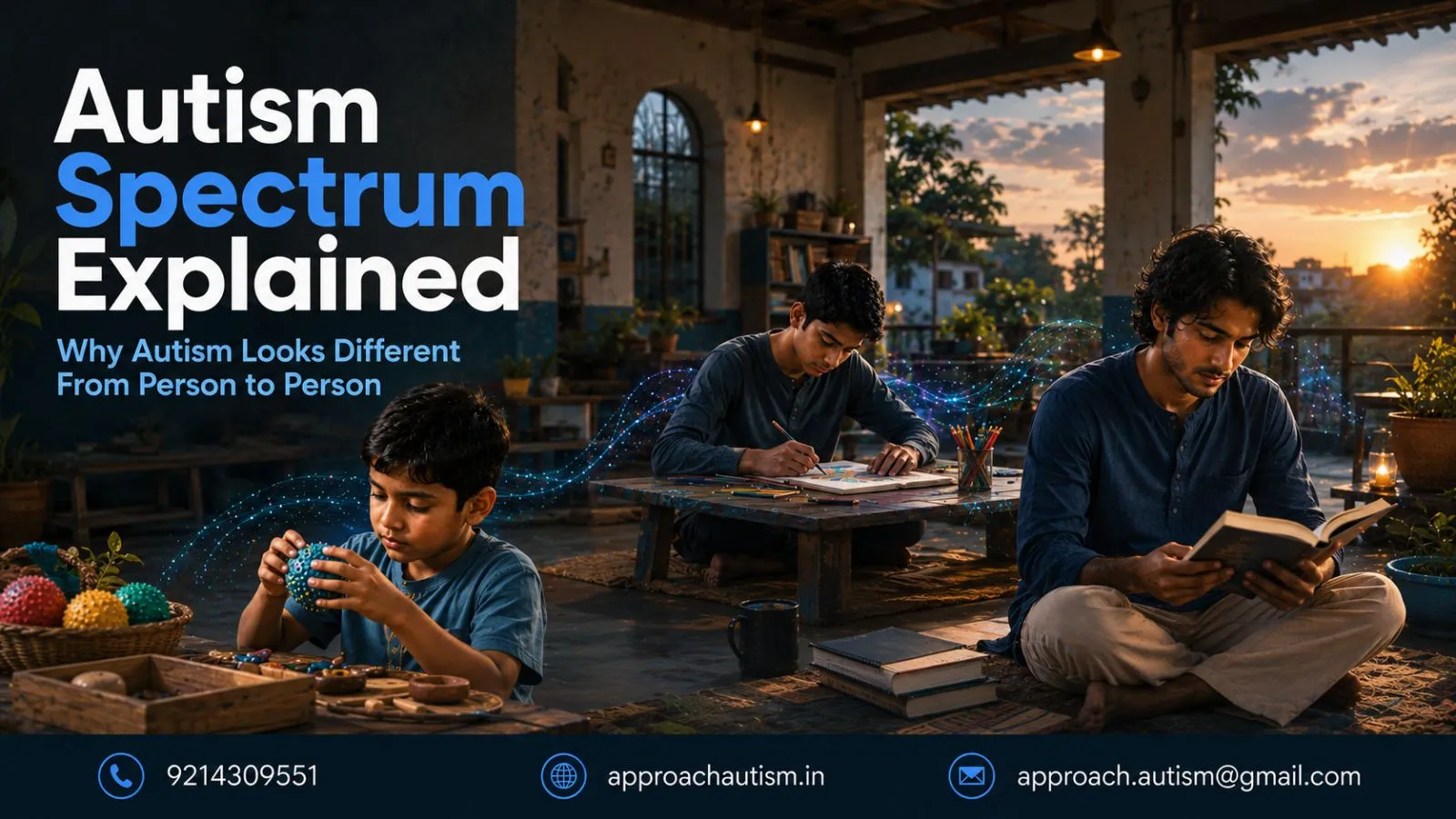
The autism spectrum describes the wide range of ways autism can affect different people.
Autism is a neurodevelopmental condition associated with differences in social communication and interaction, along with restricted or repetitive patterns of behavior, interests or activities. Sensory differences can also be an important part of an autistic person’s experience.
The word “spectrum” does not mean that autism exists on a single line from “less autistic” to “more autistic.”
Instead, autistic people can have very different combinations of characteristics.
For example, one autistic adult may communicate fluently but experience significant sensory sensitivity. Another may use limited spoken language but have strong visual or practical skills. Someone else may live independently while requiring considerable support in social situations or daily routines.
This variation is one of the most important things to understand when learning about autism.
Why Is Autism Called a Spectrum?
Autism is called a spectrum because it can present in many different ways and with different levels of support needs.
People can differ in:
- Communication abilities
- Social interaction
- Sensory experiences
- Repetitive behaviors
- Interests and attention
- Daily living skills
- Learning profiles
- Emotional regulation
- Independence
Two people can both meet the criteria for autism while having very different strengths and challenges.
The spectrum concept therefore helps explain why there is no single “typical autistic person.”
It also highlights why support should be individualized rather than based only on a diagnosis.
Does Everyone With Autism Have the Same Characteristics?
No.
Autistic people do not all have the same characteristics, strengths or support requirements.
Some people may experience noticeable sensory sensitivities, while others may have relatively limited sensory challenges.
Some may have strong spoken-language abilities, while others may communicate through alternative or augmentative communication.
Similarly, some autistic adults may prefer highly structured routines, while others may be more flexible but experience challenges in other areas.
The autism spectrum includes substantial individual variation.
A diagnosis identifies a pattern of neurodevelopmental characteristics; it does not provide a complete description of a person’s personality, abilities or future.
The Different Ways Autism Can Present
Differences in Social Communication
Autistic people may experience differences in how they understand and participate in social communication.
These differences can involve:
- Reading facial expressions
- Understanding body language
- Interpreting indirect language
- Managing back-and-forth conversation
- Understanding unwritten social expectations
- Knowing how to enter or leave conversations
However, social communication is not simply about whether someone “can socialize.”
An autistic person may want friendships and relationships but prefer communication that is more direct, predictable or structured.
Differences in Sensory Experiences
Sensory processing can be an important part of autism.
Some autistic people may be particularly sensitive to:
- Loud sounds
- Bright lights
- Certain textures
- Strong smells
- Crowded environments
- Physical touch
Others may seek particular sensory experiences.
For some people, sensory overload can affect concentration, communication, emotional regulation and participation in everyday activities.
Differences in Repetitive Behaviors and Routines
Some autistic people engage in repetitive movements or behaviors, sometimes called stimming.
Examples can include hand movements, rocking, repeating sounds or other repetitive actions.
Routines and predictability can also be important.
An autistic person may feel more comfortable when they know what will happen next. Unexpected changes may sometimes create stress or discomfort.
However, not every autistic person responds to routine changes in the same way.
Differences in Focus and Interests
Some autistic people develop highly focused interests.
They may spend considerable time learning about a particular subject and develop extensive knowledge in that area.
Focused interests can be an important source of enjoyment, motivation and expertise.
However, interests differ from person to person. There is no fixed list of subjects that autistic people are expected to enjoy.
Differences in Language and Communication
Language abilities can vary considerably across the spectrum.
Some autistic people are highly verbal and communicate fluently.
Others may experience differences in spoken language, while some may use alternative communication methods.
An individual’s ability to speak should not automatically be treated as a measure of intelligence.
Communication and intelligence are separate concepts, and people can have different strengths across different areas.
Why Autism Can Look Different in Different People
Age and Development
Autism can look different at different stages of life.
A characteristic that is noticeable during childhood may become less obvious in adulthood, while new challenges may appear when social, academic or workplace expectations become more complex.
Adults may also have developed strategies to manage situations that were difficult earlier in life.
Therefore, autism should be understood across a person’s developmental history rather than through one moment or behavior.
Individual Strengths and Challenges
Every autistic person has an individual combination of strengths and challenges.
One person may have strong memory and analytical skills but find social communication difficult.
Another may have strong communication skills but experience significant sensory challenges.
A third person may need substantial assistance with everyday activities while having particular areas of exceptional ability.
These differences are normal within the spectrum.
Communication Abilities
Communication is one of the areas where autism can vary considerably.
Some people communicate primarily through spoken language. Others may use gestures, visual communication, writing, communication boards or speech-generating devices.
Communication support should be based on the person’s needs and preferences.
Support Needs
Support needs can also differ significantly.
One autistic adult may need occasional workplace accommodations.
Another may require ongoing support with communication, personal care, transportation or decision-making.
Support requirements can also vary depending on the environment.
A person may function comfortably in a familiar setting but require considerably more support in an unfamiliar or highly stimulating environment.
Autism Spectrum in Children
Autism characteristics may become noticeable during early development, although identification can happen at different ages.
Children may show differences in communication, social interaction, play, sensory processing or repetitive behaviors.
However, children develop at different rates.
A child’s support needs should therefore be considered individually, taking developmental stage and environment into account.
Early understanding can help families and professionals provide appropriate communication, educational and developmental support.
Importantly, a childhood diagnosis does not predict exactly what an individual will be capable of achieving later in life.
Autism Spectrum in Teenagers
Teenage years introduce new social, educational and emotional expectations.
Autistic teenagers may encounter challenges involving:
- Friendships
- Group interactions
- School transitions
- Sensory environments
- Academic organization
- Changes in routine
- Understanding social expectations
Some teenagers may also develop strategies to hide or compensate for characteristics that make social situations difficult.
This can sometimes make their support needs less visible.
Understanding the teenager’s actual experience is more useful than judging support needs solely by outward behavior.
Autism Spectrum in Adults
Autism does not disappear when a person reaches adulthood.
However, the way autism affects an individual can change as responsibilities and environments change.
Autistic adults may experience challenges involving:
- Employment
- Relationships
- Independent living
- Sensory environments
- Communication
- Time management
- Healthcare
- Community participation
At the same time, autistic adults can have careers, relationships, families, hobbies and independent lives.
Some may need substantial ongoing assistance, while others may require only specific accommodations.
Can Autism Characteristics Change Over Time?
Yes, the way autism characteristics appear or affect everyday life can change over time.
The underlying neurodevelopmental condition is lifelong, but observable characteristics and support needs can change.
Development, education, life experience, coping strategies, environmental changes and available support can influence how a person manages different situations.
For example, an autistic adult may become more comfortable communicating in professional settings after gaining experience and developing strategies.
This does not mean the person has “outgrown” autism.
It means that their skills, environment and ways of managing challenges have changed.
Why Autism Should Not Be Described as a Simple Scale
Describing autism as a simple line from “mild” to “severe” can hide important differences.
Imagine two autistic adults.
Person A may have excellent spoken communication and live independently but experience severe sensory sensitivity that makes certain workplaces difficult.
Person B may use alternative communication and require daily assistance but have very strong abilities in a particular area.
Which person is “more autistic”?
The question does not adequately describe their individual profiles.
A better approach is to look at specific characteristics and support needs.
This makes it easier to understand what assistance a person actually needs instead of assigning a broad label.
Understanding Different Support Needs in Autism
Support needs are individual and can vary across environments and stages of life.
Lower Support Needs
Some autistic adults may need relatively limited assistance.
Possible supports can include:
- Clear communication
- Predictable expectations
- Workplace accommodations
- Sensory adjustments
- Additional preparation for changes
Having lower support needs does not mean that an autistic person has no challenges.
Moderate Support Needs
Some people may need more regular support with communication, daily organization, employment or social participation.
Structured routines, visual supports, communication assistance and practical guidance may be useful depending on the individual.
Higher Support Needs
Some autistic people require substantial and ongoing support.
This may involve assistance with:
- Communication
- Personal care
- Safety
- Daily living
- Healthcare
- Community participation
Higher support needs do not mean that a person lacks preferences, abilities or the right to make choices.
Support should remain respectful and person-centred.
Common Misconceptions About the Autism Spectrum
Myth: Everyone With Autism Is Either Mild or Severe
Fact: Autism is not adequately described by a simple mild-to-severe scale. Different people can have very different combinations of characteristics and support requirements.
Myth: Autism Always Involves Intellectual Disability
Fact: Autism does not automatically mean intellectual disability. Autistic people have a wide range of intellectual abilities.
Myth: A Person Can Outgrow Autism
Fact: Autism is considered a lifelong neurodevelopmental condition. However, skills, coping strategies, communication and support needs can change throughout life.
Myth: Autism Looks the Same at Every Age
Fact: Autism can present differently during childhood, adolescence and adulthood. Environmental demands and learned strategies can influence how characteristics appear.
Key Takeaways
The autism spectrum represents the wide variety of ways autism can affect individuals. Autism is not a simple scale where everyone can be placed into a single category from mild to severe. Instead, each autistic person has a unique combination of characteristics, abilities, challenges and support needs.
Autism can involve differences in social communication, sensory processing, repetitive behaviors, routines, focused interests and language. These characteristics can appear differently in children, teenagers and adults, and their impact can change as a person’s environment, responsibilities and coping strategies change.
Understanding the spectrum in this way helps move the conversation away from stereotypes and toward individualized support. For autistic adults especially, the goal should not be to judge how “autistic” someone appears, but to understand their communication preferences, strengths, challenges and the support that helps them participate meaningfully in everyday life.
Frequently Asked Questions About the Autism Spectrum
Why is autism described as a spectrum?
Autism is described as a spectrum because autistic people can have very different combinations of communication differences, sensory experiences, repetitive behaviors, interests, strengths and support needs. There is no single way that autism looks.
Are there different types of autism?
Current diagnostic systems generally view autism as one spectrum rather than dividing it into the older separate categories that were previously used. Individual differences are instead described through characteristics, abilities and support needs.
Can two autistic people have very different characteristics?
Yes. Two autistic people can have significantly different communication abilities, sensory experiences, interests, daily living skills and support requirements while both being autistic.
Can autism characteristics change with age?
The underlying condition is lifelong, but the way characteristics appear and affect daily life can change. Development, experience, environment, coping strategies and support can all influence how a person manages different situations.
What determines a person’s support needs?
Support needs depend on the individual’s characteristics, abilities, communication, adaptive skills, environment and everyday challenges. They should be assessed individually rather than assumed from an autism diagnosis alone.