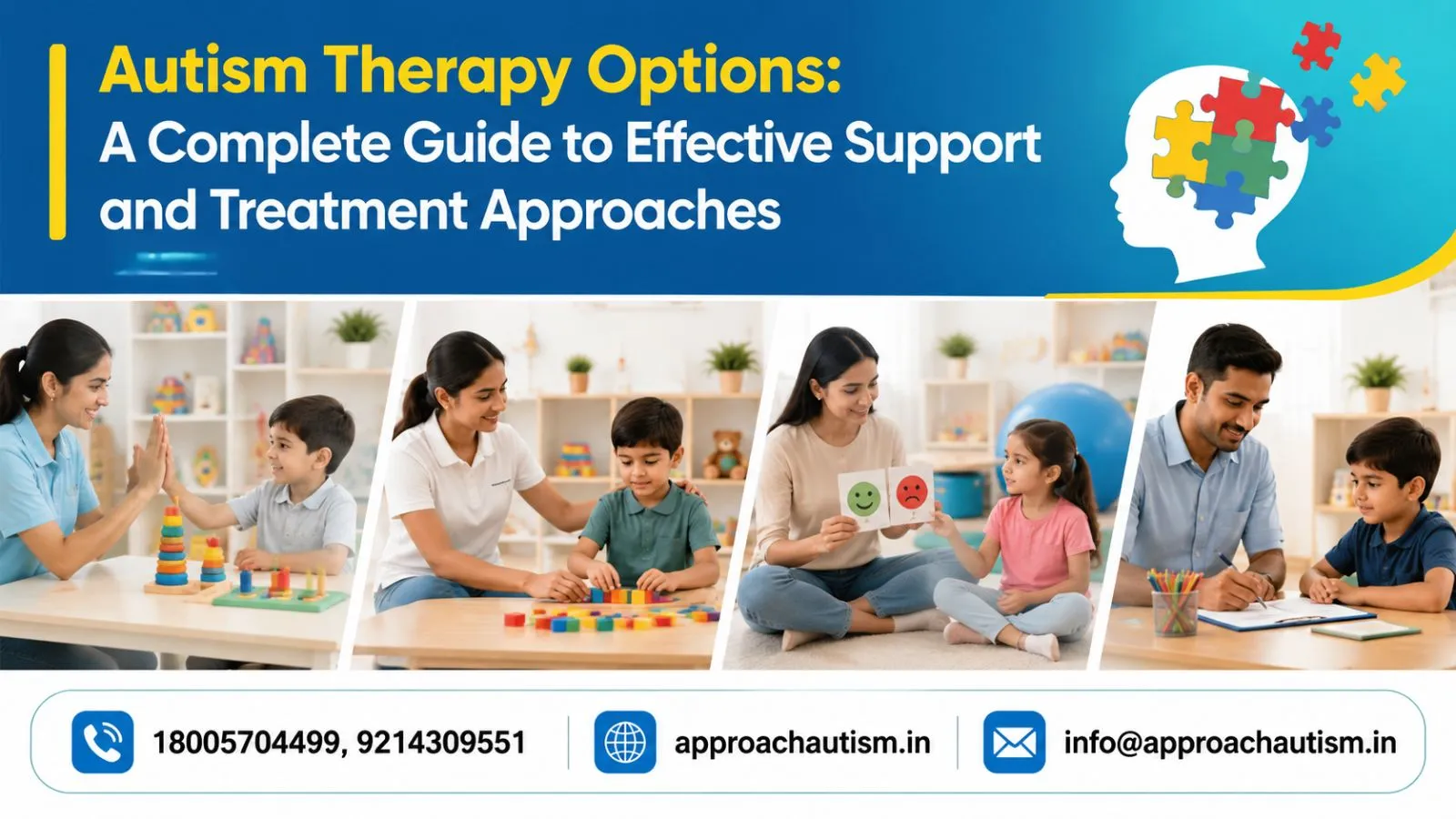
Autism Therapy Options: A Complete Guide to Effective Support and Treatment Approaches
-
by
Approach
- No Comments on Autism Therapy Options: A Complete Guide to Effective Support and Treatment Approaches
Autism Spectrum Disorder (ASD) is a developmental condition that affects communication, behavior, learning, and social interaction. While autism is lifelong, the right therapy and structured support can significantly improve a child’s ability to communicate, learn new skills, and participate in daily life.
Understanding different autism therapy options helps parents make informed decisions about their child’s development journey. Early intervention, combined with consistent therapy, can support long-term progress in communication, independence, and social skills.
This guide explains key therapy approaches, including speech therapy, occupational therapy, and behavioral therapy, along with how to choose the right support program for children with autism.
Understanding Autism Therapy and Its Importance
Autism therapy focuses on improving developmental skills and helping children overcome challenges in communication, behavior, and daily functioning. Since autism affects each child differently, therapy programs are customized to individual needs.
The goal is not to “change” the child but to help them build skills that improve quality of life, independence, and confidence.
What is Autism Therapy and How Does It Help?
Autism therapy includes structured interventions designed to support a child’s development across multiple areas such as communication, behavior, motor skills, and social interaction.
Therapy can help children:
- Improve communication abilities
- Develop social interaction skills
- Reduce challenging behaviors
- Build independence in daily tasks
- Enhance learning abilities
For example, a child who struggles to express needs may learn alternative communication methods through therapy sessions, improving interaction with parents and caregivers.
Why Individualized Therapy Plans Are Important for Autism
Every child with autism has unique strengths and challenges. This is why individualized therapy plans are essential.
A personalized plan considers:
- Developmental level
- Communication abilities
- Sensory needs
- Behavioral patterns
- Learning style
A customized approach ensures that therapy is relevant and effective, rather than using a one-size-fits-all method. This improves engagement and long-term progress.
Role of Early Support in Improving Developmental Skills
Early intervention plays a crucial role in autism therapy outcomes. The brain develops rapidly during early childhood, making this period ideal for skill development.
Benefits of early support include:
- Better communication development
- Improved social interaction
- Reduced behavioral challenges
- Stronger learning foundation
- Greater independence in daily activities
Children who receive early therapy often show more significant improvements over time compared to those who start later.
Speech Therapy for Children with Autism
Speech therapy is one of the most important interventions for children with autism, especially those facing communication difficulties. It focuses on improving verbal and nonverbal communication skills.
How Speech Therapy Improves Communication Skills
Speech therapy helps children express their thoughts, needs, and emotions more effectively.
It supports:
- Language development
- Sentence formation
- Pronunciation improvement
- Conversational skills
- Nonverbal communication methods
Therapists use structured techniques to help children communicate in ways that are easier and more natural for them.
Common Speech and Language Challenges in Autism
Children with autism may experience a variety of communication difficulties.
Common challenges include:
- Delayed speech development
- Limited vocabulary use
- Difficulty starting conversations
- Repetitive language patterns
- Trouble understanding instructions
Some children may also rely on gestures or alternative communication systems when verbal speech is limited.
Activities Used to Develop Communication and Social Skills
Speech therapists use engaging activities to improve communication skills.
Examples include:
- Picture exchange communication systems (PECS)
- Role-playing exercises
- Interactive storytelling
- Sound imitation games
- Social interaction practice
These activities help children gradually build confidence in expressing themselves.
Occupational Therapy for Autism Support
Occupational therapy (OT) focuses on helping children develop skills needed for daily life activities and improving sensory processing abilities.
It plays a key role in promoting independence and functional development.
How Occupational Therapy Helps with Daily Living Skills
Occupational therapy supports children in performing everyday tasks more independently.
It helps improve:
- Dressing and grooming skills
- Feeding and eating habits
- Writing and fine motor skills
- Coordination and balance
- Task completion abilities
For example, a child may learn how to hold a pencil correctly or complete simple self-care routines with greater independence.
Managing Sensory Processing Challenges Through Therapy
Many children with autism experience sensory sensitivities that affect behavior and comfort.
Occupational therapy helps manage:
- Overreaction to sounds or lights
- Sensitivity to textures or clothing
- Difficulty processing sensory input
- Sensory-seeking behaviors
Therapists use sensory integration techniques to help children respond more comfortably to their environment.
Improving Motor Skills, Independence, and Confidence
OT also focuses on improving physical coordination and confidence in performing tasks.
Benefits include:
- Better hand-eye coordination
- Improved balance and posture
- Increased independence
- Enhanced confidence in daily activities
These improvements help children participate more actively in home and school environments.
Behavioral Therapy and Skill Development in Autism
Behavioral therapy is widely used to help children develop positive behaviors and reduce challenges that interfere with learning and daily life.
It is often structured and goal-oriented.
What is Behavioral Therapy and How Does It Work?
Behavioral therapy focuses on understanding behavior patterns and encouraging positive actions through reinforcement strategies.
It helps children:
- Learn new skills
- Improve attention and focus
- Develop positive habits
- Reduce challenging behaviors
Therapists use structured techniques such as Applied Behavior Analysis (ABA) to guide behavior development.
Managing Challenging Behaviors and Emotional Regulation
Children with autism may sometimes struggle with emotional regulation or behavioral responses.
Behavioral therapy supports:
- Managing frustration
- Reducing repetitive disruptive behaviors
- Improving emotional control
- Encouraging appropriate responses
For example, a child may learn alternative ways to express frustration instead of using challenging behaviors.
Building Positive Habits and Independent Skills
Behavioral therapy also focuses on developing long-term life skills.
It helps children:
- Follow instructions
- Build routines
- Develop social behaviors
- Increase independence
These skills support daily functioning at home, school, and in the community.
Choosing the Right Autism Therapy Program
Selecting the right therapy program is an important decision that affects long-term development outcomes. Parents should carefully evaluate options based on their child’s needs.
A structured and supportive program can significantly improve developmental progress.
Factors Parents Should Consider Before Selecting Therapy
Parents should evaluate several key factors before choosing a therapy program.
Important considerations include:
- Child’s specific needs
- Type of therapy required
- Experience of therapists
- Program structure and flexibility
- Progress tracking methods
A well-planned approach ensures consistent improvement and better results.
Importance of Qualified Professionals and Structured Programs
Qualified therapists play a major role in successful autism intervention.
Professionals may include:
- Speech therapists
- Occupational therapists
- Behavioral therapists
- Developmental specialists
Structured programs ensure that therapy sessions are goal-oriented and tailored to the child’s developmental level.
How Consistent Therapy Supports Long-Term Growth
Consistency is one of the most important factors in autism therapy success.
Regular therapy helps:
- Reinforce learned skills
- Improve behavioral patterns
- Strengthen communication abilities
- Build long-term independence
Over time, consistent support leads to steady developmental progress and improved quality of life.
Conclusion
Autism therapy provides essential support for children by helping them develop communication, behavioral, sensory, and daily living skills. Speech therapy, occupational therapy, and behavioral therapy each play a unique role in improving development outcomes.
When combined with early intervention and consistent support, these therapies can significantly enhance a child’s ability to learn, communicate, and interact with the world.
Choosing the right therapy program and maintaining regular progress tracking ensures long-term developmental success and improved independence.
FAQs
1. What is the best therapy for autism?
There is no single best therapy. A combination of speech, occupational, and behavioral therapy is often recommended based on individual needs.
2. At what age should autism therapy start?
Autism therapy should ideally start as early as possible, often during early childhood, for better developmental outcomes.
3. Can autism therapy improve communication skills?
Yes. Speech therapy and behavioral interventions significantly improve communication abilities in children with autism.
4. How long does autism therapy take to show results?
Progress varies by child, but consistent therapy over months or years leads to gradual and meaningful improvement.
5. Is occupational therapy necessary for all children with autism?
Not always, but it is highly beneficial for children with sensory challenges, motor skill delays, or difficulties in daily activities.