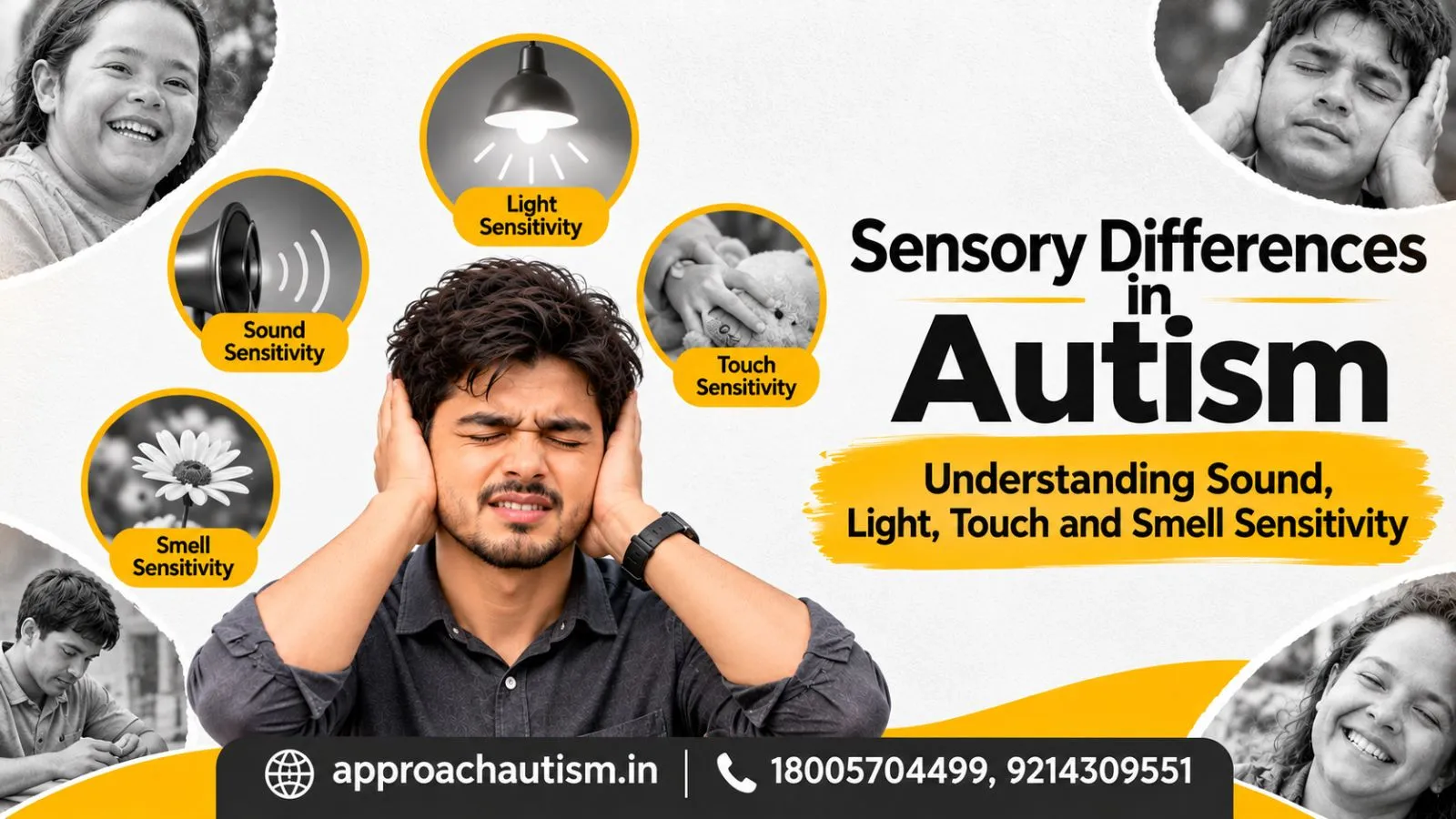
Sensory Differences in Autism: Understanding Sound, Light, Touch and Smell Sensitivity
-
by
Approach
- No Comments on Sensory Differences in Autism: Understanding Sound, Light, Touch and Smell Sensitivity
Sensory differences in autism affect how individuals experience and respond to sounds, lights, textures, smells, tastes and movement. These experiences can influence communication, learning, eating, sleeping and participation in everyday activities. Sensory differences in autism occur because the brain processes sensory information differently, making certain environments comfortable for some individuals and overwhelming or difficult for others. Understanding these differences helps parents, caregivers, teachers and communities create supportive environments that respect individual needs.
What Are Sensory Differences?
Sensory differences describe variations in how the brain receives, processes and responds to information from the senses. These include sight, hearing, touch, taste, smell, balance and awareness of body position.
For example, a person may find ordinary background noise extremely uncomfortable, while another may barely notice sounds that others hear clearly. Some individuals prefer particular clothing textures, lighting conditions or food consistencies.
These responses are not necessarily intentional behaviours. They reflect individual sensory experiences and can influence comfort, attention, communication and daily participation.
How Are Sensory Differences Related to Autism?
Sensory processing differences are a recognised characteristic associated with autism spectrum disorder. Autistic individuals may experience sensory information more intensely, less intensely or differently depending on the situation.
The same person may be sensitive to loud sounds but actively seek movement or deep pressure. Sensory responses can also change depending on tiredness, stress, surroundings and familiarity.
Understanding sensory sensitivity in autism helps families identify possible triggers and recognise why an individual may respond differently in particular environments. Instead of assuming someone is being difficult, caregivers can consider whether sensory demands are affecting their comfort.
The Two Main Types of Sensory Responses
Sensory responses generally include hypersensitivity and hyposensitivity. An individual may experience either response or a combination of both across different senses.
Sensory Hypersensitivity
Sensory hypersensitivity means experiencing certain sensory information more intensely than expected. Everyday experiences may feel uncomfortable, distracting or overwhelming.
Examples include covering ears during loud conversations, avoiding bright sunlight, disliking clothing labels or refusing foods with particular textures. A crowded shopping centre may also become difficult because several sounds, lights and movements occur simultaneously.
Providing quieter spaces, comfortable clothing and predictable routines can help reduce unnecessary sensory demands.
Sensory Hyposensitivity
Sensory hyposensitivity means responding less strongly to certain sensory information. Individuals may require stronger or additional sensory input to notice sensations.
For example, someone may not immediately notice their name being called, may seek strong flavours or may enjoy repetitive movement. They might also prefer firm pressure or activities involving physical movement.
These behaviours should be understood individually. Caregivers can observe preferences while maintaining appropriate safety and supervision.
Common Sensory Differences in Autism
Sensory experiences can involve several senses simultaneously. Recognising specific patterns helps families understand which situations may require adjustments.
Sound Sensitivity
Some autistic individuals experience everyday sounds as unusually intense. Traffic, school bells, hand dryers, television, crowded conversations and sudden noises may cause discomfort.
Others may enjoy particular sounds or repeatedly listen to familiar music. Noise-reducing headphones, advance warnings and quieter environments may improve comfort.
Light and Visual Sensitivity
Bright sunlight, fluorescent lighting, flashing screens and visually crowded surroundings can be uncomfortable for some individuals.
Others may enjoy watching moving objects, patterns, colours or reflections. Adjusting lighting, reducing visual clutter and allowing sunglasses when appropriate can make environments easier to manage.
Touch and Texture Sensitivity
Touch sensitivity may involve clothing materials, haircuts, bathing, grooming or unexpected physical contact.
Some individuals dislike sticky substances, rough fabrics or clothing labels. Others actively seek particular textures. Offering suitable clothing choices and explaining activities before physical contact can support comfort and personal boundaries.
Smell Sensitivity
Perfumes, cleaning products, cooking smells and strong fragrances may cause discomfort or nausea.
Some individuals notice smells that others barely recognise. Reducing strong fragrances and providing access to fresh air can help make shared environments more comfortable.
Taste and Food Texture Sensitivity
Food preferences may be influenced by taste, temperature, smell, appearance and texture. Certain individuals prefer predictable meals and may avoid unfamiliar foods.
For example, mixed textures, crunchy vegetables or soft foods may create discomfort. Families should avoid forcing food consumption and seek appropriate professional guidance when nutritional intake becomes a concern.
Movement and Balance Sensitivity
The vestibular system helps the body understand movement, balance and position. Some autistic individuals dislike swings, escalators or activities involving sudden movement.
Others enjoy spinning, jumping, rocking or climbing. Safe opportunities for movement can support participation while respecting individual comfort.
What Sensory Overload Can Feel Like
Sensory overload happens when the amount or intensity of sensory information becomes difficult to process. Multiple sounds, bright lights, crowded spaces and unexpected changes can contribute to this experience.
Common Signs of Sensory Overload
Possible signs include covering ears, closing eyes, withdrawing from activities, becoming restless, crying, seeking isolation or finding communication difficult.
Some individuals may experience a meltdown, while others may become unusually quiet or disengaged. Signs differ between people, so understanding an individual’s usual behaviour is important.
Sensory Overload vs Emotional Distress
Sensory overload and emotional distress can occur together, but they are not identical. Sensory overload may begin with uncomfortable environmental stimulation, while emotional distress can involve frustration, anxiety or difficulty managing an unexpected situation.
Caregivers should avoid automatically interpreting every response as a behavioural problem. Observing the environment, recent activities and communication needs can help identify possible causes.
What Can Happen After Sensory Overload
After an overwhelming experience, someone may need quiet time, reduced interaction and rest. Communication may temporarily become difficult, and returning to regular activities may take time.
Offering space, reducing demands and providing reassurance without pressure can support recovery.
Sensory Seeking in Autism
Sensory seeking in autism describes actively looking for particular sensations because they feel enjoyable, regulating or interesting.
These behaviours can be part of individual sensory preferences rather than something that needs to be stopped automatically.
Seeking Movement
Some individuals enjoy jumping, rocking, running, swinging or walking repeatedly. Movement may provide enjoyable sensory feedback and help with attention or self-regulation.
Seeking Touch or Pressure
Touch-seeking behaviours may include enjoying soft materials, holding textured objects, using cushions or preferring firm pressure.
Respecting personal preferences and ensuring activities remain safe are important considerations.
Seeking Sounds or Visual Stimulation
Some individuals enjoy repeated sounds, music, spinning objects, colourful patterns or watching moving lights. These experiences may provide comfort or enjoyment.
Families should distinguish safe, self-regulating activities from experiences that could cause harm.
Sensory Differences in Autistic Children
Children may show sensory preferences through play, eating, communication and daily routines. A child might avoid noisy classrooms, resist certain clothing or become uncomfortable during crowded family gatherings.
Parents and educators can observe patterns, identify possible triggers and introduce gradual adjustments. Predictable routines, visual schedules, comfortable learning spaces and suitable activity choices may improve participation.
Children should be encouraged to communicate discomfort through words, gestures, pictures or other communication methods that suit their abilities.
Sensory Differences in Autistic Teenagers
Teenagers may experience sensory challenges in classrooms, social gatherings, public transport and changing daily routines. Puberty, academic expectations and social demands can also influence how sensory experiences are managed.
Respecting personal preferences becomes increasingly important during adolescence. Teenagers should be involved in decisions about clothing, study environments, breaks and coping strategies.
Developing self-awareness can help them recognise uncomfortable situations and communicate their needs more independently.
Sensory Differences in Autistic Adults
Adults may experience sensory differences at home, workplaces, social events and public environments. Bright offices, background conversations, crowded transport and strong fragrances can affect concentration and comfort.
Some adults develop personal strategies, such as choosing quieter spaces, adjusting lighting or planning breaks.
Understanding individual sensory needs can support workplace participation, independent living, relationships and everyday decision-making.
How Sensory Differences Can Affect Everyday Life
Sensory experiences influence how comfortably individuals participate in different environments. Small environmental adjustments can sometimes make meaningful differences.
School and Learning
Classroom noise, bright lights, crowded seating and unexpected announcements may affect concentration. Teachers can support students through predictable instructions, quieter workspaces and appropriate breaks.
Work and Responsibilities
Busy offices, frequent interruptions and strong lighting may create difficulties. Flexible arrangements, clear instructions and suitable work environments can encourage productivity and confidence.
Public Places
Shopping centres, restaurants, transport stations and social events often involve several sensory demands. Planning visits, identifying quieter areas and allowing breaks can improve accessibility.
Eating and Mealtimes
Food textures, smells, temperatures and presentation may influence eating preferences. Calm mealtimes, familiar options and gradual exposure without pressure can support positive experiences.
Sleep and Daily Routines
Lighting, temperature, sounds and clothing textures may affect sleep comfort. Consistent routines, suitable bedding and reduced environmental stimulation can help create a comfortable sleeping environment.
Why Sensory Experiences Differ From Person to Person
Autism is a spectrum, and sensory experiences are highly individual. Two autistic people may respond very differently to the same sound, texture or environment.
Sensory responses can also change with age, health, stress, fatigue and surroundings. An individual who comfortably attends a busy event on one day may find the same environment difficult another day.
There is no single sensory profile that describes everyone. Observing individual preferences and listening to personal experiences are essential for meaningful support.
Common Myths About Sensory Differences in Autism
Misunderstandings about sensory experiences can create unnecessary expectations and barriers. Accurate information encourages acceptance and practical support.
Myth: Every Autistic Person Has Sensory Sensitivities
Reality: Sensory differences are common in autism, but their presence, intensity and combination vary. Some individuals experience significant sensitivities, while others have fewer noticeable sensory challenges.
Myth: Sensory Sensitivity Means Someone Is Being Difficult
Reality: Avoiding sounds, textures or crowded environments may reflect genuine discomfort. Understanding the underlying experience is more helpful than labelling the behaviour negatively.
Myth: Sensory Differences Only Involve Loud Sounds
Reality: Sensory processing can involve hearing, vision, touch, taste, smell, movement and body awareness. Support should consider the individual’s complete sensory experience.
Frequently Asked Questions About Sensory Differences and Autism
What are common sensory sensitivities in autism?
Common experiences include sensitivity to noise, bright lights, clothing textures, strong smells, food consistency and movement. Some individuals also seek additional sensory input.
Why are some autistic people sensitive to noise?
Differences in auditory processing can make everyday sounds feel unusually intense or difficult to filter. Background conversations and sudden noises may therefore become uncomfortable.
Can autistic people be sensitive to light?
Yes. Bright sunlight, fluorescent lighting, flashing images and visually busy environments may cause discomfort for some autistic individuals.
What is sensory overload in autism?
Sensory overload occurs when sensory information becomes difficult to manage. It may result in distress, withdrawal, reduced communication or a need for quiet recovery time.
Can sensory sensitivities change over time?
Yes. Sensory experiences can change with age, stress, health, familiarity and environmental conditions. Support strategies should therefore be reviewed as individual needs evolve.
Key Takeaways
Sensory differences are an important part of understanding autism and individual experiences. They can influence communication, learning, relationships, eating, sleep and participation in everyday environments. Recognising hypersensitivity, hyposensitivity and sensory-seeking behaviours helps families respond with greater understanding. Predictable routines, suitable environmental adjustments and respectful communication can improve comfort and independence.
Approach Autism Society works to support autistic individuals and their families through life skills training, structured learning, independent living support, vocational development and employment initiatives. Families looking for an autism support center in Jaipur can explore its programs and learn more about opportunities that encourage confidence, participation and greater independence.