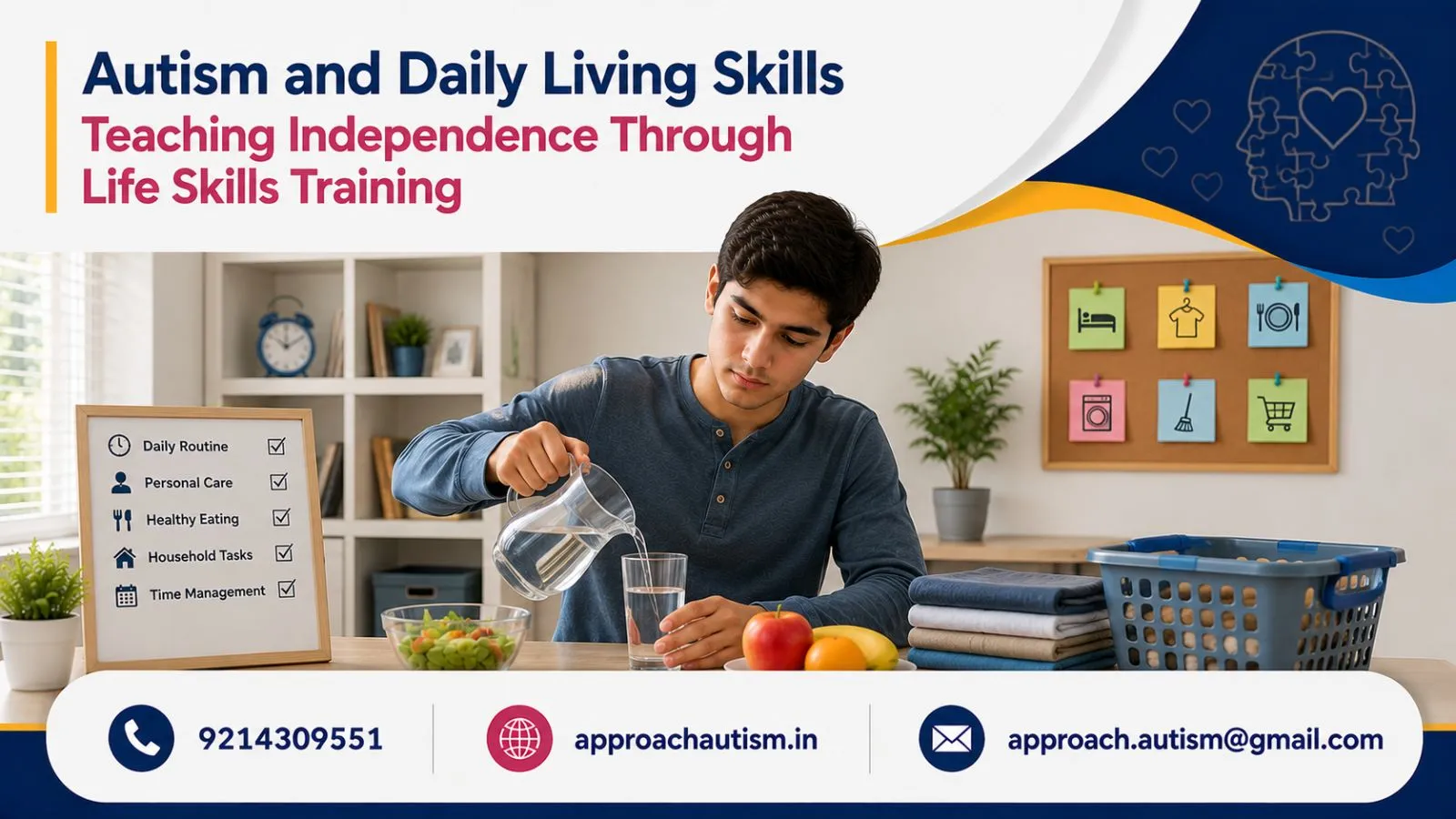
Autism and Daily Living Skills: Teaching Independence Through Life Skills Training
-
by
Approach
- No Comments on Autism and Daily Living Skills: Teaching Independence Through Life Skills Training
Daily living skills in autism play an important role in helping autistic individuals participate in everyday activities, develop confidence, and work toward greater independence. These skills include personal hygiene, dressing, preparing meals, managing routines, organising belongings, and participating in household and community activities. While some individuals learn these tasks with minimal guidance, others may benefit from structured instruction, visual supports, repetition, and individualised training.
Life skills training for autism focuses on practical abilities that support a person’s everyday needs and long-term goals. Learning should be adapted to the individual’s age, communication preferences, sensory needs, existing abilities, and learning pace. Rather than expecting immediate independence, families and professionals can break complex activities into manageable steps and gradually adjust the level of assistance.
Independence also looks different for everyone. Some individuals may manage most daily activities independently, while others may benefit from ongoing assistance or supported living arrangements. The goal is to develop useful skills, encourage personal choice, and provide the right support for meaningful participation in everyday life.
Understanding Daily Living Skills in Autism
What Are Daily Living Skills?
Daily living skills are practical abilities used to manage personal needs, household responsibilities, and activities outside the home. They are often described as adaptive skills or independent living skills because they help people respond to everyday situations.
Common examples include:
- Personal care: Brushing teeth, washing hands, bathing, dressing, and grooming.
- Household activities: Making the bed, organising belongings, folding clothes, and cleaning personal spaces.
- Food preparation: Collecting ingredients, preparing simple meals, and following kitchen safety rules.
- Organisation: Following checklists, managing belongings, and preparing for scheduled activities.
- Community participation: Shopping, recognising road safety rules, using transportation with appropriate support, and asking for assistance.
- Personal decision-making: Making choices, expressing preferences, and communicating when help is needed.
The skills to prioritise depend on the individual’s circumstances. A young child may begin with handwashing or putting away toys, while a teenager may practise laundry, meal preparation, or planning a daily schedule. Adults may work on managing appointments, handling money, using transport, or developing workplace routines.
A personalised plan helps ensure that training focuses on skills that are meaningful and useful to the individual rather than expecting everyone to follow the same milestones.
How Autism Can Affect Everyday Activities
Autism affects people differently. Differences in communication, sensory processing, motor coordination, flexibility, and executive functioning may influence how an individual approaches daily tasks.
For example, a person may understand how to get dressed but find it difficult to organise the steps independently. Another person may know how to prepare a meal but struggle with unexpected changes, noisy surroundings, or remembering several instructions at once.
These difficulties do not necessarily indicate an inability to learn. The person may need clearer instructions, additional practice, adapted materials, or a different teaching approach.
It is also important to consider environmental barriers. Strong smells, uncomfortable clothing, bright lights, or unfamiliar equipment can make certain activities harder. Adjusting the environment and offering appropriate choices may make learning more accessible.
Essential Life Skills for Greater Independence
Personal Care and Self-Management
Personal care is often a useful starting point for daily living skills training. Depending on the individual’s needs and preferences, learning goals may include brushing teeth, washing hands, dressing, grooming, managing personal belongings, and following a hygiene routine.
A complex activity such as brushing teeth can be divided into smaller steps: collecting the toothbrush, applying toothpaste, brushing different areas, rinsing, and putting the items away. A picture sequence or written checklist can show what comes next.
Caregivers can begin by supporting the steps that are difficult while allowing the individual to complete familiar steps independently. As the person gains confidence, assistance can be adjusted gradually.
Privacy, dignity, and consent matter, especially when teaching personal care. Instructions should be respectful, age-appropriate, and sensitive to sensory preferences. The aim is to support health and self-management without disregarding the person’s comfort.
Household Responsibilities, Time Management, and Safety
Household tasks provide practical opportunities to develop responsibility and participate in family life. Depending on age and ability, individuals may learn to organise their rooms, put laundry away, set the table, prepare simple food, or clean up after an activity.
Instead of giving a broad instruction such as “clean your room,” begin with one clear action, such as putting clothes in the laundry basket. Once that step becomes familiar, introduce another task. A checklist can help the person remember the sequence.
Time management can be taught through calendars, visual timetables, alarms, timers, and reminders. These tools may help individuals prepare for appointments, follow morning routines, and understand transitions between activities.
Safety skills should also be included. Relevant goals may involve recognising unsafe situations, understanding basic kitchen precautions, learning what to do if lost, identifying trusted people, and knowing how to seek help. Community travel, handling money, and using household equipment should be taught with supervision appropriate to the individual’s skills and the risks involved.
Effective Strategies for Autism Life Skills Development
Step-by-Step Teaching and Visual Supports
One practical approach to autism life skills development is task analysis, which means breaking an activity into smaller, teachable steps. This makes the expectations clearer and helps families and professionals identify exactly where support is needed.
For example, preparing a simple snack might involve:
- Gathering the required ingredients and utensils.
- Washing hands and preparing the workspace.
- Following the steps for preparing the snack.
- Using equipment safely with appropriate supervision.
- Putting ingredients away and cleaning the workspace.
A trainer can demonstrate the activity, teach individual steps, and combine them as the person becomes more familiar with the process. Some learners benefit from practising the steps in order, while others may need specific difficult steps taught separately.
Visual supports can complement this approach. Photographs, picture cards, written instructions, checklists, and visual schedules provide information that can be referred to when needed. The best format depends on the individual’s reading ability, communication preferences, and learning style.
Prompts may initially include demonstrations, gestures, verbal reminders, or physical assistance when appropriate and agreed upon. Support should be reduced thoughtfully when the person is ready, rather than removed too quickly or continued unnecessarily. This helps build genuine independence while maintaining safety and confidence.
Positive Encouragement and Practice in Real-Life Settings
Encouragement can help individuals feel motivated to practise unfamiliar tasks. Recognising effort, offering meaningful choices, and acknowledging progress can make learning more positive. Preferred activities or other personally meaningful rewards may also be helpful for some learners.
The focus should be on useful skill development rather than obedience or completing every activity in exactly the same way. If an individual communicates discomfort, appears overwhelmed, or struggles with a particular step, the teaching approach may need to be adjusted.
Practice in everyday settings is equally important. A person who learns to fold clothes in a training room may need opportunities to practise at home with their own clothing. Shopping skills can be developed through supported visits to a local shop, while meal preparation can be practised in a familiar kitchen.
Consistency across home, training, and community settings can support learning. Families and professionals can share which instructions, visual tools, and adaptations are helpful. Progress should be reviewed regularly, including whether a skill can be completed in different environments and whether the current level of assistance remains appropriate.
The Role of Families and Professional Life Skills Training
How Parents and Caregivers Can Encourage Independence
Parents and caregivers play an important role in helping individuals practise daily living activities. Everyday routines provide natural opportunities for learning without requiring every activity to become a formal lesson.
Caregivers can start by identifying what the person already does independently and choosing one realistic skill to practise. For example, a child learning to get ready in the morning might use a picture checklist while a parent prepares the environment and offers reminders only when needed.
Helpful approaches include:
- Establishing routines that are understandable and predictable.
- Using short, clear instructions instead of giving several directions together.
- Offering choices wherever possible.
- Allowing sufficient time to complete tasks.
- Recognising effort and progress without comparing individuals.
- Recording which steps can be completed independently and where assistance is needed.
Skills may develop at different rates, and progress can be uneven. A person might perform a task confidently one day and need more help on another. Fatigue, stress, sensory discomfort, illness, or changes in the environment can affect performance. Flexibility and patience help keep learning supportive.
Professional Support and Planning for Future Goals
Professional life skills training can help families identify priorities, establish realistic goals, and use teaching methods suited to the individual. Depending on the person’s needs, a programme may address self-care, household responsibilities, communication, organisation, community participation, money management, or vocational preparation.
A useful training plan starts with an assessment of current abilities and personal goals. It identifies the specific skills to develop, the steps involved, the support required, and how progress will be reviewed. Families should be involved so that learning can continue beyond the training setting.
At Approach Autism Society, life skills and independent living programmes focus on practical activities, routines, personal care, household responsibilities, and participation in everyday environments. Families exploring structured support can learn more about the organisation through its autism support center in Jaipur.
Planning for adulthood may include preparing meals, managing appointments, using transport, handling personal finances, participating in employment, and making decisions about daily life. The priorities should reflect the person’s interests, abilities, preferences, and support needs.
Some individuals may eventually live independently, while others may prefer or require supported living. Both pathways can provide opportunities for meaningful participation and personal choice. Independence is not measured solely by whether someone lives alone or completes every task without assistance.
Conclusion
Daily living skills in autism can support greater confidence, participation, and self-reliance when teaching is practical, individualised, and respectful. Personal care, household responsibilities, organisation, safety, and community activities are useful areas to explore, but the right priorities will vary from person to person.
Breaking tasks into manageable steps, using suitable visual supports, practising in real-life settings, and adjusting assistance gradually can make learning more accessible. Families and professionals can work together to recognise progress, address barriers, and create opportunities for individuals to use their skills in everyday situations.
Most importantly, independence does not mean doing everything alone. It means having opportunities to make choices, develop abilities, communicate needs, and access the support required to participate in life with dignity.